
Tag: JWST
-
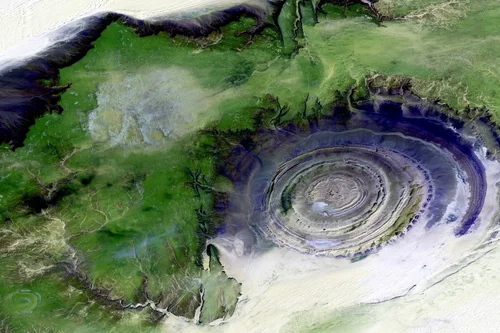
Webb discovers neutron star within supernova remnant
Using the joint NASA, European Space Agency, and Canadian Space Agency James Webb Space Telescope (JWST), an international team of astronomers has found evidence of a neutron star in the remnants of a recent supernova. The supernova, called SN 1987A, was first observed on Feb. 24, 1987, and occurred 160,000 light-years from Earth in the…
-
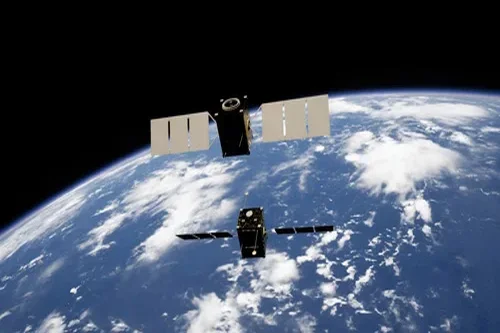
Webb discovers potential aurorae on brown dwarf
Silently floating through the universe are cosmic objects that are both too large to be planets and too small to be stars. Called brown dwarfs, these substellar objects are among the most captivating objects in the universe, and their low surface temperatures mean that most of the light they emit is infrared and thus can…
-
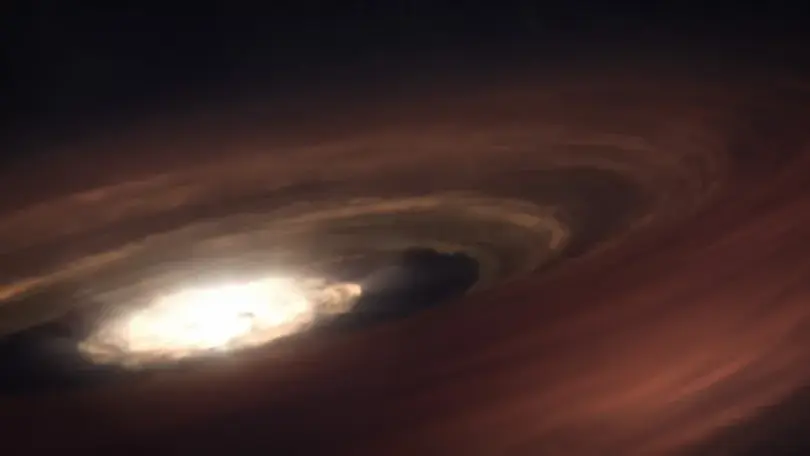
Webb detects neon in young star system, provides insight into planet formation
In 2008, observations from NASA’s now-retired Spitzer infrared space telescope hinted at the presence of neon within the protoplanetary disk of Sun-like star SZ Chamaeleontis (SZ Cha). However, Spitzer’s instruments could not confirm whether this reading was correct. Over a decade after Spitzer’s results were published, the joint NASA, European Space Agency, and Canadian Space…
-
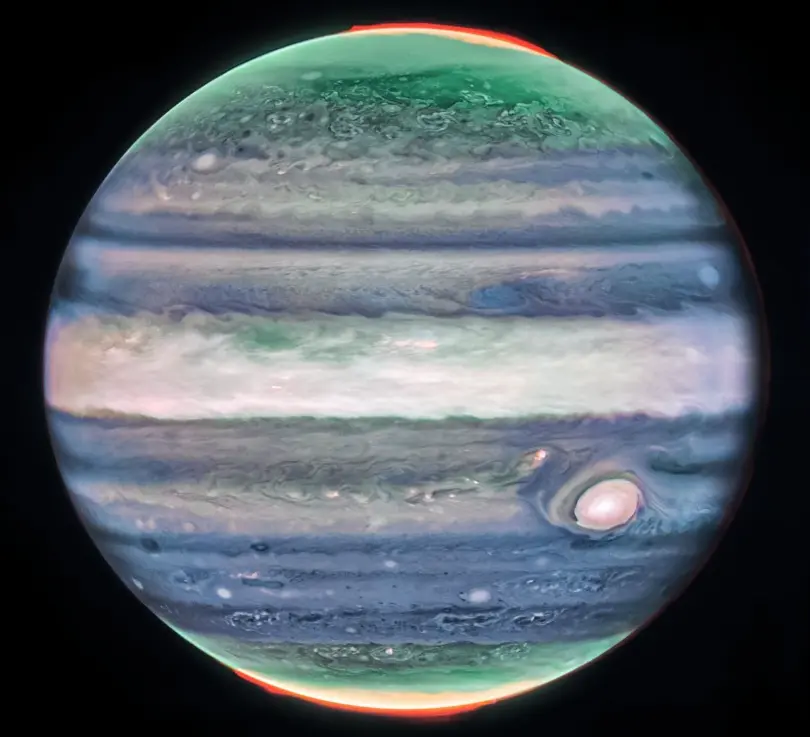
Using Webb, scientists measure high-speed jet stream in Jupiter’s atmosphere
Scientists recently discovered a high-speed jet stream at Jupiter’s equator using the joint NASA/European Space Agency/Canadian Space Agency James Webb Space Telescope. Webb’s images helped the team of scientists track fine details through the planet’s atmosphere, allowing them to measure these winds for the first time. The newly discovered jet stream will provide scientists with…
-
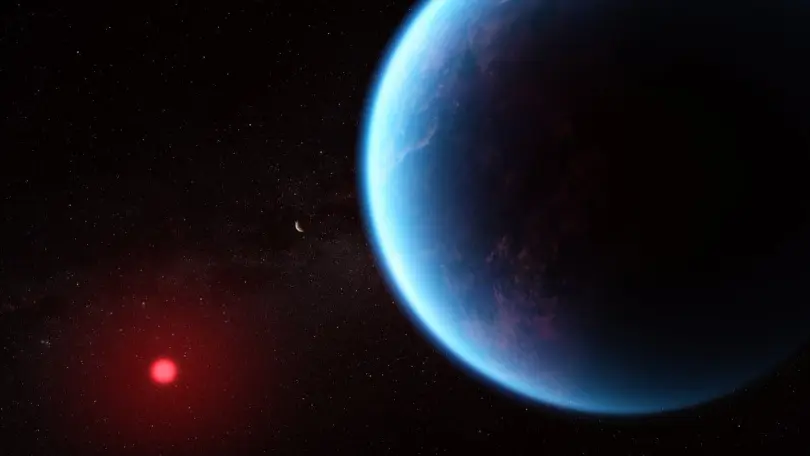
Using Webb, scientists discover carbon dioxide and methane in habitable-zone exoplanet
Using the joint NASA/European Space Agency/Canadian Space Agency James Webb Space Telescope, scientists have discovered the presence of carbon-bearing molecules within the atmosphere of exoplanet K2-18 b. Methane and carbon dioxide are among these carbon-bearing molecules. The discovery of the molecules is allowing scientists to better understand K2-18 b. The planet has been the subject…
-
Scientists, using Webb, discover water vapor within a planet-forming disk
Using the joint NASA/European Space Agency/Canadian Space Agency James Webb Space Telescope, a team of scientists has discovered, for the first time, water vapor within a planet-forming disk. The water vapor, which was found within the inner disk of two circumstellar disks around star PDS 70, is allowing scientists to research the ways by which…
-
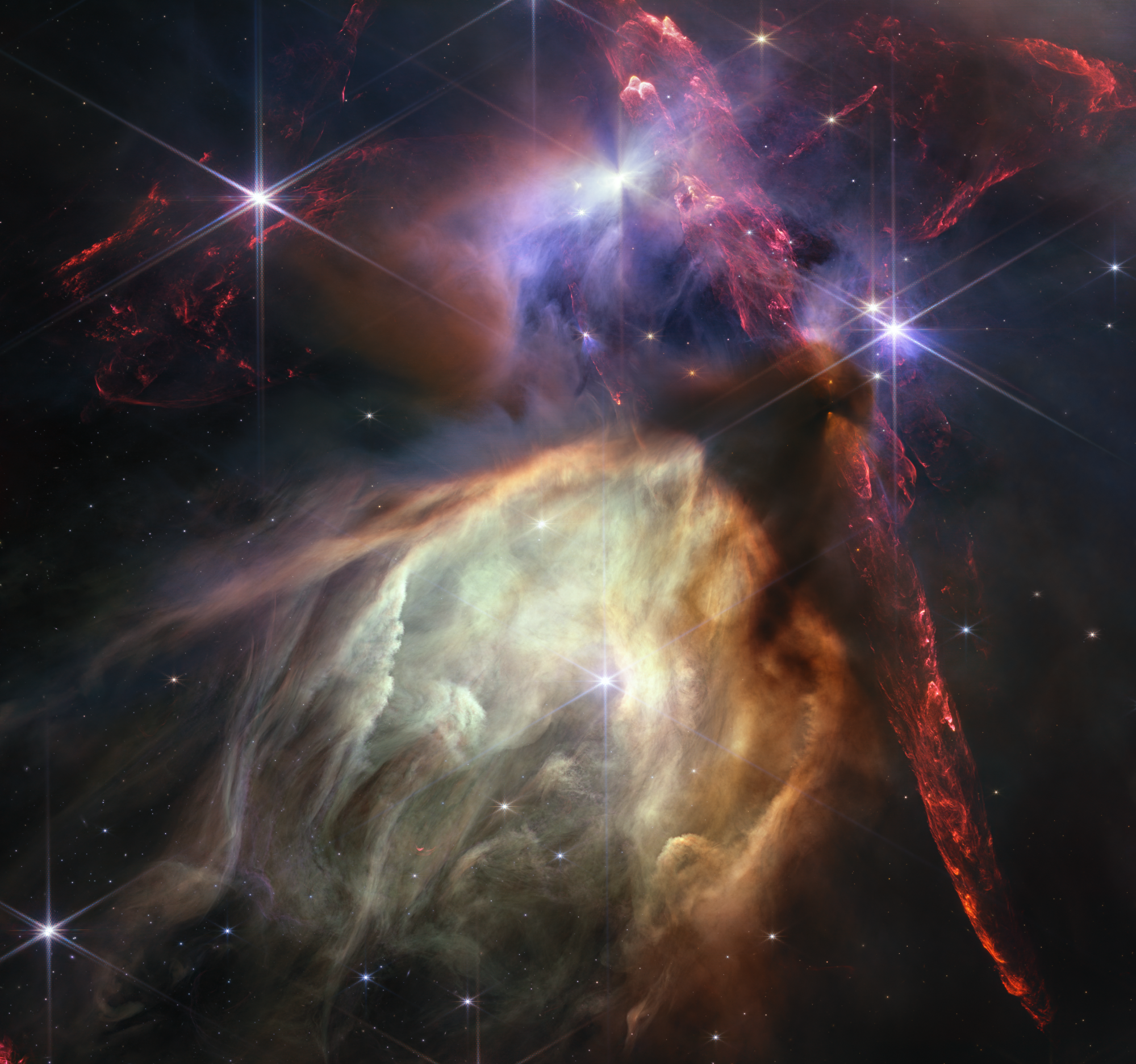
The Webb telescope just offered a revelatory view of humanity’s distant past
To commemorate the first year of scientific operations by the James Webb Space Telescope, NASA has released a stunning new image of a stellar nursery. The photo is gorgeous. It could easily hang in a museum, as if it were a large canvas painting produced by a collaboration of impressionistic and modern artists. But it…
-

Using Webb, scientists discover the most distant active supermassive black hole
Utilizing the infrared-sensitive instruments of the joint NASA/European Space Agency (ESA)/Canadian Space Agency (CSA) James Webb Space Telescope, a group of scientists has discovered the most distant active supermassive black hole to date. Located within a galaxy named CEERS 1019 — that existed just 570 million years after the formation of the universe — the…
-

With Webb, scientists make first detection of carbon molecule in protoplanetary disk
With new data collected by the joint NASA/European Space Agency/Canadian Space Agency James Webb Space Telescope, an international team of scientists has — for the first time ever — detected a carbon molecule within the protoplanetary disk of a star located in the Orion Nebula. The molecule, called methyl cation (CH3+), is quite unique. The…
-
This Week In Spaceflight: Vulcan fires up, Canadian fires from space, and JWST deep field data
A variety of methalox rockets are approaching launch, with the United Launch Alliance’s (ULA) Vulcan rocket completing its flight readiness firing. What’s more, the wildfires currently raging in Canada have been studied from space using a plethora of weather observation satellites, and the James Webb Space Telescope’s (JWST) advanced extragalactic survey data was officially released.…