
Tag: Lockheed-Martin
-
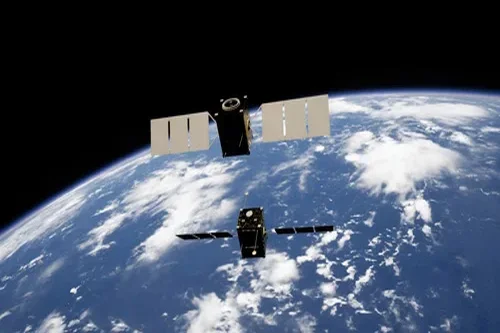
Photos: WorldView 4 satellite’s road to launch
DigitalGlobe’s WorldView 4 commercial satellite, which will join sister-spacecraft WorldView 3 in orbit to snap the highest quality Earth imagery available on the market at 31-centimeter resolution, was built by Lockheed Martin and will be launched Friday atop an Atlas 5 rocket from Vandenberg Air Force Base, California. On July 21, WorldView 4 was tucked…
-
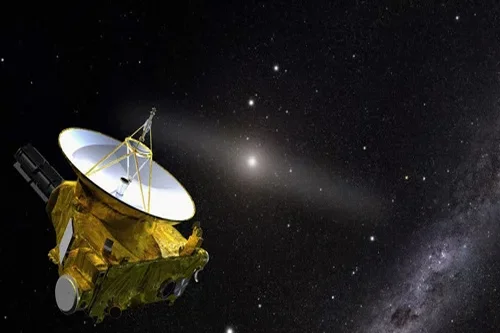
Idled by Range facility rework for months, Vandenberg ready to launch again Friday
File photo of Atlas 5 at Vandenberg. Credit: Bill Ingalls/NASA Resuming space launches from the U.S. Western Range at Vandenberg Air Force Base in California after a half-year infrastructure outage, an Atlas 5 rocket will boost a commercial Earth-imaging bird into orbit on Friday. Using the same United Launch Alliance Atlas 5 built and stacked…
-

OSIRIS-REx reaches launch pad with money to spare
Dante Lauretta, OSIRIS-REx principal investigator at the University of Arizona. Credit: NASA/Joel Kowsky The scientist in charge of NASA’s OSIRIS-REx mission hopes to apply more than $30 million in leftover funding toward reducing the risk of the probe’s touch-and-go maneuver to snag a piece of asteroid Bennu, then eventually hire more experts to analyze the…
-

Preview: NASA craft launches Thursday seeking the seeds of life on asteroid
An artist’s concept of OSIRIS-REx at Asteroid Bennu. Credit: Lockheed Martin CAPE CANAVERAL — What began as a concept scribbled on a cocktail napkin in a Tucson bar 12 years ago — sending a spacecraft to an asteroid and retrieving a pristine sample to bring back to Earth for study — becomes reality Thursday with…
-

Juno beams back dramatic new pictures of Jupiter
STORY WRITTEN FOR CBS NEWS & USED WITH PERMISSION The JunoCam instrument obtained this view on Aug. 27, about two hours before closest approach, when the spacecraft was 120,000 miles (195,000 kilometers) away from the giant planet (i.e., for Jupiter’s center). Credit: NASA/JPL-Caltech/SwRI/MSSS NASA’s Juno spacecraft, making its first scientific run over Jupiter’s poles Aug. 27, captured…
-
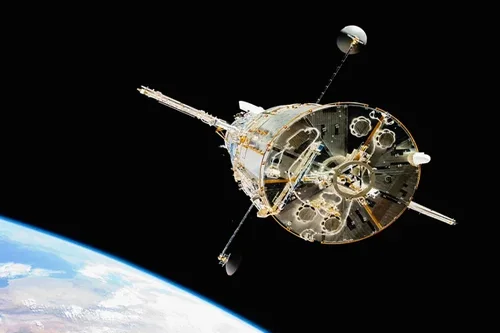
Juno gets its closest look at Jupiter
Updated with details from NASA press release. Jupiter’s north polar region is coming into view as NASA’s Juno spacecraft approaches the giant planet. This view of Jupiter was taken on August 27, when Juno was 437,000 miles (703,000 kilometers) away.Credits: NASA/JPL-Caltech/SwRI/MSSS Nearly two months after NASA’s Juno spacecraft slipped into orbit around Jupiter, the solar-powered…
-

Photos: OSIRIS-REx prepped for encapsulation
NASA’s OSIRIS-REx spacecraft is about to be sealed inside the nose fairing of its Atlas 5 rocket booster for a seven-year voyage to asteroid Bennu and back to Earth on a mission to seek out clues to the origin of life and the chaotic early solar system. The solar-powered, 4,651-pound (2,110-kilogram) spacecraft is inside the…
-

Video: Walk around NASA’s new asteroid sample probe
Take a walk around NASA’s OSIRIS-REx spacecraft less than three weeks before its Sept. 8 launch on top of an Atlas 5 rocket. Rich Kuhns, the mission’s program manager from Lockheed Martin, points out some of the major features on the probe. Lockheed Martin built the OSIRIS-REx spacecraft and will oversee mission operators after it…
-
Sophisticated new U.S. weather observatory being readied for launch
The GOES R weather satellite folded up for launch. Credit: Lockheed Martin CAPE CANAVERAL — On the cusp of advancing U.S. weather forecasting, a powerful new satellite was shipped from its Denver factory to the Cape today in preparation for launch in November. The first-of-its-kind observatory dubbed GOES R was flown aboard an Air Force…
-

NASA picks 6 companies to develop prototype space habitats
STORY WRITTEN FOR CBS NEWS & USED WITH PERMISSION Artist’s concept of a Lockheed Martin-built habitation system with the Orion capsule. Credit: Lockheed Martin NASA has selected six companies to work on designs for deep space habitat modules that could be used by astronauts living and working near the moon as technology is developed for eventual flights…