
Tag: Mars
-

Lost Beagle 2 spacecraft found on Mars
Beagle 2 on the surface of Mars, as seen by the HiRISE camera on the Mars Reconnaissance Orbiter. Image: HiRISE/NASA/University of Leicester. The UK’s Beagle 2 mission to Mars, which was lost in Christmas week 2003 during the final stages of its voyage to the red planet, has been rediscovered by NASA’s eagle eye in…
-
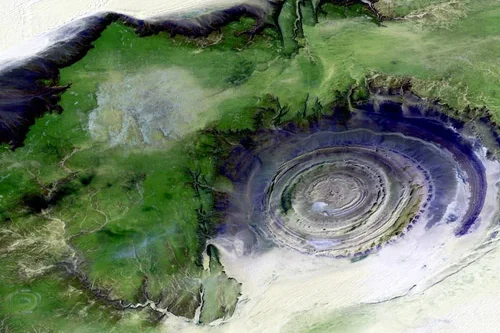
Curiosity confirms organics on Mars; Opportunity’s 10 year anniversary
Mars dominated planetary research headlines in 2014 as an international fleet of orbiters and NASA’s two rovers returned unparalleled scientific research on the Red Planet. In 2014, scientists marked Opportunity’s 10-year anniversary on Mars, watched the near miss of comet Siding Spring, and announced Curiosity’s groundbreaking confirmation of the presence of organics on the surface…
-
Mars rover detects methane spike, organic molecules
STORY WRITTEN FOR CBS NEWS “SPACE PLACE” & USED WITH PERMISSION Artist’s concept of the Curiosity rover. Credit: NASA/JPL-Caltech Carefully analyzing data collected by NASA’s Mars Curiosity rover, scientists discovered a sudden, unexpected spike in methane levels in the martian atmosphere over a two-month period one year ago, researchers announced Tuesday. The roving science lab also has…
-

Rover data suggest Mars crater once contained long-lived lake
This illustration depicts a lake of water partially filling Mars’ Gale Crater, receiving runoff from snow melting on the crater’s northern rim. Credit: NASA/JPL-Caltech/ESA/DLR/FU Berlin/MSSS Scientists analyzing imagery from NASA’s Curiosity Mars rover believe sediments left by an ancient lake more than three billion years ago formed a towering mountain that is set to be…
-
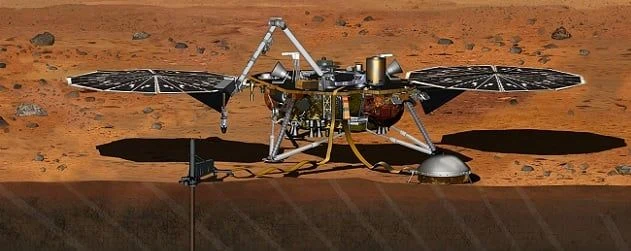
Lockheed Martin enter ATLO phase for Mars InSight lander
Following last week’s dramatic exploits of Rosetta’s Philae lander on the surface of a comet, another lander – destined for the surface of Mars – is being born at Lockheed Martin. NASA’s InSight Mars lander spacecraft has started its assembly, test and launch operations (ATLO) phase – ahead of its March, 2016 launch atop of an Atlas…
-
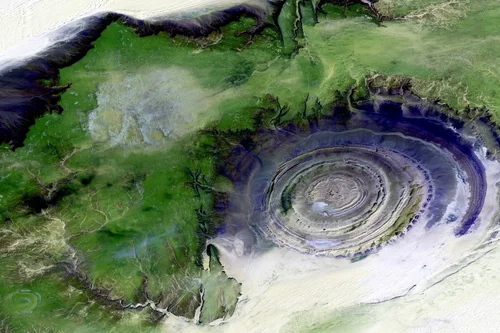
MAVEN begins science mission at Mars
Artist’s concept of NASA’s MAVEN spacecraft at Mars. Credit: NASA/GSFC NASA’s newest Mars orbiter has formally started a one-year research campaign to study an ancient case of climate change that starved the red planet of water, breathable air and potential life, scientists said Monday. The mission’s milestone came after two months of instrument calibrations, test…
-
New Mars lander takes shape
The next Mars lander — a platform to drill beneath the surface of the red planet — has begun its assembly phase in preparation for launch in March 2016. “Reaching this stage that we call ATLO is a critical milestone,” said InSight Project Manager Tom Hoffman at NASA’s Jet Propulsion Laboratory, Pasadena, California. “This…
-

Comet’s brush with Mars more dramatic than expected
STORY WRITTEN FOR CBS NEWS “SPACE PLACE” & USED WITH PERMISSION Artist’s concept of Comet Siding Spring approaching Mars, shown with NASA’s orbiters preparing to make science observations of this unique encounter. Credit: NASA/JPL Comet Siding Spring’s close flyby of Mars last month dumped several tons of primordial dust into the thin martian atmosphere, likely creating a…
-

SLS manifest targets Europa and Mars Sample Return missions
NASA is moving up a gear with its manifest planning for the Space Launch System (SLS). A new internal manifest portrays a tag team approach, alternating SLS between crewed missions for Orion and major flagship science missions that includes sending a spacecraft to Europa and conducting a Mars Sample Return mission, all before the middle…
-
Mars spacecraft safe after fortuitous comet encounter
The HiRISE camera on NASA’s Mars Reconnaissance Orbiter took these images of comet Siding Spring, the first resolved images of a long-period comet’s nucleus. HiRISE took the pictures nine minutes apart at a range of 138,000 kilometers (86,000 miles) from the comet, yielding a scale of about 138 meters (150 yards) per pixel. Credit: NASA/JPL-Caltech/University…