
Tag: NASA
-

Scientists discover first long-lasting radio bursts above sunspots
A team of NASA-funded scientists recently discovered long-lasting radio signals above sunspots — regions of the Sun’s surface where the magnetic field is so strong that surface temperatures are reduced and surrounding atmospheric pressure decreases, creating dark spots on the solar surface. The team’s results show the radio signals are emanating from the sunspots in…
-
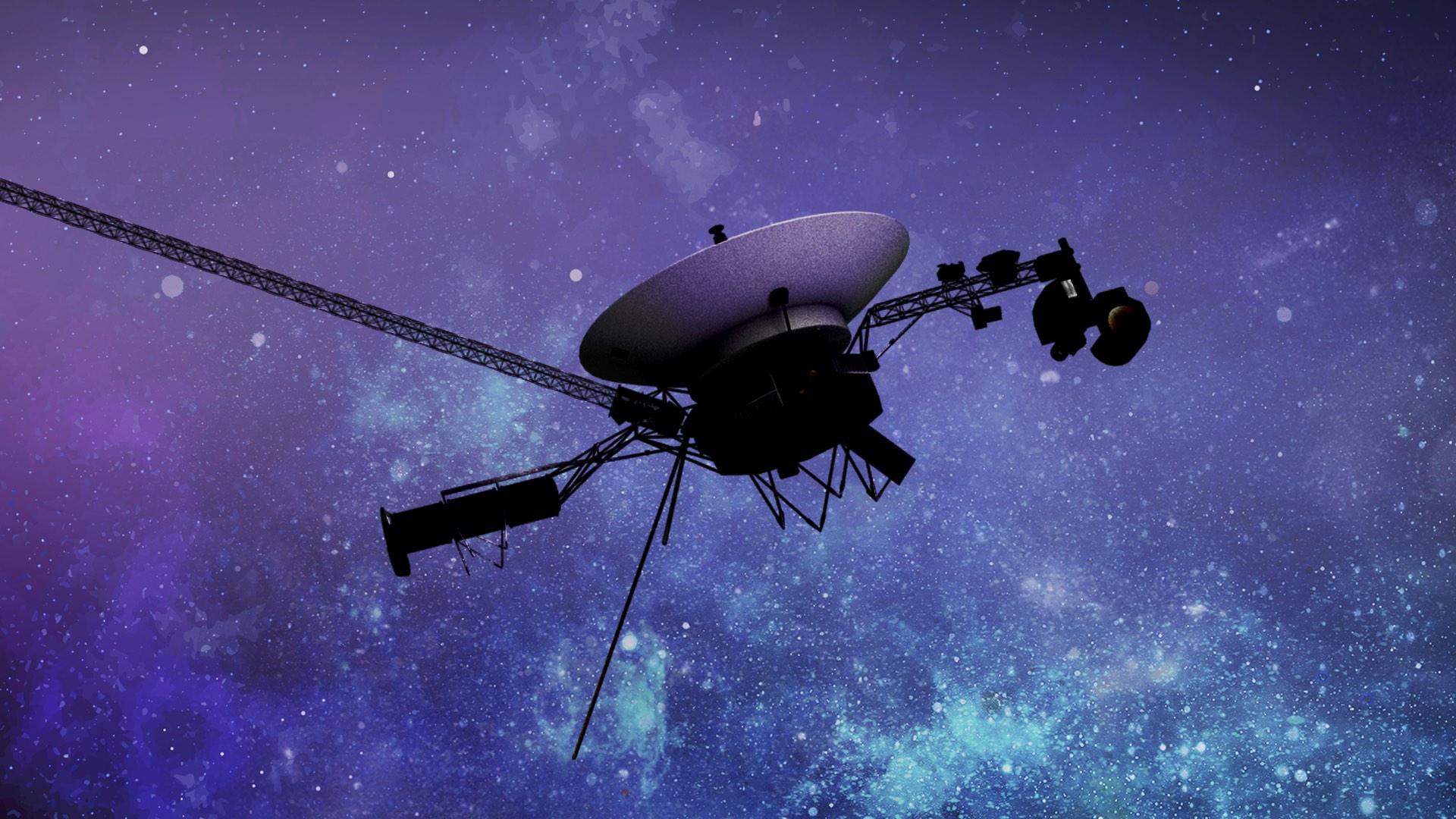
Finally, engineers have a clue that could help them save Voyager 1
It’s been four months since NASA’s Voyager 1 spacecraft sent an intelligible signal back to Earth, and the problem has puzzled engineers tasked with supervising the probe exploring interstellar space. But there’s a renewed optimism among the Voyager ground team based at NASA’s Jet Propulsion Laboratory in California. On March 1, engineers sent a command…
-
Sierra Space tests upcoming in-space habitat as other commercial space stations continue development
On Jan. 21, Sierra Space performed an “ultimate burst pressure test” on a full-scale model of its Large Integrated Flexible Environment (LIFE) habitat — an inflatable space station module. The launcher-agnostic habitat is designed to be launched encapsulated within any four-meter fairing, docked to a space station in orbit, and then inflated to a 9-meter…
-

Crew-7 returns home following six-month stay at the International Space Station
A view of the Crew Dragon Endurance as it prepared to undock from the International Space Station following 197 days at the orbiting outpost. Image: NASA Update: Dragon Endurance returned to Earth Tuesday, splashing down off the coast of Florida near Pensacola at 5:47 a.m. EDT (0947 UTC). A journey of more than half a…
-

Juno measures oxygen production on Europa
Using NASA’s Juno spacecraft, scientists have calculated the rate of oxygen production on Jupiter’s moon Europa — the first time any spacecraft had directly measured charged oxygen and hydrogen particles from the moon’s atmosphere. From these measurements, the team determined the rate of oxygen production to be much lower than estimated in previous studies. Europa,…
-
News from the Press Site: A roundup of the week’s space news
Join us for a roundup of the week’s space news with reporters covering the big stories. Spaceflight Now’s Will Robinson-Smith is joined by Irene Klotz, Senior Space Editor for Aviation Week, and Richard Tribou, Space Reporter and Senior Content Editor for The Orlando Sentinel. Among the topics of discussion, the panel will talk about the…
-
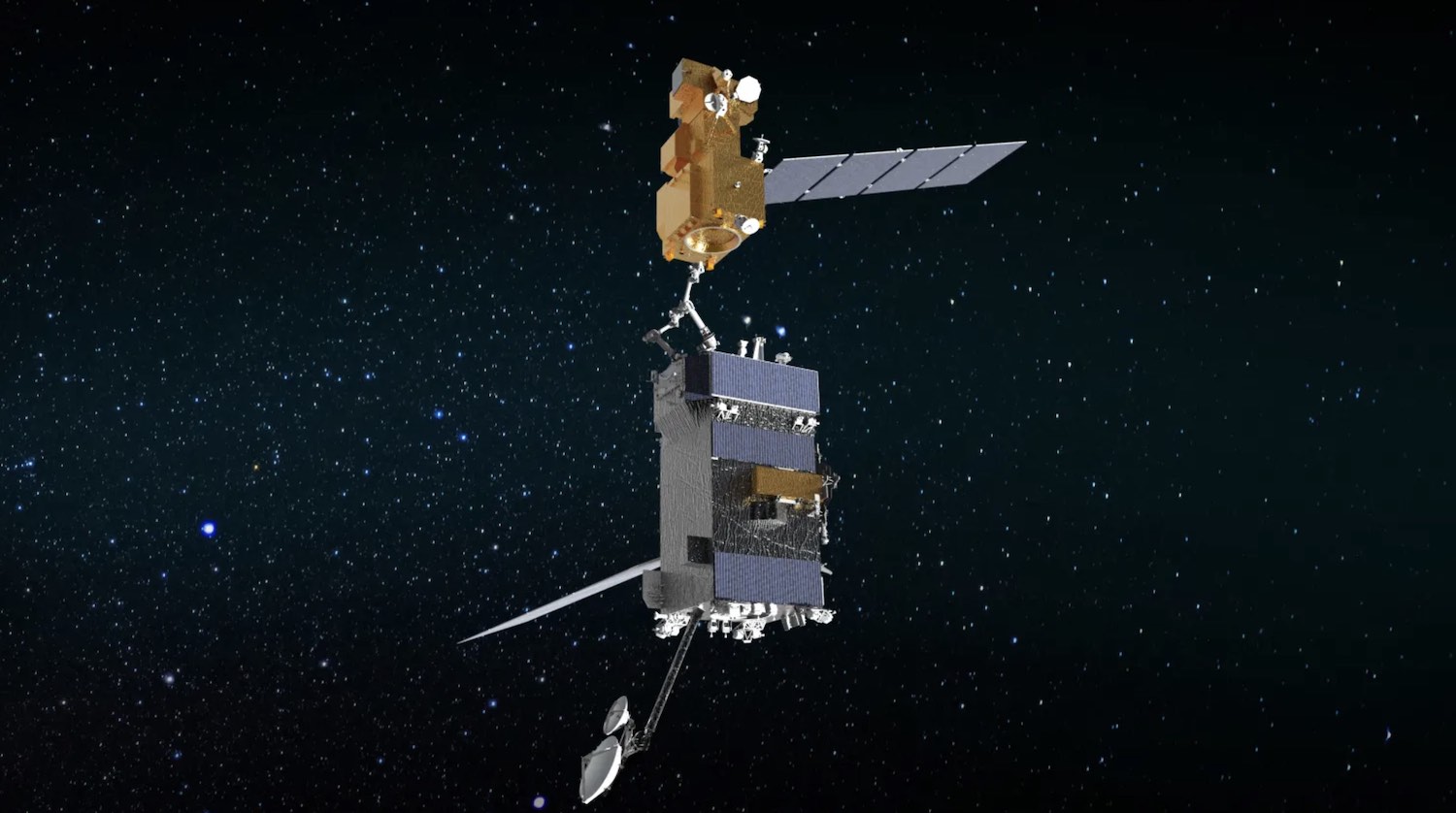
NASA cancels a multibillion-dollar satellite servicing demo mission
NASA has canceled an over-budget, behind-schedule mission to demonstrate robotic satellite servicing technology in orbit, pulling the plug on a project that has cost $1.5 billion and probably would have cost nearly $1 billion more to get to the launch pad. The On-orbit Servicing, Assembly, and Manufacturing 1 mission, known as OSAM-1, would have grappled…
-
Using Hubble and Webb, scientists investigate galaxies responsible for the reionization of the universe
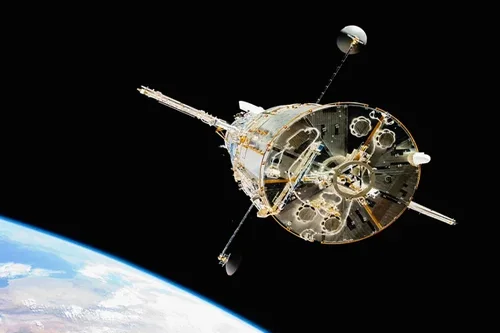
Utilizing the infrared-sensitive instruments of the joint NASA, European Space Agency, and Canadian Space Agency James Webb Space Telescope, as well as observations from the Hubble Space Telescope, scientists recently collected the first spectroscopic observations of some of the oldest galaxies in the universe, some being born during the first one billion years of the…
-
Blue Origin gets ready for cargo lander’s inaugural moon trip, with humans to follow
An artist’s conception shows Blue Origin’s Blue Moon Mark 1 lander on the moon. (Blue Origin Illustration) Update: Blue Origin’s first uncrewed Blue Moon mission is now set for 2026. Jeff Bezos’ Blue Origin space venture is aiming to send an uncrewed lander to the surface of the moon in the next 12 to 16…
-
The world’s most-traveled crew transport spacecraft flies again
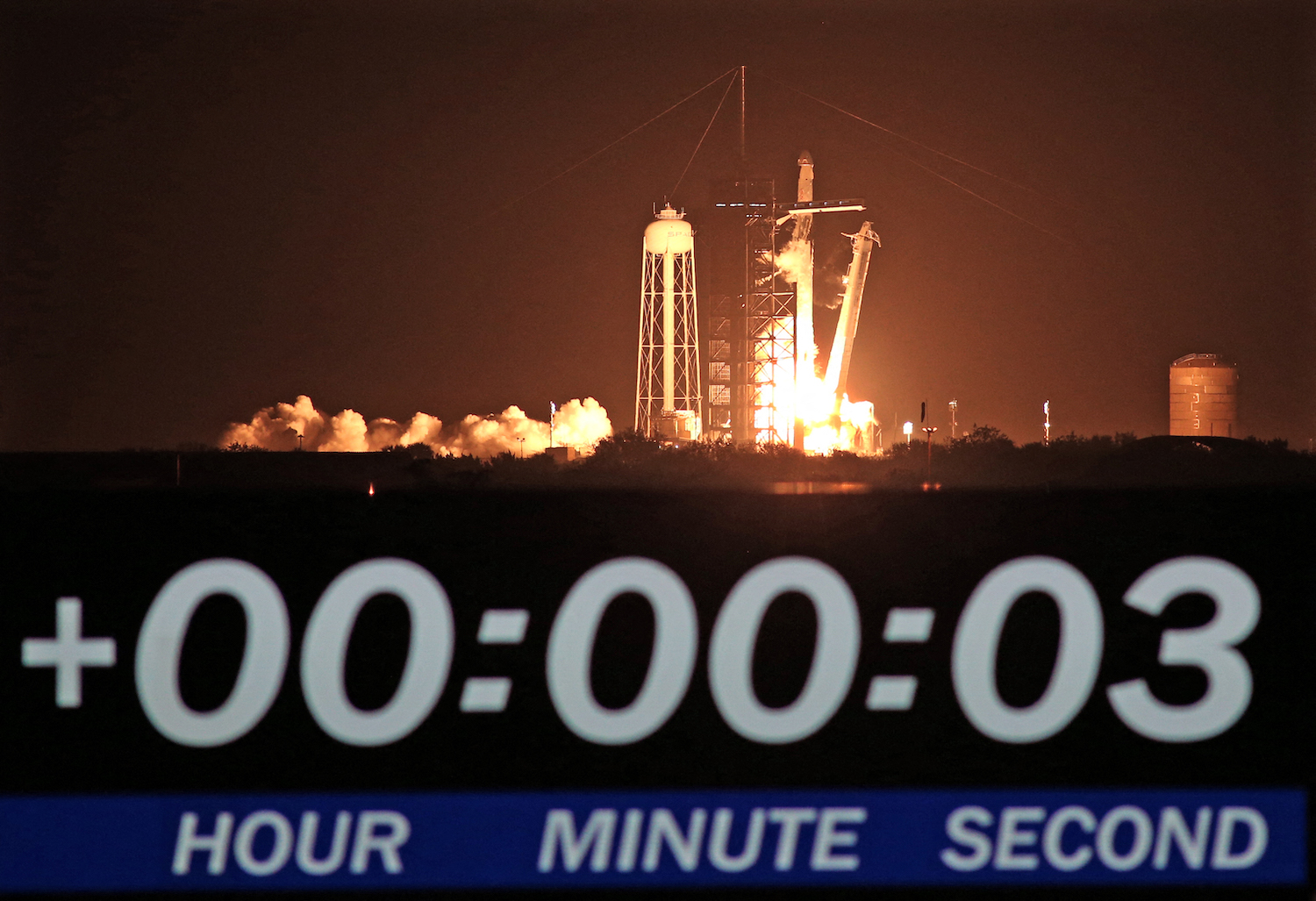
SpaceX’s oldest Crew Dragon spacecraft launched Sunday night on its fifth mission to the International Space Station, and engineers are crunching data to see if the fleet of Dragons can safely fly as many as 15 times. It has been five years since SpaceX launched the first Crew Dragon spacecraft on an unpiloted test flight…