
Tag: NASA
-

While NASA gets set for its first Artemis moon mission, Aerojet is working ahead
An artist’s conception shows the Orion spacecraft’s main engine firing during a lunar flyby, surrounded by eight of Aerojet Rocketdyne’s Redmond-built auxiliary engines. (NASA Illustration) REDMOND, Wash. — When NASA’s Space Launch System rocket sends an uncrewed Orion spacecraft beyond the moon and back for the Artemis 1 mission, the trip will put rocket components…
-

Aiming for the Moon: Artemis I countdown begins for historic flight
The launch countdown for the Space Launch System (SLS) rocket and the Artemis I mission is underway at the Kennedy Space Center in Florida ahead of a planned liftoff within a two-hour launch window that opens at 8:33 AM EDT (12:33 UTC) on Monday, August 29. The launch count comes after more than a decade…
-
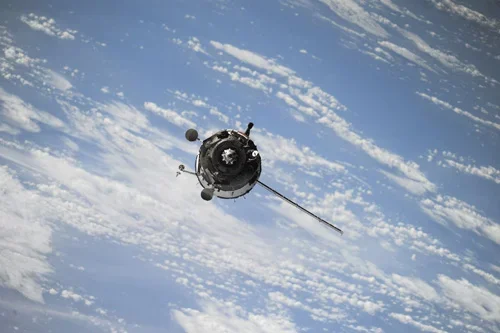
Airbus highlights European Service Module work for Artemis
SLS is nearing its debut flight, with the Artemis I launch window opening this Monday at 16:33 UTC. But this launch is impactful beyond NASA and the United States. The European Service Module (ESM) will provide a wide range of services for Orion on its way to the moon, including propulsion and power. It is…
-
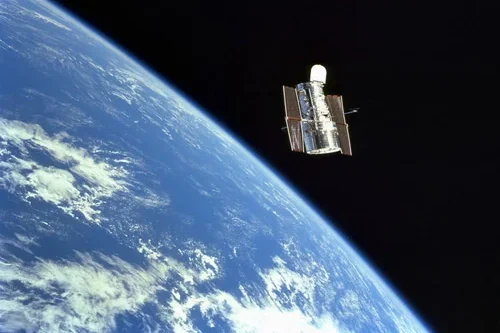
NOAA, NASA, and Northrop Grumman complete major testing for JPSS-2 before launch
The National Oceanic and Atmospheric Administration (NOAA), NASA, and Northrop Grumman have completed the final major test of the Joint Polar Satellite System (JPSS)-2 spacecraft ahead of its delivery to Vandenberg Space Force Base, California, for launch. JPSS-2 is the second of four satellites in NOAA’s JPSS weather tracking constellation and will launch atop a…
-

SLS arrives at LC-39B for launch, teams prepare for multiple launch trajectories
NASA’s Space Launch System (SLS) rocket has left the Vehicle Assembly Building at the Kennedy Space Center in Florida and completed its 4.2-mile (6.7-km) journey to Launch Complex 39B. The multi-hour rollout process resulted in a sunrise arrival at the pad. The rollout is the last major milestone ahead of launch, which will differ from…
-

Lunar Reconnaissance Orbiter discovers thermally stable areas in surface pits suitable for future lunar bases
Using data from NASA’s Lunar Reconnaissance Orbiter (LRO), a group of NASA-funded researchers has discovered that shaded locations inside surface pits on the lunar surface harbor comfortable temperatures that could prove useful for future lunar exploration. Furthermore, LRO continues to operate in a healthy state around the Moon and is regularly returning data, so much…
-
Curiosity marks 10 years on Mars as discoveries continue
After successfully landing on Mars on August 6, 2012 (UTC), Curiosity continues to unlock the secrets of the Red Planet as the vehicle explores Gale Crater. Since landing, the rover has traveled over 17.5 miles (28.1 km) and made multiple scientific discoveries. Curiosity is now in the process of exploring and traversing Mount Sharp, the…
-
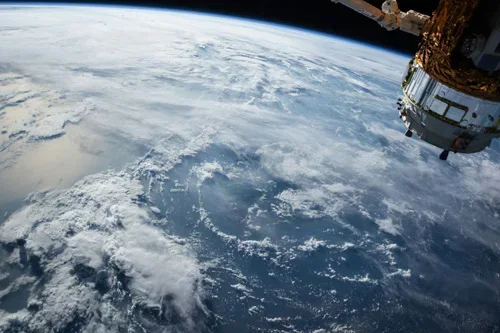
SpaceX launches Danuri, South Korea’s first mission to the Moon
SpaceX has launched South Korea’s first mission to the Moon on Thursday. A flight-proven Falcon 9 rocket launched the Danuri spacecraft from Space Launch Complex 40 at the Cape Canaveral Space Force Station in Florida at 7:08 PM EDT (23:08 UTC). Danuri, also known as the Korea Pathfinder Lunar Orbiter (KPLO), will be the first…
-
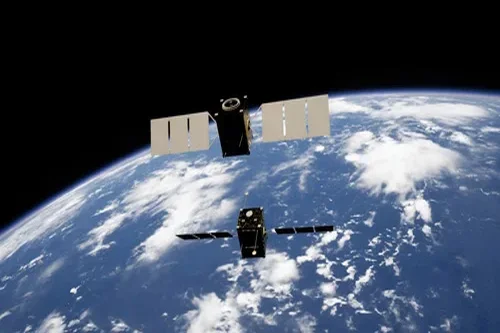
SLS Stages in assembly at MAF for future NASA Artemis launches
Boeing, the prime Stages contractor for NASA’s Space Launch System (SLS) program, is working on the production and development of hardware for the third and fourth Artemis launches at the Michoud Assembly Facility (MAF) in New Orleans. Welded and bolted structures for the third and fourth Core Stage vehicles are being assembled in parallel with…
-
Data from OSIRIS-REx reveals loose surface of asteroid Bennu and “early aging” of asteroids
Recently analyzed data from an asteroid surface-sample collection performed by NASA’s OSIRIS-REx mission has revealed that asteroid 101955 Bennu’s surface regolith is much looser than previously thought. Had OSIRIS-REx not fired its thrusters to back away from Bennu after collecting its sample, the spacecraft likely would’ve sunk straight into Bennu’s surface. What’s more, additional data…