
Tag: Nauka
-

Cosmonauts complete Russian spacewalk to integrate Prichal node
Two Russian cosmonauts have conducted a spacewalk at the International Space Station (ISS) to fully configure and integrate the outpost’s newest module to support future operations. The two spacewalkers, Anton Shkaplerov and Pyotr Dubrov, began their work at 12:17:31 UTC and concluded the EVA seven hours 11 minutes later at 19:28 UTC. Spacewalk procedures Russian…
-
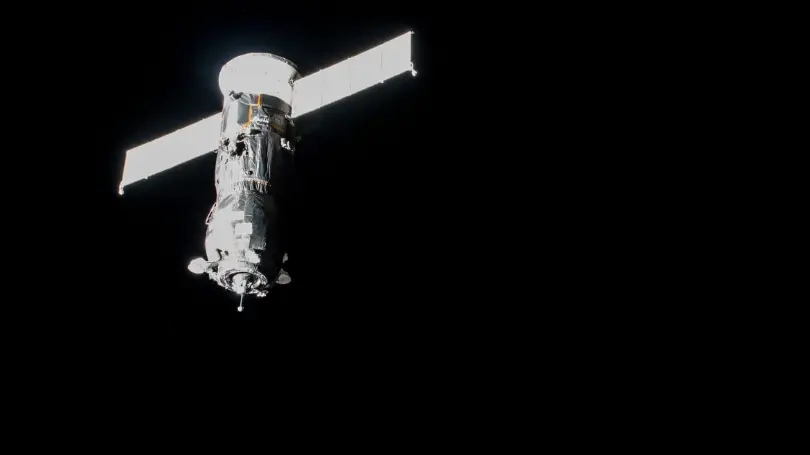
Progress MS-17 completes 24 hour long relocation at Space Station
Progress MS-17 has successfully relocated its docking position to the station’s newest module, MLM Nauka. Relocation began at 23:42 UTC (7:42 PM EDT) on Wednesday when the Russian resupply spacecraft autonomously undocked from the Russian Poisk module and backed away from the station to a distance of approximately 180-190 kilometers. Progress perform station-keeping maneuvers in…
-
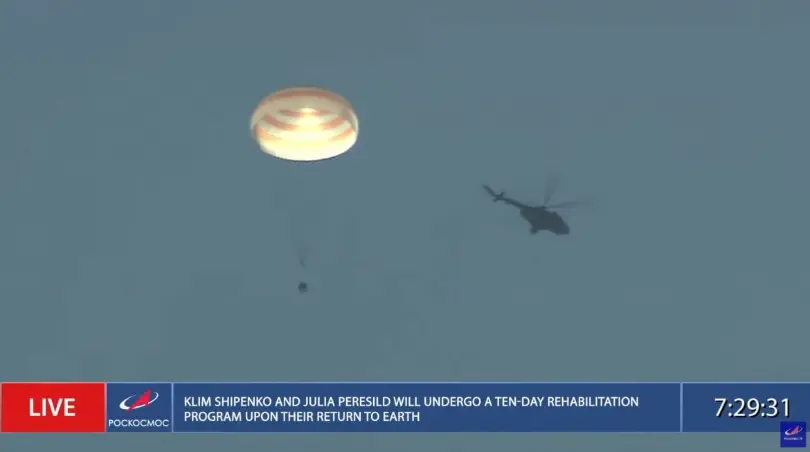
Soyuz MS-18 touchdown in Kazakhstan
Cosmonaut Oleg Novitsky and spaceflight participants Yulia Peresild and Klim Shipenko have returned to Earth with a landing in Kazakhstan on Sunday, completing the Soyuz MS-18 mission. The three-person landing crew undocked from the nadir port on the Nauka Multipurpose Laboratory Module (MLM) at 01:13 UTC. Landing occurred at around 04:36 UTC. Soyuz MS-18 launched…
-

Soyuz MS-18 crew relocates spacecraft to Nauka
The Soyuz MS-18 crew has successfully relocated their spacecraft from the Rassvet module to the Nauka module at the International Space Station. The relocation began at 12:21 UTC on Tuesday, clearing Rassvet for Soyuz MS-19’s arrival next week while providing the first opportunity to test Nauka’s temporary docking port. The crew of Soyuz MS-18 made…
-
Novitskiy & Dubrov conduct Russian EVA-50 for Nauka module outfitting
ISS Expedition 65 Flight Engineers Oleg Novitskiy and Pytor Dubrov performed an EVA (Extravehicular Activity) at the International Space Station on Thursday, the second in a series of up to 11 spacewalks planned to integrate the new Russian Nauka module onto the ISS. Novitskiy and Dubrov, in their Russian Orlan-MK spacesuits, opened that station’s Poisk…
-

Russian cosmonauts begin series of spacewalks to integrate Nauka with the ISS
ISS Expedition 65 Flight Engineers Oleg Novitsky and Pytor Dubrov exited the International Space Station for Russian EVA-49 on Friday, the first in a series of up to 11 spacewalks planned to fully integrate the new Russian Nauka module onto the ISS. Novitsky and Dubrov donned their Russian Orlan-MKS model spacesuits and exited from the…
-
MLM Nauka docks to ISS, malfunctions shortly thereafter
Russia’s Multipurpose Laboratory Module (MLM) Nauka, meaning “science,” has defied the odds to successfully dock to the ISS after a long and arduous journey dating back over 20 years and a problematic propulsion system after launch which had threatened the success of the mission. The docking was not without issue, with Russian cosmonauts noting that…
-
Farewell, Pirs; ISS module decommissioned, destructively reentered
After nearly 20 years in orbit serving as a docking port and airlock for the Russian segment of the International Space Station (ISS), the Pirs module — also called Stykovochny Otsek 1, or Docking Compartment 1 (DC-1) — has become the first habitable element of the station to be decommissioned and permanently removed from the…
-
Nauka science module launches to ISS
Good things come to those (modules) that wait. On July 21, at 14:58:25 UTC (10:58:25 EDT), a Proton-M rocket launched from the Baikonur Cosmodrome to take the first Russian ISS module in 11 years to orbit. The moment marked a major milestone for Roscosmos, which was originally slated to launch the module in 2007. After…
-
Russian duo complete decommissioning of Pirs ahead of removal from Station
Outside the International Space Station (ISS), Oleg Novitsky and Pyotr Dubrov have completed a near 7 hour extravehicular activity, or EVA/spacewalk, to finalize external preparations for the removal to the Pirs docking compartment that has served the Station for nearly 20 years. Delivered in 2001, Pirs will be removed from the ISS no earlier than…