
Tag: NOAA
-

Atlas rocket bids farewell to California as ULA readies for Vulcan
The Atlas rocket family, a staple of the US launch industry since June 11, 1957, ended its West Coast operations on Nov. 10 with the launch of an Atlas V rocket with the JPSS-2 weather satellite. Liftoff of the mission from Space Launch Complex-3 East (SLC-3E) at Vandenberg Space Force Base, California, is scheduled for…
-
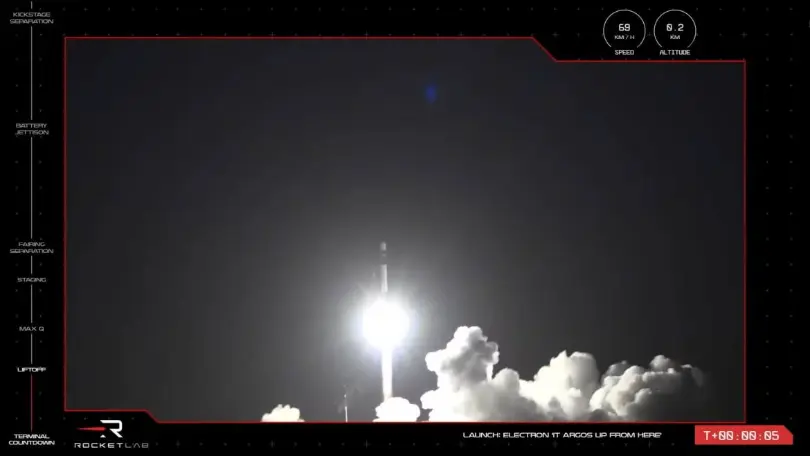
Rocket Lab launches “It Argos Up From Here” mission
Rocket Lab has launched its 31st Electron rocket on the “It Argos Up From Here” mission from Rocket Lab’s private Launch Complex 1B (LC-1B), on the Mahia Peninsula in New Zealand. Liftoff occurred on Saturday, Oct. 8 at 6:09 AM NZT (17:09 UTC on Oct. 7). This launch marks Rocket Lab’s eighth launch of 2022…
-
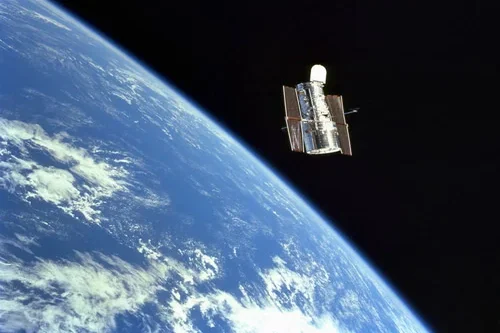
NOAA, NASA, and Northrop Grumman complete major testing for JPSS-2 before launch
The National Oceanic and Atmospheric Administration (NOAA), NASA, and Northrop Grumman have completed the final major test of the Joint Polar Satellite System (JPSS)-2 spacecraft ahead of its delivery to Vandenberg Space Force Base, California, for launch. JPSS-2 is the second of four satellites in NOAA’s JPSS weather tracking constellation and will launch atop a…
-

Microsoft and Xplore team up with NOAA to demonstrate cloud-based satellite operations
An artist’s rendition shows the NOAA-18 satellite in orbit. (NOAA Illustration) What do you do with an aging weather satellite? If you’re the National Oceanic and Atmospheric Administration, you turn to Microsoft Azure and a Seattle-area startup called Xplore to find out if there’s a cheaper way to keep it going. After a yearlong demonstration…
-

NOAA, NASA’s GOES-T weather satellite launches on ULA Atlas V
United Launch Alliance (ULA) has launched the Geostationary Operational Environmental Satellite (GOES)-T advanced weather satellite for the US National Oceanic and Atmospheric Administration (NOAA). GOES-T launched on an Atlas V 541 from Space Launch Complex (SLC)-41 from Cape Canaveral Space Force Station (CCSFS). The launch took place on March 1, 2022, at 4:38 PM EST…
-

How forecasters use GOES weather satellite data for hurricane tracking and forecasting
Since the dawn of the satellite era, weather satellites have been an instrumental and mainstay feature of space exploration. Numerous countries and agencies around the world have launched their own sets of sentinels that keep an ever-watchful eye over our continents and oceans. To say that weather satellites have had a positive impact on weather…
-

NOAA recovers from latest GOES-17 weather satellite issue, plans to replace it next year
The National Oceanic and Atmospheric Administration’s (NOAA’s) Geostationary Operational Environmental Satellite (GOES)-East/17 has suffered another major issue while in orbit, as NOAA aims to replace the problematic satellite with GOES-T. GOES-17 is the second satellite in NOAA’s GOES-R program, a replacement to the aging GOES-N satellites. The GOES satellite constellation is NASA, NOAA’s weather constellation…
-
NOAA weather satellite transitions to new role for U.S. military
A view of the Earth from the EWS-G1 satellite, formerly known as GOES–13, taken on Sept. 1, 2020, from its new location over the Indian Ocean. Credit: U.S. Space Force’s MARK IV-B Program Office A weather satellite built and launched for NOAA in 2006 to help track hurricanes approaching the United States has been repositioned…
-

NOAA awards Xplore $670,000 to study the options for space weather observatory
Artwork shows Xplore’s Xcraft probe observing the sun in different spectral bands. (Xplore Illustration) Seattle-based Xplore has won a $670,111 award from the National Oceanic and Atmospheric Administration to look into the feasibility of sending a solar observatory to a gravitational balance point that’s a million miles from Earth. From that spot, known as the…
-
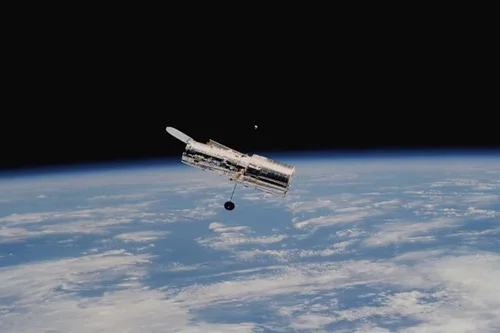
DSCOVR resumes operations after eight-month outage
Artist’s concept of the Deep Space Climate Observatory. Credit: NOAA The Deep Space Climate Observatory has resumed regular observations after NOAA and NASA engineers uplinked a software patch to the spacecraft a million miles from Earth, restoring data on space weather and a daily series views of the sunlit side of our home planet. The…