
Tag: Parker Solar Probe
-

Space Science in 2026: New lunar explorers, Mars missions, and space telescopes
With many missions on the manifest, the new year promises to be packed with space science. Two interplanetary spacecraft will arrive at their destinations as another Mars window opens in late 2026. Meanwhile, multiple space telescopes have their launch dates set for this year, and the schedule promises an increased cadence for lunar missions. The…
-
Parker Solar Probe takes images close to the Sun as primary mission winds down
On Dec. 24, 2024, NASA’s Parker Solar Probe traveled closer to the Sun than any spacecraft had before. During this close approach, or perihelion, the spacecraft’s four instruments observed the Sun’s atmosphere from inside. This week, NASA released images collected by the spacecraft’s Wide-Field Imager for Solar Probe (WISPR) instrument. Since the close approach in…
-
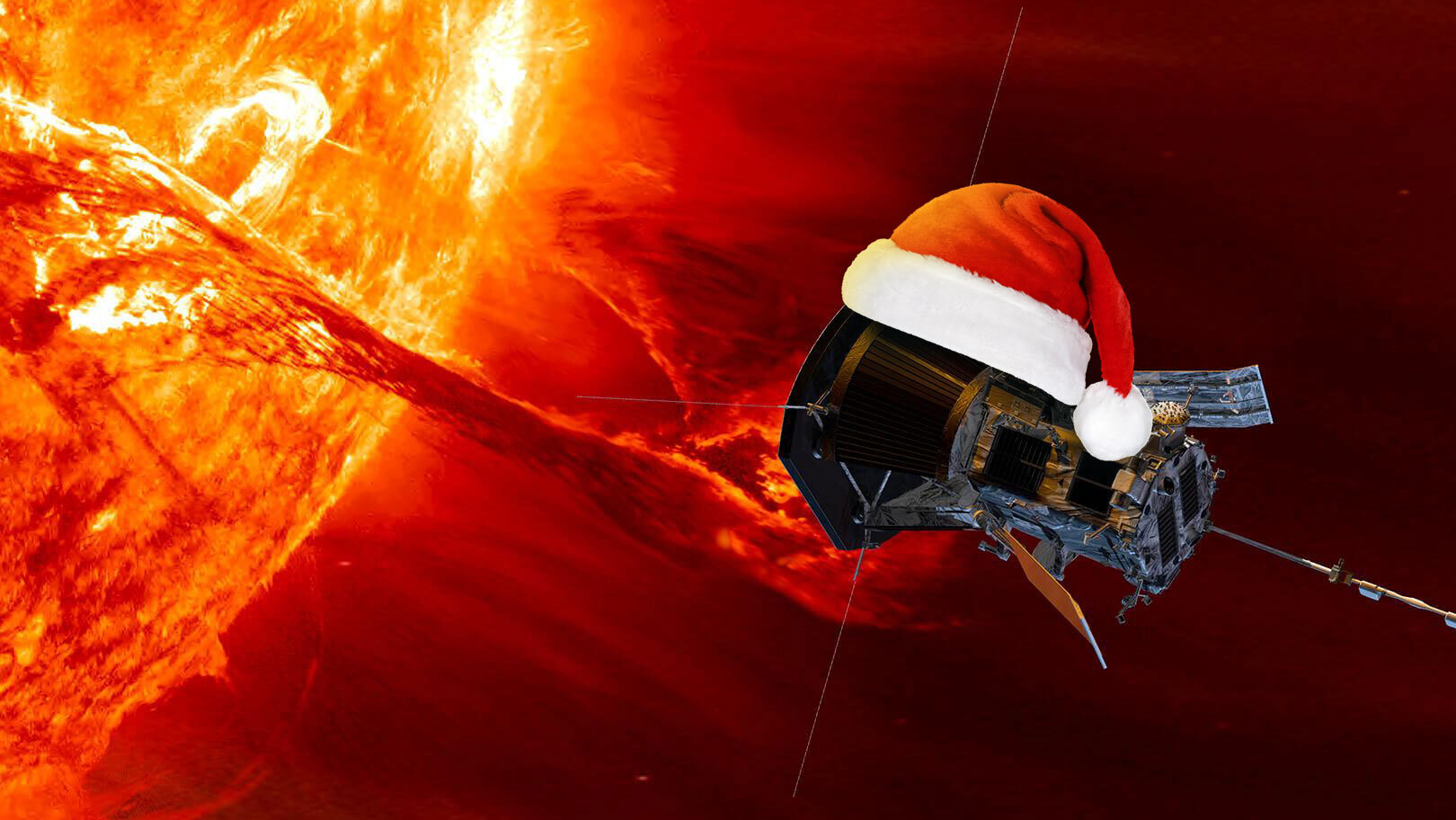
We’re about to fly a spacecraft into the Sun for the first time
Twas the night before Christmas, when all through the Solar cycle, Not a sunspot was stirring, not even a burst; The stockings were all hung by the corona with care, In hopes that the Parker Solar Probe would soon be there. Almost no one ever writes about the Parker Solar Probe anymore. Sure, the spacecraft…
-
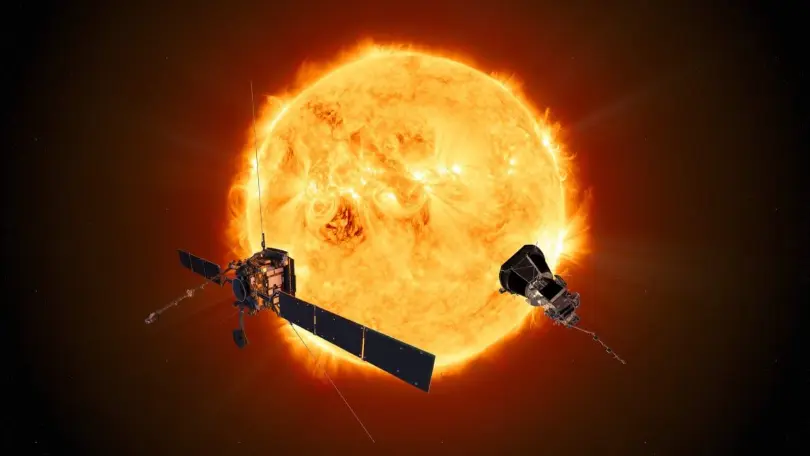
NASA and ESA missions unexpectedly collaborate to reveal what accelerates solar winds
As the solar wind moves away from the Sun, it cools slower than expected and accelerates. Where the energy that powers this phenomenon comes from has long been unknown. NASA’s Parker Solar Probe and the European Space Agency’s (ESA) Solar Orbiter, when they coincidentally lined up to observe the same solar wind stream, provided scientists…
-
Parker Solar Probe pulls back the veil on Venus’s night side
When flying past Venus in July 2020, Parker Solar Probe’s WISPR instrument, short for Wide-field Imager for Parker Solar Probe, detected a bright rim around the edge of the planet that may be nightglow — light emitted by oxygen atoms high in the atmosphere that recombine into molecules in the nightside. The prominent dark feature…
-
Carrington Event still provides warning of Sun’s potential 161 years later
On 28 August 1859, a series of sunspots began to form on the surface of our stellar parent. The sunspots quickly tangled the Sun’s magnetic field lines in their area and produced bright, observed solar flares and one — likely two — Coronal Mass Ejections, one major. The massive solar storm impacted our planet on…
-
Carrington Event still provides warning of Sun’s potential 161 years later
On 28 August 1859, a series of sunspots began to form on the surface of our stellar parent. The sunspots quickly tangled the Sun’s magnetic field lines in their area and produced bright, observed solar flares and one — likely two — Coronal Mass Ejections, one major. The massive solar storm impacted our planet on…
-
Solar Orbiter reveals closest pictures, new science of the Sun
The European Space Agency (ESA) and NASA have released the first pictures and preliminary findings captured by the Solar Orbiter, including intriguing glimpses of “campfires” near the solar surface that could shed new light on one of the biggest solar mysteries scientists are eager to learn more about. Numerous other scientific areas of intrigue were…
-
Solar Orbiter reveals closest pictures, new science of the Sun
The European Space Agency (ESA) and NASA have released the first pictures and preliminary findings captured by the Solar Orbiter, including intriguing glimpses of “campfires” near the solar surface that could shed new light on one of the biggest solar mysteries scientists are eager to learn more about. Numerous other scientific areas of intrigue were…
-
NASA and ESA Solar Stalkers mark milestones
Two intrepid spacecraft are dancing with the Sun and making great progress toward the goal of learning more about our star. After NASA announced that Parker Solar Probe (PSP) had sent the “Status A” beacon after its fifth close flyby of the Sun, the European Space Agency (ESA) has announced that its Solar Orbiter has…