
Tag: Planetary Science
-

Tiny thrusters to do heavy lifting as Japanese probe approaches Venus
Artist’s concept of Japan’s Akatsuki spacecraft at Venus. Credit: JAXA/Akihiro Ikeshita Inside a month until its next chance to swing into orbit around Venus, Japan’s Akatsuki spacecraft has weathered unexpectedly “severe” conditions after missing an arrival opportunity in 2010, according to the mission’s project scientist. The space probe accomplished its last targeting maneuver Oct. 11…
-
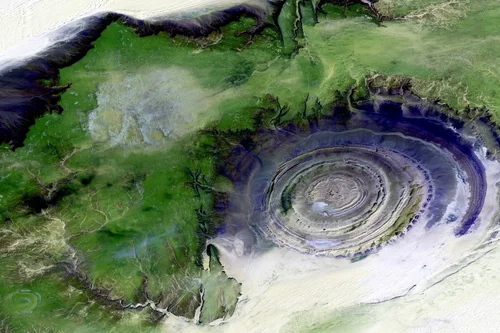
Solar wind blasting away Martian atmosphere
STORY WRITTEN FOR CBS NEWS & USED WITH PERMISSION The solar wind, the million-mile-per-hour stream of charged particles blasted away from the sun, is slowly but surely stripping away Mars’ atmosphere and likely played a major role in turning the red planet from a habitable world in the distant past into the dry, frozen wasteland seen today,…
-

Charon takes center stage in new batch of New Horizons images
This enhanced color view of Charon comes from New Horizons’ Ralph color camera. The colors highlight the subtle variations in the composition of Charon’s crust, with the reddish region near the north pole — informally named Mordor Macular — standing out most prominently. Credit: NASA/Johns Hopkins University Applied Physics Laboratory/Southwest Research Institute With a meandering…
-

Secrets behind Pluto’s pastels far from being answered
In this extended color image of Pluto taken by NASA’s New Horizons spacecraft, rounded and bizarrely textured mountains, informally named the Tartarus Dorsa, rise up along Pluto’s day-night terminator and show intricate but puzzling patterns of blue-gray ridges and reddish material in between. This view, roughly 330 miles (530 kilometers) across, combines blue, red and…
-
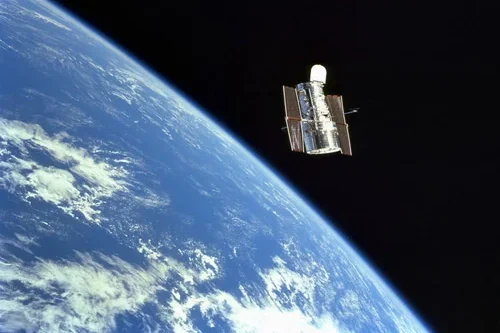
Dawn gets better look at bright spots on Ceres
This image taken by NASA’s Dawn spacecraft, shows Occator crater on Ceres, home to a collection of intriguing bright spots. Credit: NASA/JPL-Caltech/UCLA/MPS/DLR/IDA NASA’s Dawn spacecraft, nearly halfway through its exploration of the dwarf planet Ceres, has returned its best images yet of a mysterious grouping of bright spots inside a crater on the Texas-sized world,…
-
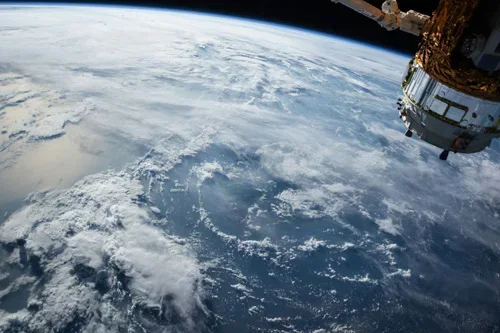
Uranus, Neptune in NASA’s sights for new robotic mission
NASA’s Voyager 2 mission captured this image of Uranus during its January 1986 flyby, the only encounter with the distant ice giant. Credit: NASA NASA has asked scientists to assess how to design and fly robotic space probes to Uranus and Neptune, the last of the solar system’s classical planets yet to be orbited, likely…
-
Dawn enters new orbit closer to Ceres
Dawn captured this view of Ceres on May 7 from a distance of 8,400 miles, or 13,600 kilometers. Credit: NASA/JPL-Caltech/UCLA/MPS/DLR/IDA NASA’s Dawn asteroid explorer has arrived at its new perch 2,700 miles from the dwarf planet Ceres, a vantage point scientists say will yield better views as the probe continues to step closer to the…
-
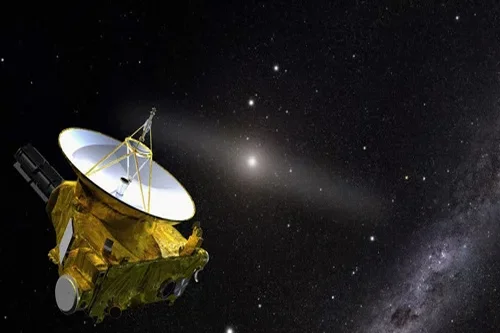
UAE details ambitious plan for Martian weather satellite
Artist’s concept of the Emirates Mars Mission. Credit: Mohammed bin Rashid Space Center Scientists from the United Arab Emirates have announced the Arab world’s first Mars probe will launch in July 2020 and collect global measurements of the Martian atmosphere. Assuming a launch in 2020, the robotic probe will fly on a seven-month cruise to…
-
NASA receives proposals for new planetary science mission
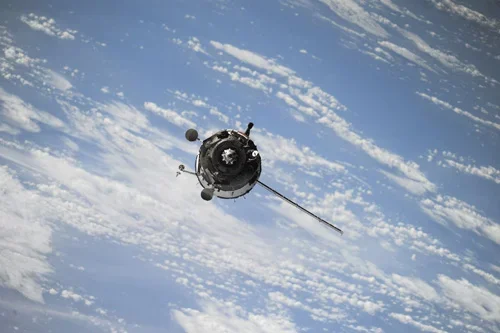
NASA’s 13th Discovery program mission is set for launch in 2021. Credit: NASA The proposals are in for a new NASA robotic mission for launch in 2021 to explore the solar system, and scientists have submitted concepts for probes to the moon, planets, asteroids and comets for a chance to win $450 million in federal…
-
Japanese craft to get second chance after missing Venus in 2010
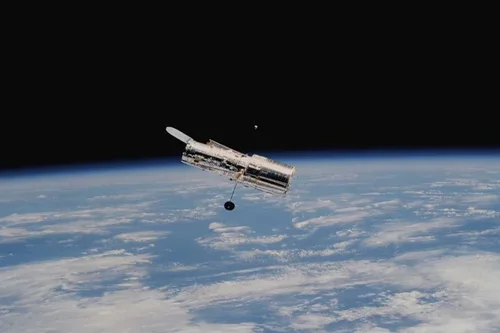
Artist’s concept of the Akatsuki spacecraft at Venus. Credit: JAXA/Akihiro Ikeshita Five years after a balky valve kept it from entering orbit around Venus, Japan’s Akatsuki space probe is again approaching the sweltering planet for another shot at completing its science mission in December, officials said Friday. The robotic spacecraft has spiraled around the inner…