
Tag: Propulsion Systems
-

Lockheed Martin Wins Contract from DARPA to Develop Nuclear-Powered Spacecraft
Lockheed Martin has won a contract from the Defense Advanced Research Projects Agency (DARPA) to develop and demonstrate a nuclear-powered spacecraft under a project called Demonstration Rocket for Agile Cislunar Operations (DRACO). The project will represent a rapid advancement in propulsion technology to benefit exploration and national defense. DARPA partnered with NASA’s Space Technology Mission…
-
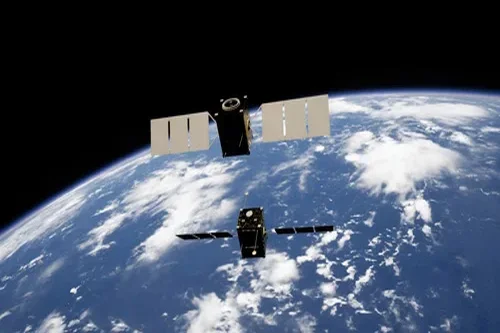
ISRO Successfully Conducts Hot Test of Gaganyaan Service Module Propulsion System
The Indian Space Research Organisation (ISRO) successfully tested the Gaganyaan Service Module Propulsion System (SMPS) on July 19, 2023, at ISRO Propulsion Complex (IPRC), Mahendragiri. This test involved five liquid apogee motor (LAM) engines with a thrust of 440 N and sixteen reaction control system (RCS) Thrusters with a thrust of 100 N. The Service…
-

Phase Four Selected by AFWERX to Develop Critical Technology for Electric Propulsion
Phase Four announced that it has been selected by AFWERX for a Tactical Funding Increase (TACFI) contract in the amount of $4.26M focused on developing a Propellant Decomposition Chamber for propellant-agnostic electric propulsion to address the most pressing challenges in the Department of the Air Force (DAF). The Air Force Research Laboratory and AFWERX have…
-

NASA and Aerojet Rocketdyne Begin Testing on Cutting-Edge Solar Electric Propulsion Thrusters
Engineers from NASA and Aerojet Rocketdyne are beginning qualification testing on the cutting-edge solar electric propulsion (SEP) thrusters that will change the in-space propulsion game. The culmination of this work will see these innovative thrusters fly on Gateway beginning in 2025, making it the most powerful SEP spacecraft ever flown. Gateway is a lunar space…
-

Safran and Terran Orbital Sign a MoA for the Production of Satellite Electric Propulsion Systems in USA
Safran Electronics & Defense and Terran Orbital announced that they have signed a Memorandum of Agreement to study and validate the prerequisites for the production of a new generation of electric propulsion systems for satellites in the United States, based on Safran’s PPSX00 plasma thruster. Safran Electronics & Defense, via Safran Spacecraft Propulsion, and Terran…
-

SETS Successfully Completes Testing of its SPS-25 Propulsion System on EOS SAT-1 Satellite
Space Electric Thruster Systems (SETS), a provider of electric propulsion systems based on Hall thrusters, has successfully tested its SPS-25 space propulsion system on the EOS SAT-1 satellite developed by Dragonfly Aerospace for the EOS Data Analytics space mission. Assembled and shipped from Ukraine in spring 2022, the SPS-25 was installed on the satellite at…
-
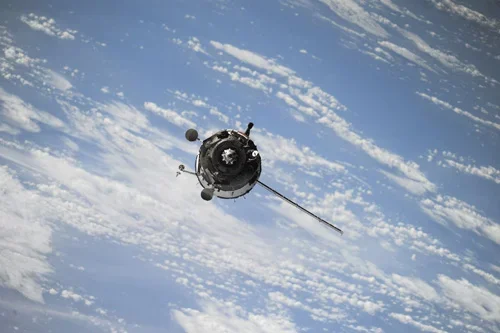
VAST Selects Impulse Space to Provide Propulsion Systems for its Haven-1 Space Station
Vast, a pioneer in space habitation technologies, announced that it has selected Impulse Space, a leader in the development of in-space logistics services, to provide its Haven-1 Space Station propulsion system. Impulse Space and Vast will work closely to integrate the propulsion system as a key subsystem of Haven-1, scheduled to launch on a SpaceX…
-
Pulsar Fusion Partners with Princeton Satellite Systems to Apply Nuclear Fusion Propulsion for Future Space Travel
Pulsar Fusion, developers of clean space propulsion systems and services through fusion, has entered into a partnership with Princeton Satellite Systems (PSS) to apply machine learning to study data from the Princeton field-reverse configuration (PFRC-2) reactor to advance the delivery of practical fusion-propelled spacecraft that can make interstellar space travel practical. The study will help…
-
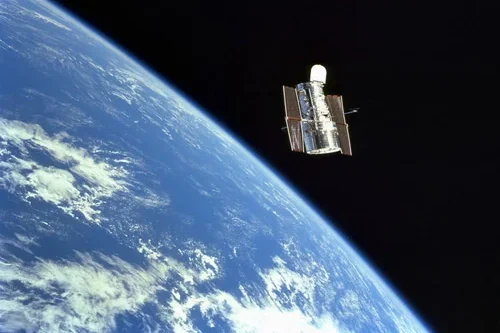
Astra Aims to Improve Life on Earth From Space By Dedicated Small Launches and On-Orbit Mobility
Astra is a space company that is empowering its customers to Improve Life on Earth from Space by providing dedicated small launches and mission-critical on-orbit mobility to smallsat builders and operators around the world. Astra has dedicated, low-cost, orbital launch services for small satellites. It also incorporates space-qualified, hall effect electric propulsion systems currently in…
-

Ursa Major Announces Storable Liquid Draper Rocket Engine For Hypersonics Defense
Ursa Major, America’s privately funded company that focuses solely on rocket propulsion, is excited to introduce Draper, a revolutionary new engine designed to defend against hypersonic weapons. Draper is a storable, 4,000-pound-thrust closed catalyst cycle engine that uses storable hydrogen-peroxide/kerosene propellant, making it ideal for small hypersonic defense vehicles that need to launch on demand.…