
Tag: Spitzer
-

Webb investigates protoplanetary disk in extreme detail, observes glowing interstellar material
The joint NASA, European Space Agency (ESA), and Canadian Space Agency (CSA) James Webb Space Telescope, located at the Sun-Earth Lagrange Point 2, recently utilized its extraordinary suite of infrared instruments to investigate and image a protoplanetary disk around a newborn star. Webb’s observations provided scientists with unprecedented views of the disk, material jets, and…
-

Spitzer gives scientists insights into black hole eating habits
Using data from NASA’s retired Spitzer Space Telescope, scientists have gained new insights into the eating habits of supermassive black holes at the centers of galaxies throughout the universe. These black holes often fluctuate in brightness from the massive clumps of cosmic material falling into them. However, this is not true for the black holes…
-
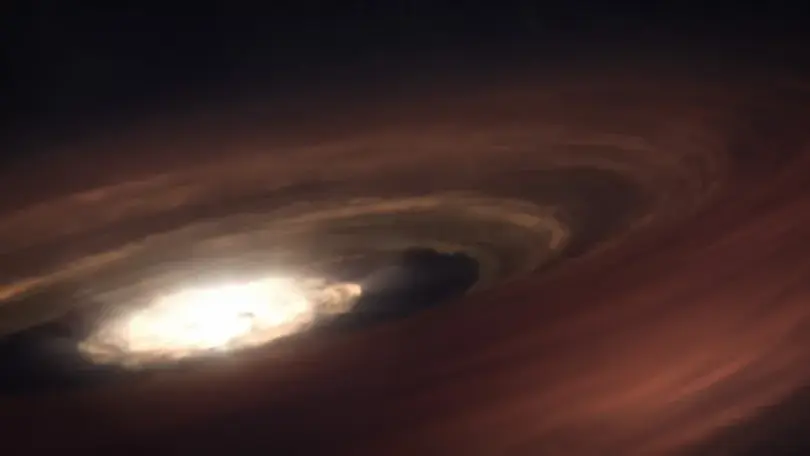
Webb detects neon in young star system, provides insight into planet formation
In 2008, observations from NASA’s now-retired Spitzer infrared space telescope hinted at the presence of neon within the protoplanetary disk of Sun-like star SZ Chamaeleontis (SZ Cha). However, Spitzer’s instruments could not confirm whether this reading was correct. Over a decade after Spitzer’s results were published, the joint NASA, European Space Agency, and Canadian Space…
-
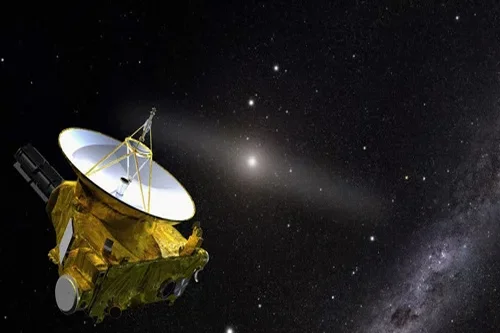
Using data from Spitzer and TESS, scientists discover exoplanet littered with volcanoes
Using data collected by NASA’s retired Spitzer Space Telescope and NASA’s Transiting Exoplanet Survey Satellite (TESS), a team of scientists has discovered an exoplanet that could potentially be covered with volcanoes. The exoplanet is Earth-sized, and the team’s results suggest that the gravitational pull of a neighboring exoplanet could be causing an increase in volcanic…
-
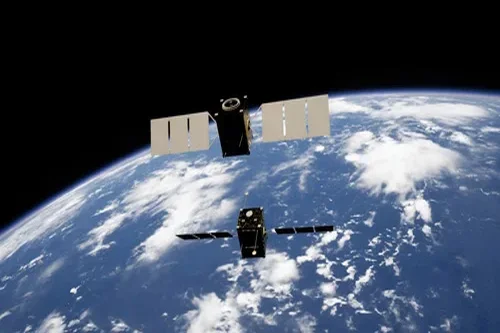
Using data from Spitzer and TESS, scientists discover exoplanet littered with volcanoes
Using data collected by NASA’s retired Spitzer Space Telescope and NASA’s Transiting Exoplanet Survey Satellite (TESS), a team of scientists has discovered an exoplanet that could potentially be covered with volcanoes. The exoplanet is Earth-sized, and the team’s results suggest that the gravitational pull of a neighboring exoplanet could be causing an increase in volcanic…
-
With Hubble and Spitzer, researchers discover water-filled exoplanets
Using data from NASA’s Hubble Space Telescope and retired Spitzer Space Telescope, a group of researchers has discovered two exoplanets that may be largely comprised of water. Located around a red dwarf star 218 light-years away, the two planets are low in density. Furthermore, the researchers, led by Caroline Piaulet of the Trottier Institute for…
-
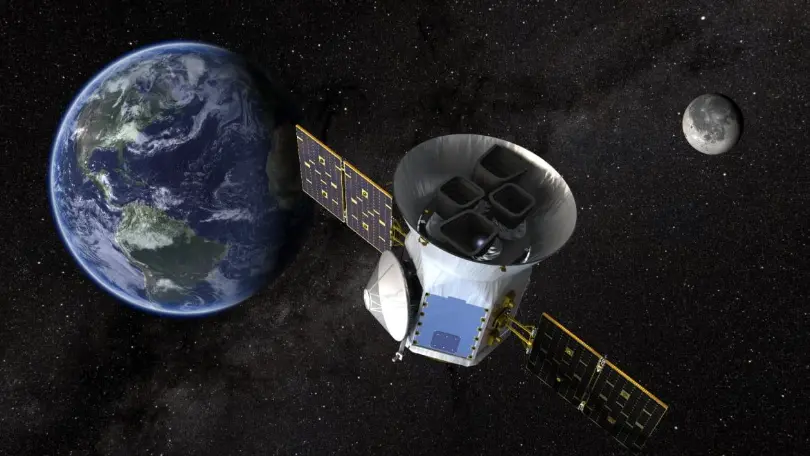
TESS returns from safe mode, the case of the missing exoplanet atmosphere
Following an incident that triggered the telescope to enter safe mode, NASA’s Transiting Exoplanet Survey Satellite (TESS) has resumed normal science operations in its highly elliptical Earth orbit. TESS entered safe mode on Monday, Oct. 10, and was in the protective states until Thursday, Oct. 13, at approximately 22:30 UTC. Meanwhile, a team of researchers…
-
As Webb begins observing exoplanets, scientists use Spitzer data & brown dwarfs to reveal how silicate clouds form
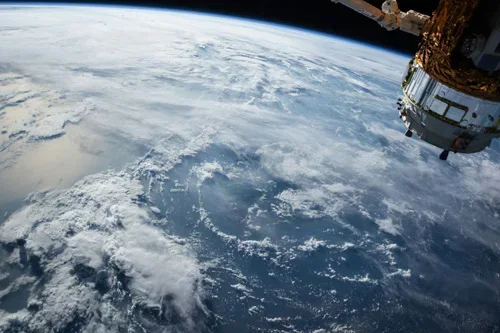
In a new study from a group of researchers in Canada, data from NASA’s now-retired Spitzer Space Telescope was used to determine the conditions under which silicate clouds form on distant exoplanets outside of our solar system — giving scientists insight into what’s inside the atmospheres of exoplanets similar in size, temperature, and composition to…
-
First possible “survivor” planet orbiting a white dwarf seen via NASA telescopes
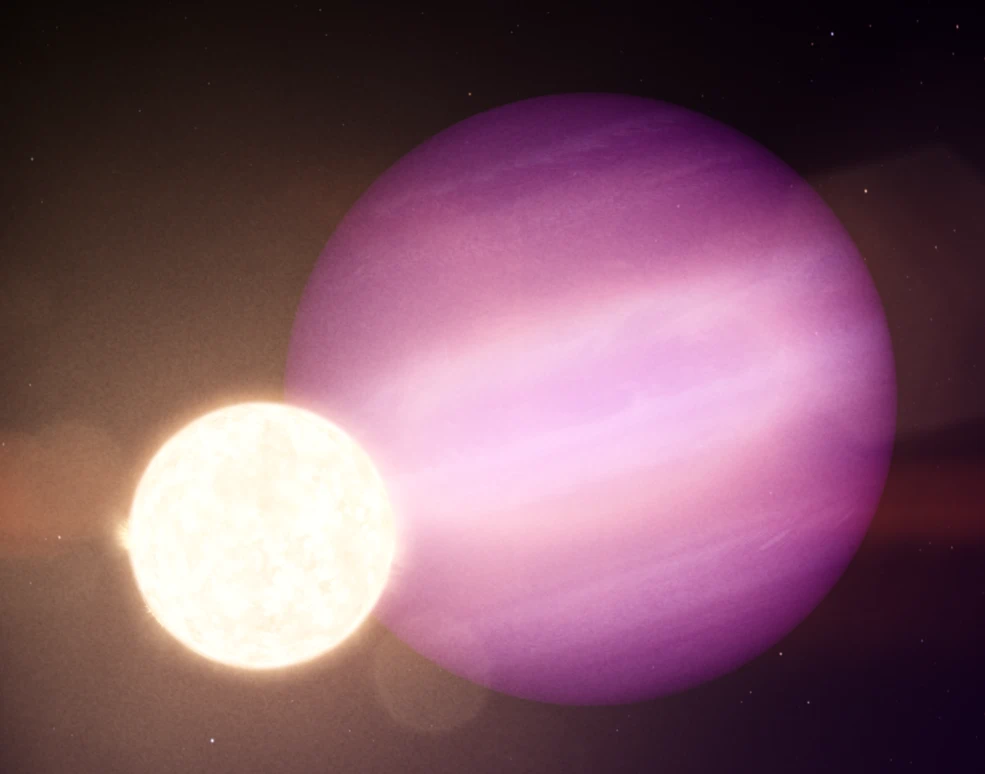
A potential planet… where no planet should be. An international team of astronomers utilizing NASA’s Transiting Exoplanet Survey Satellite and data obtained from the now-retired Spitzer space telescope have reported an astounding potential discovery of a surviving planet closely orbiting a white dwarf. So what’s the big deal? Scientists have found many exoplanets in close…
-
NASA uplinks final command to deactivate Spitzer telescope
Artist’s concept of the Spitzer Space Telescope seen against the infrared sky. Credit: NASA/JPL-Caltech/R. Hurt (SSC) NASA declared the Spitzer Space Telescope’s 16-year mission complete Thursday after sending final commands for the spacecraft to enter hibernation as it drifts farther from Earth. The Spitzer Space Telescope, one of NASA’s original four “Great Observatories,” studied the…