
Tag: SWRI
-

Juno data provides insight into thickness of Europa’s surface ice sheet
Using recent data from NASA’s Juno orbiter, scientists have uncovered new details on the thickness and structure of Europa’s surface ice shell, which encases the Jovian moon’s subsurface ocean. For planetary scientists and astrobiologists, Europa’s ocean makes the moon one of the most likely places for life to exist outside of Earth. Since entering orbit…
-
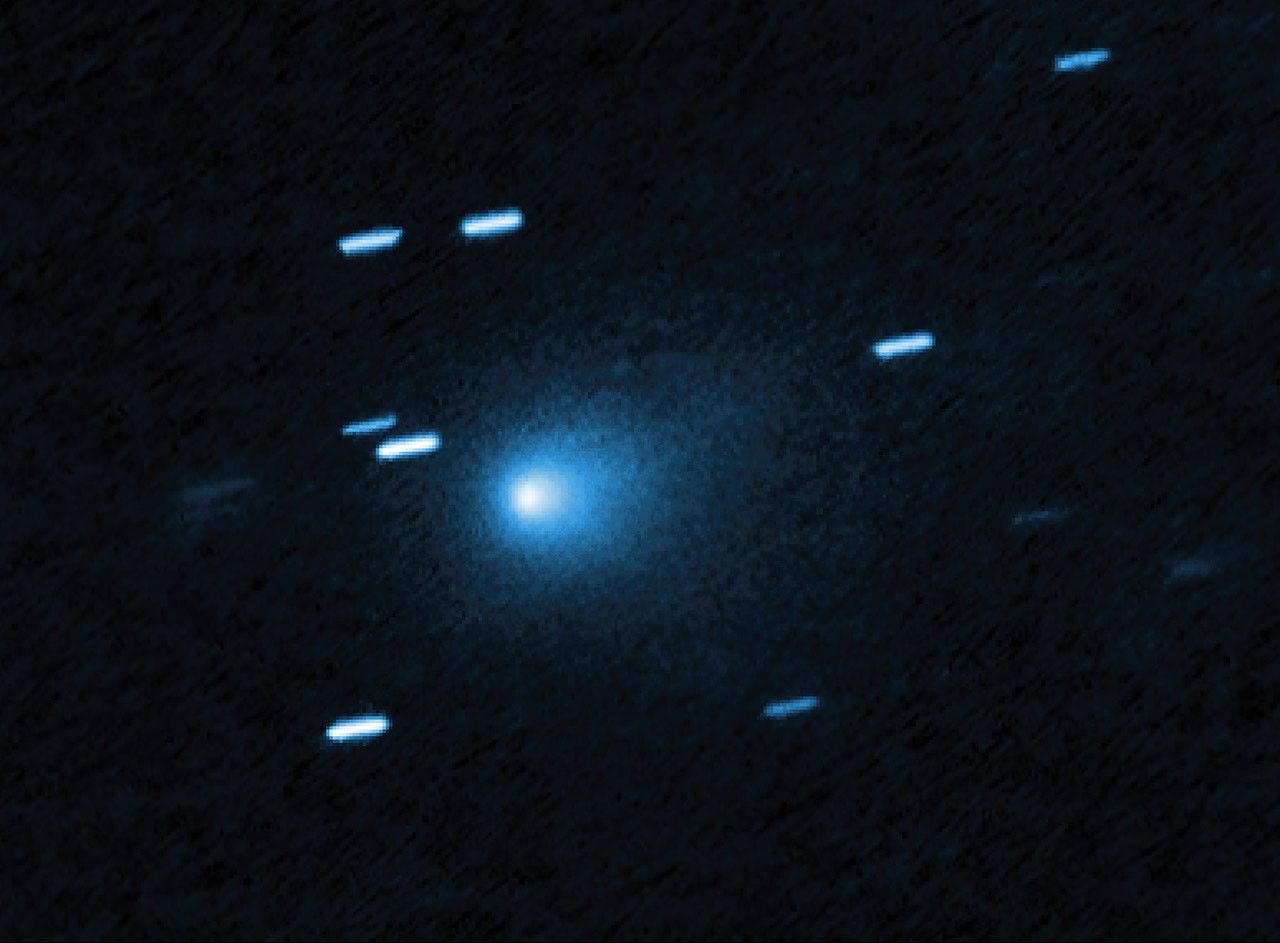
We’re about to find many more interstellar interlopers—here’s how to visit one
A few days ago, an inscrutable interstellar interloper made its closest approach to Mars, where a fleet of international spacecraft seek to unravel the red planet’s ancient mysteries. Several of the probes encircling Mars took a break from their usual activities and turned their cameras toward space to catch a glimpse of an object named…
-

NASA selects missions to observe the sun and its impact on Earth
An eruption from the sun on April 16, 2012, was captured here by NASA’s Solar Dynamics Observatory. Credit: NASA NASA has selected two satellite missions for launch on the same rocket in 2022 to investigate the origins of the solar wind and explore the interaction between magnetic fields around Earth with those from the sun.…
-
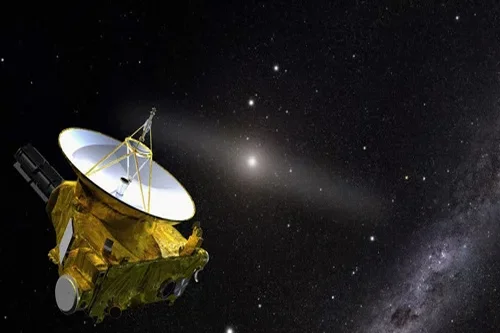
New Horizons finds Ultima Thule has an unexpected, flattened shape
Scientists’ understanding of the shape of Ultima Thule, officially known as 2014 MU69, has changed since the New Horizons spacecraft’s Jan. 1 flyby. Imagery downlinked by the probe in recent weeks suggests Ultima Thule’s two lobes have a flatter shape than the spherical projection suggested by the flyby’s initial pictures. The dashed blue line marks…
-
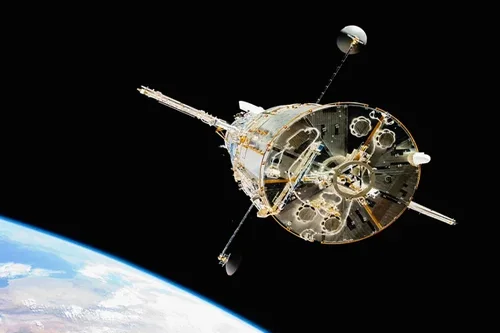
Ultima Thule revealed in new detail with fresh flyby image
A new image captured minutes before NASA’s New Horizons probe zipped by a rocky object in the Kuiper Belt on New Year’s Day shows the dual-lobed world — nicknamed Ultima Thule — is covered with intriguing fractures and a large crater-like depression that could provide clues about the early history of the solar system. The…
-
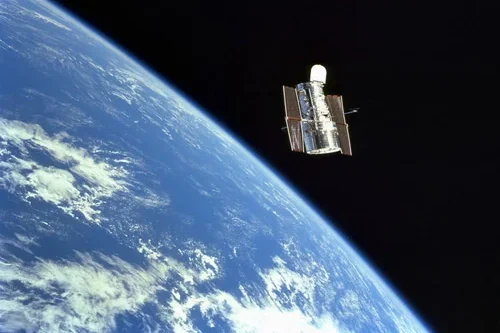
Ultima Thule revealed in new detail with fresh flyby image
A new image captured minutes before NASA’s New Horizons probe zipped by a rocky object in the Kuiper Belt on New Year’s Day shows the dual-lobed world — nicknamed Ultima Thule — is covered with intriguing fractures and a large crater-like depression that could provide clues about the early history of the solar system. The…
-
Most distant object ever visited resembles a snowman
The Kuiper Belt Object 2014 MU69 — nicknamed “Ultima Thule” — appears as a dual-lobe contact binary in this photo captured by NASA’s New Horizons spacecraft at a distance of around 18,000 miles (28,000 kilometers). Credit: NASA/SWRI/JHUAPL LAUREL, Maryland — The first well-resolved image of the faraway chunk of rock fleetingly visited by NASA’s New…
-

New Horizons scientists elated as Ultima Thule’s shape comes into view
At left is a composite of two images taken by New Horizons’ high-resolution Long-Range Reconnaissance Imager (LORRI), which provides the best indication of Ultima Thule’s size and shape so far. Preliminary measurements of this Kuiper Belt object suggest it is approximately 20 miles long by 10 miles wide (32 kilometers by 16 kilometers). An artist’s…
-
New Horizons phones home, confirms successful flyby
STORY WRITTEN FOR CBS NEWS & USED WITH PERMISSION New Horizons principal investigator Alan Stern of the Southwest Research Institute, center, celebrates with school children at the moment the spacecraft was planned to reach its closest approach to Kuiper Belt object Ultima Thule at 12:33 a.m. EST (0533 GMT) Jan. 1. Credit: NASA/Bill Ingalls NASA’s New Horizons…
-
Video: The New Horizons team hold news conference after flyby declared a success
Watch as the New Horizons team hold a press conference an hour after they received confirmation that the spacecraft had successfully flown by Ultima Thule and had recorded the expected amount of science data.