
Tag: Telescope
-
AMOS Selected to Build PROVIDENCE Space Surveillance Telescope for France
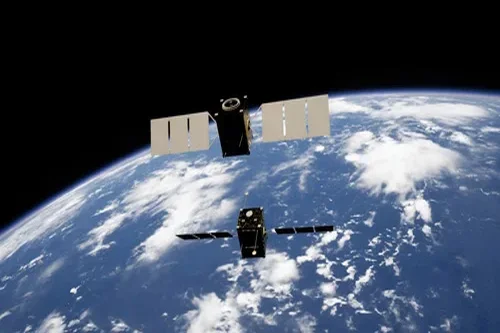
Belgian optical systems company AMOS has been selected by the French aerospace research agency ONERA to design and manufacture PROVIDENCE, a ground-based telescope intended to support space surveillance operations for the French Air and Space Force. Astronomy The 2.5-meter telescope is scheduled to enter service in early 2029 and will be installed at the Haute-Provence…
-
Roman telescope construction complete, moving into final testing ahead of 2027 launch
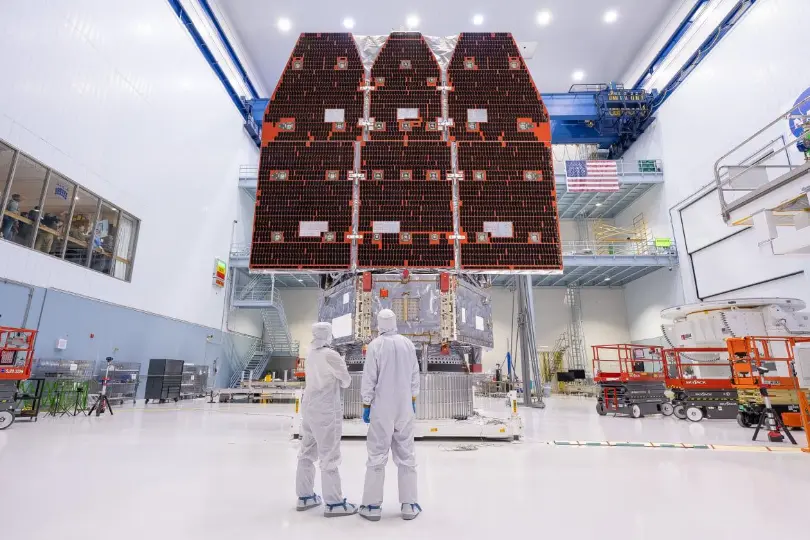
At the end of November, NASA’s next great telescope — the Nancy Grace Roman Space Telescope — officially finished construction. Teams at NASA’s Goddard Space Flight Center in Maryland joined the inner and outer portions of the telescope, completing construction of the multi-billion-dollar telescope on schedule for launch atop a SpaceX Falcon Heavy in May…
-
Wide-field surveys versus precise infrared observations: how Rubin compares to JWST
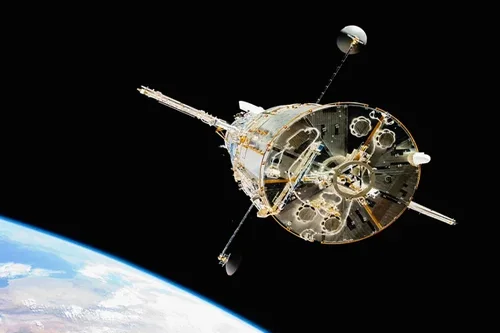
Earlier this year, the new Vera C. Rubin Observatory in Chile officially began scientific operations, becoming the world’s largest and most advanced ground-based telescope. Featuring an eight-meter primary mirror and the world’s largest camera, Rubin promises to deliver exceptional new results and astrophysical research opportunities for scientists worldwide. Meanwhile, situated at the L2 Lagrange point…
-
Webb, Keck observe Titan; find clouds and carbon molecule in northern hemisphere
By combining data from the Keck II telescope and the joint NASA/European Space Agency/Canadian Space Agency James Webb Space Telescope, a group of scientists observed cloud convection in the northern hemisphere of Saturn’s moon Titan — the first time such atmospheric activity has been observed in the region. A majority of Titan’s methane lakes and…
-

Launch Roundup: Starship, Ariane 6 and telescope missions delayed, lunar lander flies
Several significant missions were scheduled for this week, including the third lunar lander to launch in just over a month. The Intuitive Machines-2 (IM-2) mission will explore and analyze the Moon’s subsurface, testing new technologies and paving the way for future lunar missions. NASA is also set to launch its SPHEREx observatory, which will map…
-
Euclid reveals an Einstein ring around a nearby galaxy
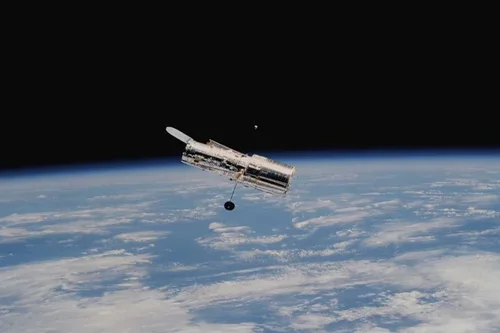
Using the European Space Agency’s Euclid space telescope, astronomers have accidentally found a complete Einstein ring around a nearby galaxy known as NGC 6505. This optical effect shows a distorted image of a far-away galaxy as a ring around a separate galaxy in the foreground. NGC 6505’s proximity to Earth and the completeness of its…
-
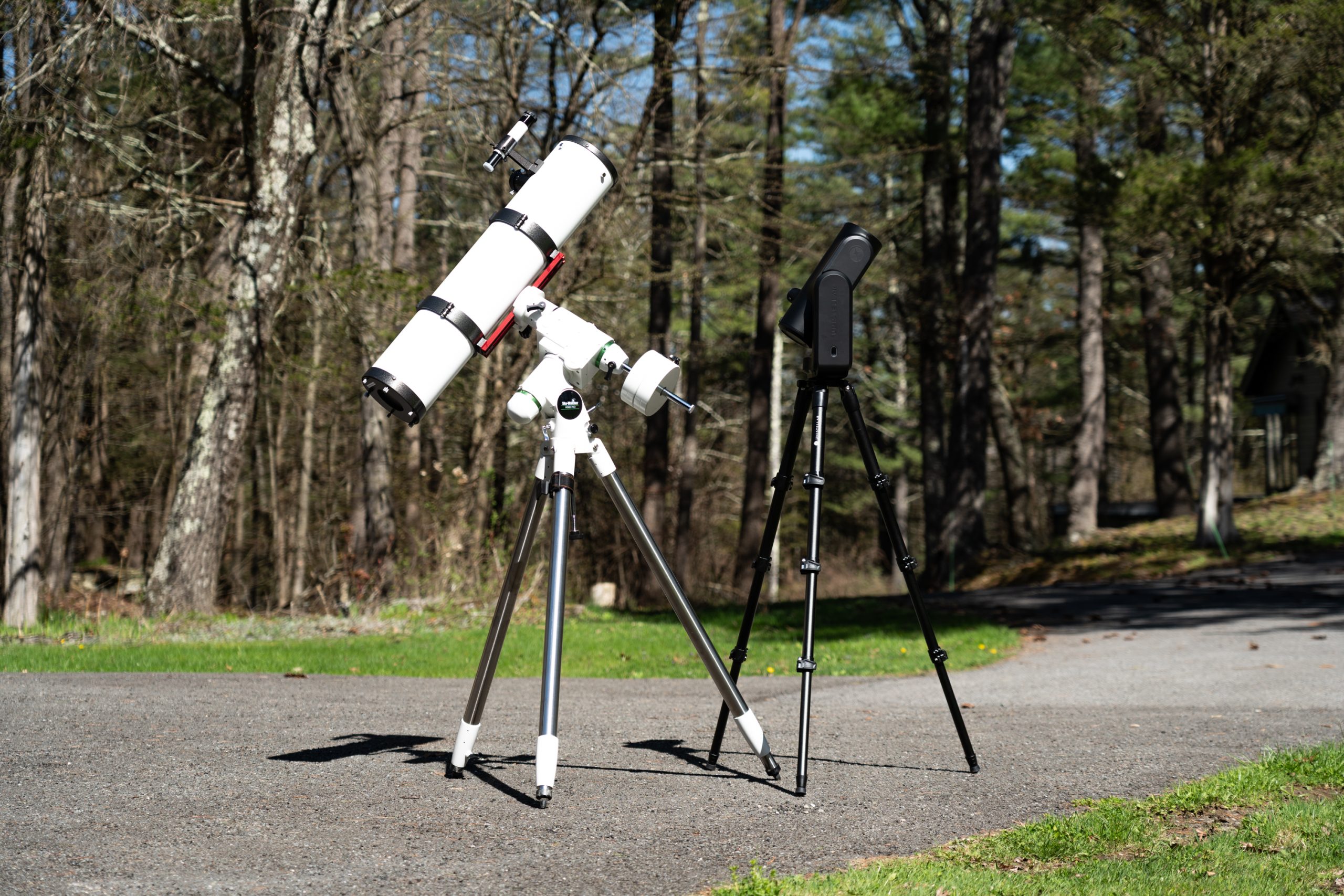
The Unistellar Odyssey smart telescope made me question what stargazing means
It’s been 300 years since Galileo and Isaac Newton started fiddling around with lenses and parabolic mirrors to get a better look at the heavens. But if you look at many of the best amateur telescopes today, you’d be forgiven for thinking they haven’t progressed much since. Though components have certainly improved, the basic combination…
-

ESA reveals Euclid’s first five images
The European Space Agency (ESA) has released the first full-color images from Euclid, the agency’s latest space telescope designed to study the nature and distribution of dark matter and dark energy in the universe. During a video broadcast on Nov. 7, scientists, engineers, and agency officials unveiled the telescope’s first five images. The images reveal…
-

Japanese H-IIA launches X-ray telescope and lunar lander
The Mitsubishi Heavy Industries H-IIA launch vehicle, as its career is being wound down in favor of the H3, launched the Smart Lander for Investigating Moon (SLIM) robotic lunar lander and the X-Ray Imaging and Spectroscopy Mission (XRISM) X-ray telescope on its 47th flight. After this flight, the second of 2023 for the H-IIA, the…
-
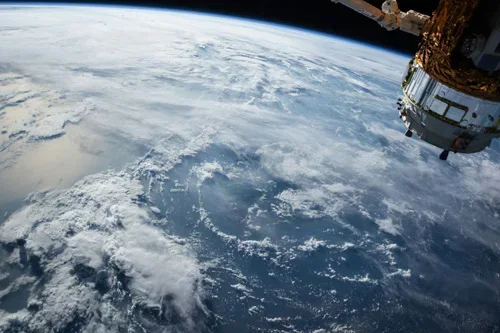
As Webb begins observing exoplanets, scientists use Spitzer data & brown dwarfs to reveal how silicate clouds form
In a new study from a group of researchers in Canada, data from NASA’s now-retired Spitzer Space Telescope was used to determine the conditions under which silicate clouds form on distant exoplanets outside of our solar system — giving scientists insight into what’s inside the atmospheres of exoplanets similar in size, temperature, and composition to…