
Tag: United Launch Alliance
-

Weather forecast favorable for Atlas 5 to launch NASA asteroid probe Thursday
File photo of Atlas 5. Credit: United Launch Alliance CAPE CANAVERAL — Prognosticators are predicting favorable weather conditions to launch an Atlas 5 rocket Thursday and send NASA’s OSIRIS-REx spacecraft on its interplanetary journey to interrogate an asteroid and collect a surface sample for return to Earth. The Air Force’s 45th Weather Squadron at Cape…
-
Asteroid probe apparently unharmed in nearby SpaceX explosion, passes its FRR
The encapsulated OSIRIS-REx was lifted into the VIF on Monday. Credit: NASA-KSC/Dimitri Gerondidakis CAPE CANAVERAL — NASA says initial checks show no damage to the Atlas 5 rocket or the agency’s asteroid-bound OSIRIS-REx spacecraft that stood within the Vertical Integration Facility just a mile away from the SpaceX explosion Thursday. The United Launch Alliance vehicle…
-
Animation of OSIRIS-REx mission from liftoff to return home
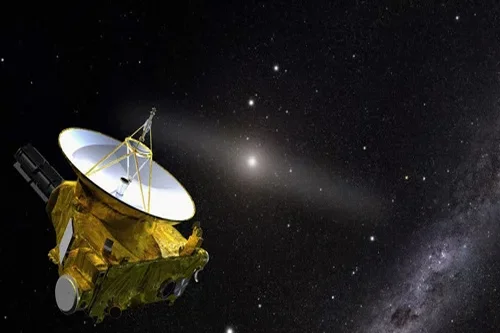
This NASA animation depicts the OSIRIS-REx mission beginning with liftoff aboard a United Launch Alliance Atlas 5 rocket from Cape Canaveral on Sept. 8, embarking on a voyage to rendezvous and orbit Asteroid Bennu. The spacecraft will use its cameras, laser and spectrometer instruments to map the mountain-size rock starting in late 2018 before performing…
-
Probe hoisted aboard launcher to leave Earth next week on asteroid adventure
File photo of Atlas payload lift and mate. Credit: United Launch Alliance CAPE CANAVERAL — NASA’s OSIRIS-REx spacecraft today moved a step closer to starting a voyage to explore an uncharted world in our solar system — the mountain-sized Asteroid Bennu — by joining the booster rocket that will propel it from Earth next week.…
-
Atlas 5 rocket rehearses countdown for upcoming launch to Asteroid Bennu
The venting Atlas 5 during today’s WDR. Credit: NASA-KSC/Kim Shiflett CAPE CANAVERAL — Running through a practice countdown to check systems before launching a NASA sample-return probe to Asteroid Bennu in exactly two weeks, an Atlas 5 successfully completed its Wet Dress Rehearsal today. The United Launch Alliance rocket will propel the OSIRIS-REx spacecraft on…
-

Photos: Atlas 5 rocket assembled for launch of asteroid sample return probe
At Cape Canaveral’s Vertical Integration Facility, adjacent to the Complex 41 launch pad, workers with United Launch Alliance stacked the Atlas 5 rocket that will propel NASA’s OSIRIS-REx spacecraft on its voyage to Asteroid Bennu. On Monday, Aug. 8, the first stage was erected onto the mobile launch platform parked inside the assembly building. A…
-
Sophisticated new U.S. weather observatory being readied for launch
The GOES R weather satellite folded up for launch. Credit: Lockheed Martin CAPE CANAVERAL — On the cusp of advancing U.S. weather forecasting, a powerful new satellite was shipped from its Denver factory to the Cape today in preparation for launch in November. The first-of-its-kind observatory dubbed GOES R was flown aboard an Air Force…
-
Video: Preview of the OSIRIS-REx mission to sample an asteroid
Watch the pre-flight news conference that introduces NASA’s OSIRIS-REx spacecraft scheduled to launch from Cape Canaveral atop a United Launch Alliance Atlas 5 rocket on Sept. 8. The mission will reach Asteroid Bennu in 2018, capture a sample of the celestial body in 2020 and bring the specimen back to Earth in a special landing…
-

Video: Liftoff of Delta 4 with second GSSAP satellite duo
The United Launch Alliance Delta 4 rocket, standing 206 feet tall and and weighing 720,000 pounds, unleashes 1.1 million pounds of thrust from its main engine and two side-mounted boosters at 12:52 a.m. EDT (0452 today to launch the GSSAP No. 3 and No. 4 satellites for the Geosynchronous Space Situational Awareness Program from Cape…
-
Photos: Delta 4 lights up the sky for night owl launch
Launching the second pair of Geosynchronous Space Situational Awareness Program satellites for the U.S. military, a United Launch Alliance Delta 4 rocket thundered away from Cape Canaveral today at 12:52 a.m. EDT (0452 GMT). Photos by Alex Polimeni/Spaceflight Now See earlier Delta 375 coverage. Our Delta archive.