As the main force in my country’s satellite industry, the Fifth Academy of Aerospace Science and Technology (China Academy of Space Technology) has successfully developed and launched a full spectrum of satellites covering communications, navigation, remote sensing, scientific experiments and manned spaceflight, from “Dongfanghong-1” to “Beidou” networking, from “Chang’e” to capture the moon and “Tianwen” for fire detection. Behind all this is the in-depth collaboration of various professional research institutes within the five institutes. They have jointly built a full-chain satellite development system from overall design, payload development, platform construction to final assembly testing.
The full name of Institute 501 is the General Design Department of China Academy of Space Technology. It is the “chief designer unit” of all satellites, spacecrafts, and deep space detectors developed by the five institutes. It is responsible for leading the entire process from mission demonstration, system definition, indicator decomposition, to whole-satellite integration, test verification, and on-orbit support. If something goes wrong after a satellite goes into space, the first person to be held accountable is always the chief engineer of 501. Previously, 501 was only engaged in national missions (Shenzhou, Chang’e, Tianwen, etc.), but in the face of the explosive demand for low-orbit satellite Internet constellations, 501 has also begun to turn to the two-wheel drive of “national missions + commercial orders”. In order to cope with the demand for low-orbit constellations, 501 has broken the previous “single-piece customization” model and greatly increased the production capacity targets of some key components to adapt to the launch rhythm of low-orbit satellite Internet constellations.
The full name of 502 Institute is Beijing Institute of Control Engineering. It is the only research and development unit in my country that covers the full spectrum of GNC systems including “satellites, spacecrafts, deep space detectors, and missiles”. The GNC systems of all Shenzhou manned spacecraft and Tianzhou cargo spacecraft launched so far in our country were developed by 502 Research Institute. Institute 502 not only makes reaction flywheels, star sensors, control computers and other hardware, it also has another core barrier which is its system-level control algorithm and on-orbit intelligence. Previously, after a remote sensing satellite operated in orbit for 5 years, the life of the flywheel was running short. Institute 502 uploaded a new algorithm and only used magnetic torque converter + gravity gradient torque to achieve three-axis stability and extend its life by 2 years. In the past, 502 Research Institute has been criticized by commercial companies for its expensive products and slow delivery. However, 502 Research Institute has made some new changes in recent years. It has not only launched a “commercial version” product line to reduce the prices of flywheels, star sensors and other products, but also provides customized GNC solutions for some commercial aerospace companies, and no longer “only sells complete machines.” Although some commercial companies are gradually becoming competitors of the 502 Institute, for key tasks, you still have to choose the 502 Institute’s products, such as the test satellite of a certain low-orbit satellite Internet constellation and a certain military reconnaissance satellite. The GNC system still prefers the 502 Institute.
The full name of the 504 Institute is Xi’an Space Radio Technology Research Institute. It is the largest and most comprehensive professional space radio technology research institute in my country. It is responsible for the development of measurement and control, data transmission, navigation, antennas and microwave systems for most of my country’s spacecraft. During the development of the Beidou system, the 504 Institute, as the core development unit for navigation signal system design, spaceborne atomic clock interface, and RDSS short message system, comprehensively conquered more than 20 key technologies such as the Beidou-3 inter-satellite link, and achieved 100% localization of satellite payloads. In the past, the products of the 504 Institute were known for their high reliability, high cost, and long cycle. However, in the face of the rapid development of commercial aerospace in recent years, the 504 Institute has also begun to undergo some transformations. It not only tried to launch shelf-type products, but also provided Q/V band gateway terminals for a commercial satellite company’s low-orbit broadband constellation, and gradually began to deeply participate in the commercial aerospace market.
The full name of Institute 508 is Beijing Institute of Space Mechanical and Electrical Engineering. It is my country’s first professional research institute for space optical remote sensing and recovery and landing. It is responsible for the development of spacecraft optical remote sensing payloads, recovery and landing systems, and space agencies. The 2-meter panchromatic/8-meter multispectral camera of my country’s Gaofen-1 and the sub-meter optical camera of Gaofen-2 are both produced by 508 Research Institute. The main parachute, deceleration chute, reverse thrust engine, and landing buffer system of the Shenzhou spacecraft are also developed by 508 Research Institute. With the continuous development of commercial aerospace, Institute 508 has also substantially participated in the construction of my country’s two low-orbit satellite Internet constellations.
The full name of the 510 Institute is the Lanzhou Institute of Space Technology Physics. It is responsible for special technical research such as spacecraft vacuum environment simulation, space physics detection, electric propulsion, atomic frequency standards, and thermal control materials. The technical direction covers the full spectrum of electric propulsion (ion, Hall, and micro-propulsion). It has provided LIPS-200 ion thrusters for Shijian-9, Shijian-20 and other satellites, and has also provided 1.35 for a low-orbit satellite Internet constellation. kW Hall thrusters), atomic frequency standards (batch production of rubidium clocks, leading hydrogen clocks/optical clocks, breaking the Swiss Spectratime monopoly), thermal control materials (coatings, gaskets, PCM full chain) and other directions have created real barriers to its multi-disciplinary cross-integration. For example, a high-throughput communication satellite previously required 10 years in orbit. 510 provided a Hall electric thruster + high-stable rubidium clock + anti-AO coating combination solution, which extended the satellite life from 5 years to 12 years.
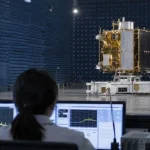
The full name of the 511 Institute is the Beijing Satellite Environmental Engineering Research Institute. It is my country’s largest and most comprehensive spacecraft environmental test center. Its testing capabilities cover all environmental dimensions such as mechanics, thermal, vacuum, electromagnetic, radiation, cleanliness, transportation, and launch support. It supports almost all major projects in my country from returnable satellites to space stations, from lunar sampling to Mars exploration. The 511 Institute has Asia’s largest space environment simulator KM8 (Φ17m×35m), which can accommodate the entire module test of the core module of the Tiangong Space Station. In addition, the 511 Institute has also built a full-spectrum mechanical testing system and a full-band EMC verification system. After 2020, with the vigorous development of the commercial aerospace industry, the 511 Institute gradually began to actively embrace commercial aerospace. It not only set up independent production lines to provide commercial rapid test services, but also opened up standard interfaces to lower the threshold for private enterprises to connect.