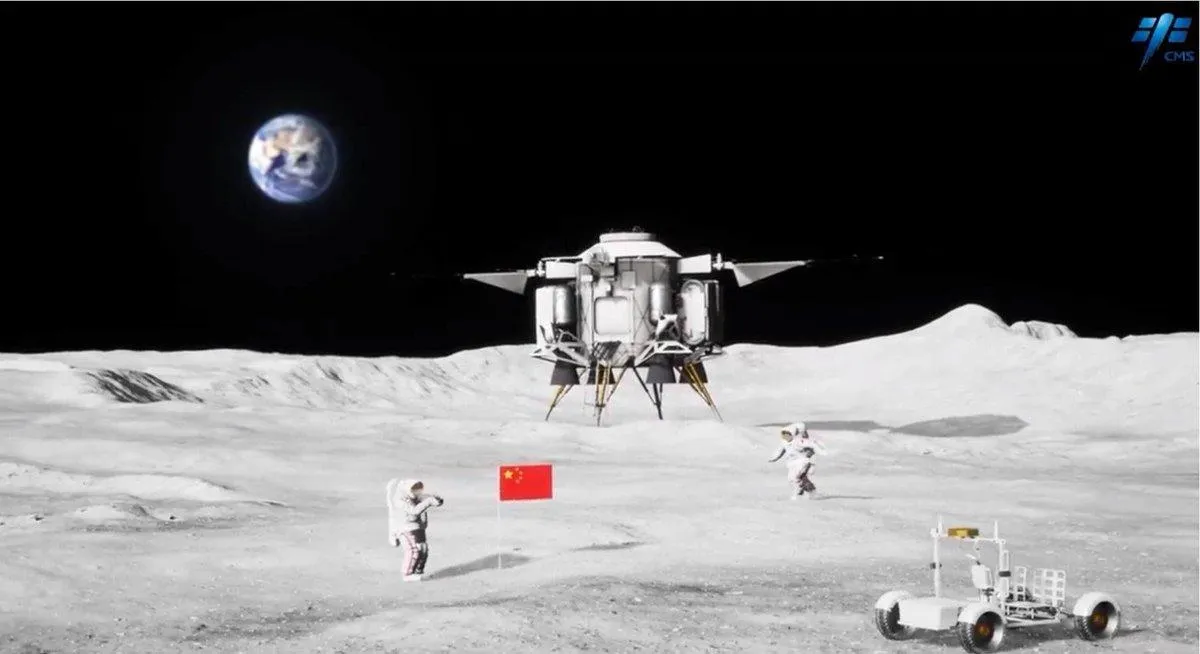
The plan establishes a rehearsal-heavy path toward a crewed landing. Rather than moving directly to a human mission, China intends to validate its hardware through a progression of uncrewed flights that test the lander and the broader landing profile before astronauts are committed to the attempt.
The campaign begins with a standalone mission for the Lanyue lunar lander. That will be followed by a full-scale uncrewed landing rehearsal, demonstrating the complete sequence without a crew aboard. Only after those steps are completed does China plan to attempt a crewed landing, a milestone targeted before the end of the decade. The roadmap references the Mengzhou crew vehicle and the CZ-10 program as elements of the architecture supporting the effort.
China is framing the approach as methodical, with each flight serving as a checkpoint in the buildup to the crewed attempt. The standalone lander test and the uncrewed rehearsal are positioned as prerequisites, ensuring the landing system is proven before human flight.
The sequence signals a disciplined push toward a firm pre-2030 deadline for returning humans to the Moon. The rehearsal-heavy structure stands in contrast to the uncertainty surrounding NASA’s Artemis III timeline, sharpening the competition to return astronauts to the lunar surface.
Attention now turns to the execution of the Lanyue standalone mission and the subsequent full-scale uncrewed rehearsal, the two gating milestones China has named ahead of any crewed landing attempt.