Emerging companies represent the future of commercial spaceflight. As China’s commercial aerospace industry continues to expand, many emerging commercial aerospace companies are exploring new boundaries of commercial aerospace through technology, business models and other methods.
In addition to rockets, satellites, and constellations, real new opportunities for China’s commercial aerospace are emerging in “new infrastructure” and “new application portals.”
01
Why focus on emerging companies?
Emerging companies represent the future of commercial spaceflight. In the past 10 years, the “commercial aerospace” industry led by giant low-orbit satellite Internet constellation networking technology has developed rapidly in China. The massive construction of commercial satellite constellations, ground stations and other aerospace infrastructure has put forward new requirements for communication network security and space orbit security. At the same time, as satellite data applications and new aerospace technologies continue to penetrate and integrate into other industries, new aerospace + concepts such as aerospace + manufacturing and aerospace + data centers are increasingly mentioned.
In these expanding emerging fields, many emerging commercial aerospace companies are constantly exploring new boundaries of commercial aerospace through technology, business models and other methods.
In the definition of Nihao Space, “emerging companies” do not mean “newly established companies”, but refer to those companies that are on the new track, new infrastructure, and new application entrances for commercial aerospace. They may not necessarily be the largest companies today, but they are likely to be the most interesting variables to watch in the next round of expansion of the commercial space industry.
The selection of the “2026 China’s Top 10 Emerging Commercial Aerospace Companies” list will systematically evaluate the companies with the most development potential in various subdivisions of China’s commercial aerospace in the next 10 years, and sort out where the next “trillion” industry in commercial aerospace will be.
02
How does HelloSpace evaluate emerging companies?
Unlike relatively mature tracks such as rocket and satellite manufacturing, the value of an emerging company often does not lie in how big it is today, but in whether it has seized the key entrance to the next round of industrial expansion.
Therefore, “Hello Space” is mainly judged comprehensively from the following four aspects in the selection of this list:
1) Technological innovation capability
Whether to form differentiated capabilities in key directions such as space computing, inter-satellite laser communications, on-board AI, electric propulsion, satellite Internet payloads, and ultra-low orbit constellations.
2) Scenario landing ability
Whether to truly cut into the clear demand scenario instead of staying at the conceptual level.
3) Engineering and commercial verification capabilities
Whether to complete key technology verification, obtain core customers, and enter the real task or order system.
4) Long-term growth potential
Is it possible to become the next round of commercial aerospace infrastructure or a key link?
03
Introduction to typical emerging companies
Based on the above capabilities, we selected 15 representative companies from the national commercial emerging companies and divided them into 4 types according to their business scope.
1. New generation of satellite and constellation explorers
Terrestrial Moon: It is a space intelligence technology research company dedicated to realizing connection through computing and realizing sharing through connection. The company uses the cross-development of AI technology and aerospace technology to promote the construction of space computing systems to build space computing networks; it is a private commercial aerospace company with the ability to complete the overall delivery of satellites and ground systems overseas;
Juntian Aerospace: Headquartered in Beijing, it is a cutting-edge spacecraft R&D and manufacturing high-tech enterprise. It is committed to significantly reducing satellite development costs through integrated, standardized and modular design of satellite construction methods, and carrying out the research and development of commercial satellites with high cost performance and wide application in multiple fields;
Sederet: The company has the largest private commercial satellite manufacturing base in central my country. Its main business covers satellite platform research and development, entire satellite manufacturing and measurement and operation control services. The electromagnetic environment monitoring satellite it developed was selected into the “Zhuzhou Electromagnetic Spectrum Monitoring Constellation” and is Zhuzhou’s main model to promote the application of Beidou + low-altitude industry;
Yuncheng Satellite: Its main business includes the design, development and delivery of high-precision remote sensing smart satellites; change monitoring services based on remote sensing data and satellite remote sensing industry application services;
Zhongke Xiguang: Mainly engaged in hyperspectral remote sensing satellite research and development, constellation operations and satellite data application services; the “Xiguang-1” series of satellite constellations it developed have built a monitoring system including methane monitoring cameras, hyperspectral cameras and other payloads, filling the gap in domestic commercial dual-carbon monitoring satellites. Xiguang-1 plans to build a hyperspectral remote sensing constellation system containing 158 satellites. As of May 2025, more than ten satellites including Tanli have been launched;
Seth Base: A commercial aerospace enterprise focusing on the construction of ultra-low orbit remote sensing satellite constellations. The “Double Super Constellation” (ultra-low orbit and ultra-high-resolution constellation project) jointly launched by the company and Tianjin TEDA Investment Holdings Co., Ltd. uses ultra-low orbit (150-300 kilometers) to achieve high-resolution observation, low communication delay and low-cost data acquisition. The constellation plans to launch 48 satellites. The first verification satellite of this constellation will be launched in July 2023.
2. A new generation of rocket innovators
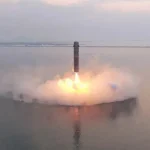
Arrow Technology: As an emerging recyclable rocket R&D company, Arrow Technology adopts the same “sea splash” recovery method as the Starship Level 2 in terms of recovery method. In 2025, it completed the reuse hot test of the “Yuanxingzhe 1” test Arrow sea splash recovery engine, servo mechanism and electrical equipment, realizing a closed loop of technical verification of the sea splash recovery mode.
3. Key suppliers of new infrastructure
Aurora Skycom: The company completed China’s first in-orbit 400Gbps inter-satellite laser communication test, providing key technical verification for future satellite Internet network operations. Inter-satellite link capabilities are the infrastructure layer that will realize the value of future constellations;
Helium Star Optical Alliance: As one of the suppliers of inter-satellite laser communication payloads for the Star Network, Helium Star Optical Alliance has joined hands with NationStar Aerospace to explore the application of “inter-satellite laser communication” payloads in the field of “space computing”, allowing laser communications to empower space computing power and become a key capability for the next “trillion” aerospace industry;
Yufan Lingguang: Provider of laser communication optical transmission link solutions. It is a high-tech enterprise focusing on the R&D and manufacturing of optical transmission subsystems and modules for laser communication terminals. Its products include laser light sources, optical amplification systems, optical modulation modules, detection and reception units and highly integrated subsystems. It is the core component supplier of laser communication terminals;
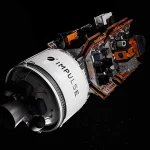
Yidong Aerospace: One of the leading companies in electric propulsion systems in China, its products are used in several national key models and commercial satellite missions. Currently, the company has more than 300 orders on hand, successfully delivered more than 200 products, and has more than 170 propulsion systems flying in orbit;
Satellite Testing Future: On-board AI payload supplier, focusing on satellite intelligence and enabling efficient aerospace information services. The company is committed to the in-depth integration of “AI + aerospace” and provides leading space-based intelligent solutions for communications, remote sensing, situational awareness, space computing and other fields;
Xingyi Lianxin: In the domestic satellite Internet field, it is the first commercial aerospace company focusing on satellite communication payload system design and product development. The “satellite routing” load developed by it is oriented to the “direct mobile phone connection” scenario of the satellite Internet, and is an important component to realize the integrated interconnection and interoperability of the 6G network between heaven and earth;
Xingsi Semiconductor: Positioned as a “5G Internet of Everything Connection Chip” company, focusing on 5G/6G cellular and satellite Internet technology, it is committed to providing full-scenario air, space and ground integrated baseband chips and solutions. The company has built a full-stack independent research and development system covering core modules such as baseband algorithms, radio frequency transceivers, and protocol stack software.
4. New players in the extension of the industrial chain
Guanglian Airlines: In 2025, Guanglian Airlines entered the rocket tank industry by acquiring 51% of Tianjin Yuefeng’s equity, successfully entered the commercial aerospace field, and obtained the resources of domestic leading rocket companies. It is an important milestone in the rapid expansion of the domestic commercial aerospace industry.
04
What do emerging companies really stand for?
These emerging companies may not necessarily be the largest players in the commercial space industry today, but they may represent the next most important direction.
As the industry moves from “making rockets and satellites” to “realizing the use of space infrastructure,” new value portals are also emerging.
In the future, new growth in China’s commercial aerospace industry may not only come from launches and star-making, but also from new infrastructure capabilities such as space computing, inter-satellite communications, on-board intelligence, electric propulsion, and ultra-low orbit remote sensing. And these companies are at the forefront of this round of changes.
Conclusion
These emerging companies have not only verified the trinity of “technology + scenario + model” commercialization path, but also demonstrated strong order acceptance and scale capabilities. They are not only supporting partners of the aerospace industry chain, but also connectors of future space infrastructure.
When the integration of space computing, satellite Internet and 6G becomes a new paradigm, the “trillion-level” industrial landscape of China’s commercial aerospace industry is being drawn by these companies.