In 2015, the National Development and Reform Commission, the Ministry of Finance, the State Administration of Science, Technology and Industry for National Defense and other departments jointly issued the “National Civilian Space Infrastructure Medium and Long-term Development Plan (2015-2025)”, which can be regarded as the first year of my country’s commercial aerospace industry.
Since then, with a series of policy guidance and support, my country’s commercial launch vehicle industry has entered the fast lane, and a number of commercial aerospace companies have emerged, such as Blue Arrow Aerospace, Tianbing Technology, and Interstellar Glory. During this period, we mainly relied on resources within the system, relied on the development and launch of solid rockets, gradually tried to open up all aspects of the commercial launch vehicle industry, and simultaneously attempted the development and launch of 3.35m liquid rockets. This can be regarded as the 1.0 era of the development of my country’s commercial aerospace industry.
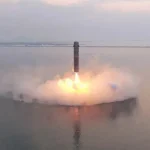
Affected by the cost and price reduction after the Falcon 9 rocket is reused, it has become a general consensus among major space powers to effectively reduce launch costs through reuse technology. Our country has also begun to develop launch vehicles with reusable features, gradually changing from “how to enter space” to “how to enter space at low cost”, which can be regarded as the 2.0 era of development of China’s commercial aerospace industry.
In the future, with the development of aerospace technology and the improvement of human living standards, commercial aerospace will radiate into all areas of the national economy and build a large-scale market around mass consumption. At the same time, based on aerospace resources, related cultural and creative industries will continue to generate new economic growth points and achieve large-scale, stable and profitable business models. The development of the commercial aerospace industry has entered the 3.0 era.