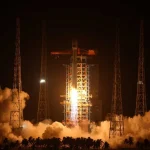
IHI Aerospace is developing and manufacturing a range of launch vehicles that support commercial, government and scientific space missions, contributing to Japan’s space transportation capabilities through advanced rocket technologies and launch services. The portfolio includes the Epsilon Launch Vehicle, participation in the H-IIA & H-IIB Launch Systems, the H3 Launch Vehicle and a family of sounding rockets, providing launch solutions for satellites, scientific research and space exploration programs.

At the center of the company’s launch portfolio is the Epsilon Launch Vehicle, a next-generation solid-propellant rocket developed to deliver high reliability, operational flexibility and competitive launch costs. Designed as one of the world’s most compact launch vehicles, Epsilon inherits proven technologies from Japan’s H-IIA and M-V rocket programs while incorporating innovations that simplify launch operations. The solid-fuel architecture reduces operational complexity compared with liquid-fueled launch vehicles, enabling lower launch costs while maintaining the reliability required for commercial, academic and government missions.
Also Read: IHI and Kuva Space Collaborate to Add Hyperspectral Sensors to Earth Observation Constellation
The latest Epsilon S launch vehicle further enhances operational efficiency by incorporating technologies developed through both the Epsilon program and the next-generation H3 Launch Vehicle. The rocket features an automatic checkout system that enables mobile launch operations with only a small team of operators using PC-based control systems, helping reduce human error during launch preparations. It also supports late access, allowing payload integration up to three hours before liftoff, providing greater flexibility for missions involving time-sensitive payloads such as biological experiments or special materials. In addition, the vehicle is designed to minimize vibration, acoustics, and spacecraft separation shock, creating a launch environment that helps protect sensitive payloads. A Post Boost Stage (PBS) liquid propulsion system enables precise orbital insertion and supports rideshare missions by accurately deploying multiple spacecraft into their intended orbits. The Epsilon S is capable of delivering more than 1,200 kg to Low Earth Orbit (LEO) and over 600 kg to Sun-Synchronous Orbit (SSO).

Alongside the orbital launch vehicles, IHI Aerospace develops sounding rockets for scientific observation and experimental missions. The S-310, S-520 and SS-520 rockets support atmospheric, ionospheric and magnetospheric research at altitudes of approximately 190 km, 350 km and 1000 km, respectively. These launch systems have been used for ultra-high-altitude atmospheric observations, recovery experiments and scientific missions, expanding Japan’s capabilities in suborbital research and technology demonstration.

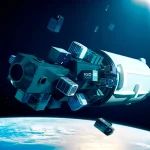
=IHI Aerospace contributes to numerous national space programs through spacecraft propulsion systems, International Space Station hardware, satellite deployment technologies and scientific missions. The portfolio includes propulsion products such as bipropellant thrusters, hydrazine monopropellant thrusters, propellant tanks and propulsion subsystems, alongside contributions to projects including the Japanese Experiment Module “Kibo”, the JEM Small Satellite Orbital Deployer (J-SSOD), CALET and the Hayabusa and Hayabusa2 missions. By combining launch vehicle development with spacecraft technologies and mission support, IHI Aerospace continues to strengthen Japan’s end-to-end space transportation and exploration capabilities.
About IHI Aerospace
IHI Aerospace is a Japan-based aerospace company specializing in launch vehicles, rocket propulsion systems, spacecraft technologies and space mission support. The company develops the Epsilon Launch Vehicle, contributes to the H-IIA, H-IIB, and H3 launch programs, manufactures sounding rockets and spacecraft propulsion systems, and supports a wide range of scientific, commercial and government space missions.