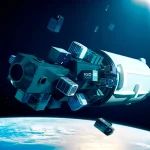
Electra has complemented Impulse’s chemical propulsion lineup, enabling customers to choose the appropriate in-space mobility technologies for their mission. The first chapter of human space activity has largely been defined by launch. Rockets are launched, payloads have reached orbit, and missions have officially begun. The next chapter in space has been characterized by what happens after launch: moving satellites between orbits, transporting cargo across cislunar space, supporting off-world infrastructure, servicing spacecraft and supporting additional economic activities beyond Earth.
At Impulse, the company has been established on the premise that accelerating humanity’s future beyond Earth required much more than launch alone. It required an integrated in-space mobility architecture, one that has given spacecraft the freedom to move, adapt, and accomplish more throughout their missions.
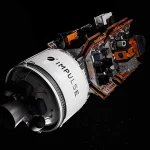
The company has introduced the next step in that vision: Electra, its first electric propulsion (EP) system, designed to support spacecraft operations after launch. Designed, built and tested entirely in-house, Electra has added highly efficient electric propulsion to the company’s existing slate of high-thrust chemical propulsion engines. When used together, they have created enhanced spacecraft, giving mission designers greater flexibility while preserving what has mattered most: the ability to move quickly when timing has been critical.
One of the biggest constraints on spacecraft has not been reaching orbit; it has been staying there. Mission designers have often reserved up to half of a spacecraft’s chemical propellant to maintain its orbit over the mission’s life. That meant half of a spacecraft’s maneuvering capability has been effectively unavailable for mission objectives. If chemical propulsion has been a sprinter, electric propulsion has been a highly efficient marathon runner. Rather than delivering large bursts of thrust, electric propulsion has provided a continuous, highly fuel-efficient push over long periods of time, making it ideal for stationkeeping and other long-duration operations.
For example, by allowing electric propulsion to handle stationkeeping, operators have been able to dedicate all of the chemical propellant to the maneuvers that have created mission value, rapid orbit changes, responsive operations, and mission flexibility when timing has mattered most. Rather than replacing chemical propulsion, Electra has complemented it, allowing customers to choose the appropriate mobility technologies for their mission.
Just over a year earlier, the company shared that Impulse has been exploring electric propulsion as part of its long-term roadmap. At that time, Impulse had been qualifying Electra flight engines for integration with Mira. From a clean sheet of paper to a firing propulsion system has taken less than six months. Nearly every element of the system, including the thruster and supporting avionics, has been designed, built, and tested in-house. That vertical integration has allowed the company to optimize every component specifically for its spacecraft while maintaining its stated development and production objectives.
The development story has reflected the engineering culture at Impulse. The manufacturing team has rapidly developed the expertise to fabricate specialized components when traditional suppliers have not met the company’s timeline. Rather than waiting months for outside vendors, the engineers have built the capability themselves. That ability to move quickly, from concept to hardware, has been a characteristic of the company’s development approach.
“The best part of building Electra has been the opportunity to move fast and try new things. We get to turn ideas into plasma in a matter of weeks or months, not years,” said Charlie Kelly, Lead Electric Propulsion Engineer at Impulse. “We’re still a small team, just a few people, which means every engineer gets to own a significant portion of our EP systems that will redefine the capabilities of Mira and future spacecraft.”
“As launch becomes more accessible, the next frontier is enabling spacecraft to do more once they arrive in orbit,” said Tom Mueller, Founder, CEO & CTO of Impulse. “Our strategy has always been to develop the mobility technologies needed to support all missions after launch, and electric propulsion is an essential component of that strategy.”
Electra has represented an additional propulsion system and has been part of the company’s plan for end-to-end in-space mobility.