IonQ is preparing to acquire Skyloom Global, a specialist in space-based optical communications, in a deal aimed at accelerating the company’s expansion across quantum computing, networking, and sensing technologies.
The planned acquisition — revealed by Chairman and CEO Niccolò de Masi during an interview on CNBC — is positioned as a major step toward building a global quantum key distribution (QKD) system that spans ground infrastructure and satellites.
“We entered an agreement just recently to acquire a company called Skyloom,” de Masi said on CNBC. He added that the company’s growing portfolio, which now includes Capella Space and ID Quantique, is designed to support QKD networks “not just on the ground, but also up into space with satellites.”
The move continues IonQ’s rapid acquisition streak as it seeks to become a full-stack quantum technology leader. Over the past year, the company has purchased Qubitekk, ID Quantique, Lightsynq Technologies, Capella Space, Vector Atomic, and announced a $1.1 billion deal for the UK’s Oxford Ionics.
Building a Global Quantum Network
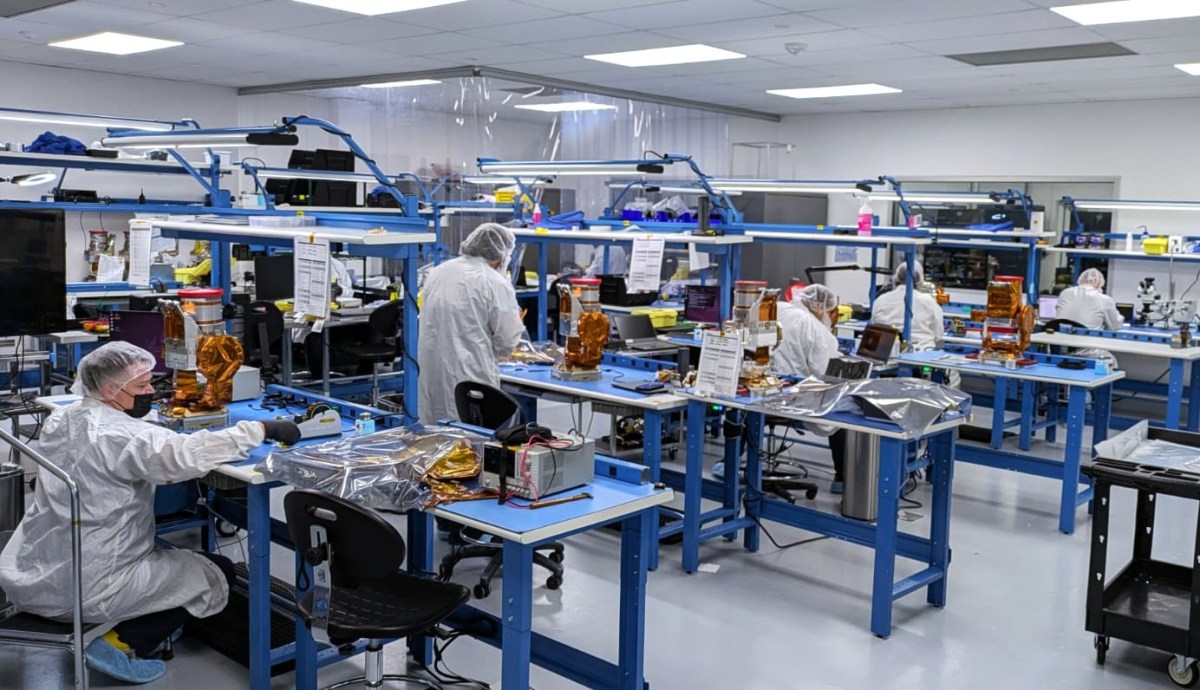
Skyloom brings deep expertise in optical communication terminals designed for real-time data transfer in orbit. Founded in 2017 in Colorado, the company has spent nearly a decade developing what it describes as “fiberless internet” for Earth — a network capable of moving massive volumes of data across low-Earth orbit, geostationary orbit, and ground stations.
Skyloom has completed several milestones, including participation in the Space Development Agency’s Tranche 0 program, successful laser-communications demonstrations with the Naval Research Laboratory, deployment of a LEO optical terminal in 2023, and a geostationary node launch in late 2024.
Integrating Skyloom’s optical transport capabilities would help IonQ extend quantum networking beyond terrestrial fiber links and into space, a critical requirement for secure global QKD systems.
IonQ’s Strategic Expansion
IonQ has also been building physical nodes for quantum networks. The company recently partnered with EPB in Chattanooga to establish a quantum-networking and computing hub, and launched an initiative with the University of Chicago to install a campus-based quantum computer with an entanglement distribution network.
De Masi said IonQ now offers quantum technologies “in the ocean, under the ocean, on land, in the air, up in the sky,” as the company positions itself to dominate all layers of the emerging quantum ecosystem.
Revenue and Funding Momentum
Financially, IonQ remains one of the few firms in the sector with nine-figure revenue. De Masi said the company has raised its 2025 revenue guidance to $110 million, continuing a multiyear trend of doubling annual revenue since going public in 2021.
He added that IonQ has raised roughly $3.5 billion so far this year — including $2 billion in the past six weeks — to support development of fault-tolerant quantum systems and global quantum-secure communications.
“We want to be the market share leader in all things quantum,” de Masi said, noting that IonQ is only at the beginning of its long-term plan to create an integrated, secure, and scalable quantum infrastructure.