Artemis III has become the linchpin of NASA’s lunar return strategy. Rather than repeat the Soviet-era approach of landing a single spacecraft on the moon, the Artemis architecture requires crews to launch in the Orion capsule, dock with commercial landers in orbit, and transfer to those vehicles for descent. This dependency on commercial hardware has forced NASA to restructure its timeline, pushing the actual moon landing to Artemis IV while using Artemis III as a full-scale dress rehearsal in low Earth orbit. The mission reflects both the maturation of commercial spaceflight and the precarious coordination needed to make it work.
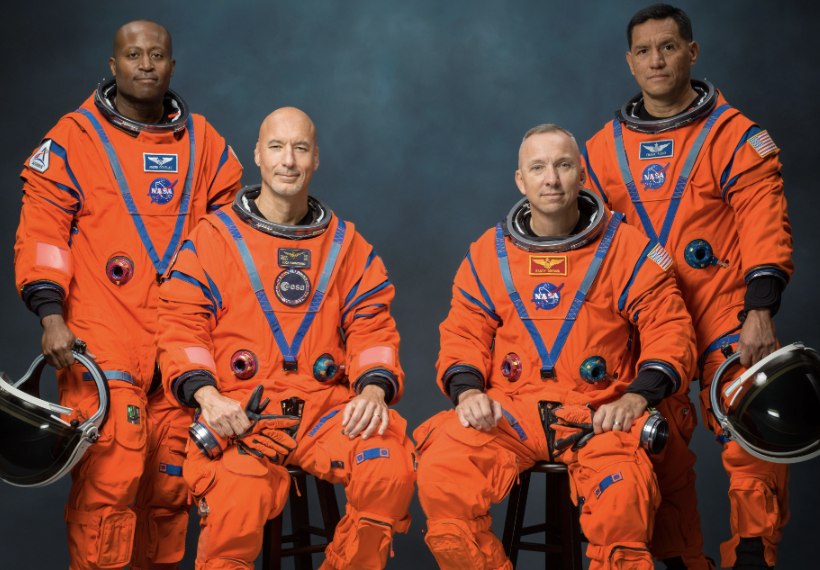
Commander Randy Bresnik, a retired Marine fighter pilot and four-time Space Shuttle veteran, will lead the mission. European Space Agency astronaut Luca Parmitano, who has completed two previous spaceflights, will serve as pilot. Frank Rubio, a former Army physician and two-time ISS resident, and Andre Douglas, a Coast Guard Reserve commander, will fly as mission specialists. Douglas is the sole first-time spaceflight participant on the roster, representing NASA’s continued effort to bring diversity of background to crewed missions.
The 2027 timeline is aggressive. Artemis III must practice docking with both SpaceX’s Starship HLS variant and Blue Origin’s Blue Moon Mark 2 lunar lander, requiring each commercial partner to have flight-ready hardware available for orbital operations. The May 2026 failure of Blue Origin’s New Glenn orbital launch vehicle has raised questions about the company’s ability to meet deadlines. SpaceX has demonstrated Starship’s booster recovery but has not yet conducted a full crewed docking test with its lunar variant. Neither company has committed publicly to 2027 availability.
If either lander slips beyond 2027, NASA faces a difficult choice: delay Artemis III entirely, redesign the mission with available hardware, or risk practicing docking procedures with simulators instead of live vehicles. The latter scenario would undermine the entire point of the flight test.
The broader significance lies in whether NASA can sustain the Artemis cadence while depending on commercial partners operating on different development schedules. A successful Artemis III would validate the architecture for Artemis IV’s lunar landing attempt, potentially accelerating subsequent surface missions. A delay or redesign would signal that the commercial lunar economy still requires additional maturation time.
Watch for Blue Origin and SpaceX to provide formal commitments on lunar lander readiness by early 2027. Any slippage in either vehicle’s development timeline will ripple directly into Artemis III’s launch date.