As Via Satellite marks its 40-year anniversary in 2026, we’re celebrating with a special feature: 40 People Who Shaped the Satellite Industry, to mark visionaries both past and present that have made the satellite industry what it is today.
This feature is meant to be part tribute, part history lesson, with some anecdotes from some of the supporting characters along the way. Via Satellite will publish the full 40 People over the next few months, leading up to our 40th Anniversary Special Edition. Here are the first two groups of 10 people:
Robert Bednarek
Robert Bednarek was one of the top executives of PanAmSat and SES and one of the key architects of the satellite broadcast movement from the 1990s onwards. Bednarek played pivotal roles at both SES and PanAmSat, industry giants of the time, and was one of the architects of some of the most significant consolidation in the industry. He held top technical positions at PanAmSat, before making his way to SES and
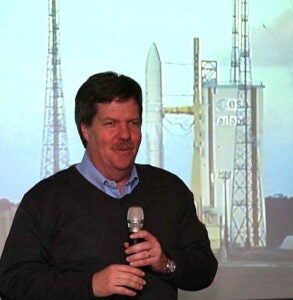
becoming even more of a household name there. He left PanAmSat to join SES in 2002, and served as president and CEO of SES New Skies, later SES World Skies including SES Americom. His legacy in the industry through his work at PanAmSat and SES remains a strong one. Sadly, Bednarek died at age 55 in 2013 after a long battle with cancer.
Romain Bausch, former SES CEO, who worked with Bednarek and appointed him as executive advisor in 2011, credits Bednarek with leading the acquisition of New Skies, recalls his friendship and impact on the satellite industry. “Rob will be remembered as a dedicated professional who helped shape the world of modern satellite communications. On a more personal note, I will always remember him as a friend with personal warmth who treated all those who were fortunate enough to know him with dignity and respect,” Bausch says.
Joseph V. Charyk
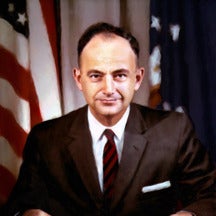
As an early pioneer of the satellite industry, Joseph Charyk had a deep impact on both government satellite programs and the formation of the commercial satellite industry. Charyk served as undersecretary of the Air Force from 1961 to 1963. During that time, President John F. Kennedy appointed Charyk to also serve as the first director of the National Reconnaissance Office. He is credited with consolidating the CIA, Air Force, and Navy space programs into the NRO and bringing the first U.S. imagery satellite, CORONA, into operation.
After the Communication Satellite Act was passed in 1962, Charyk took the helm of the newly formed Communications Satellite Corporation (COMSAT) as its second president in 1963. As the first private satellite corporation authorized by Congress, COMSAT was tasked with developing commercial communications satellite systems, and was the U.S. representative to the Intelsat consortium. Leading COMSAT from 1963 to 1985, Charyk oversaw the launch of Early Bird, the first communications satellite, which launched in 1965. He was one of participants on the six-nation conference call that inaugurated the first-ever commercial telephone service by satellite via Early Bird in 1965, marking the start of a new era of telecommunications with his statement, “I now officially declare these satellite circuits open for use.”
Charyk passed away at age 96 in 2016, and his obituary sums up his impact: “He fought skepticism that this untested technology would not work for voice transmission because of a half-second time delay. He also raised funds to support this new industry and enlisted the cooperation of countries around the world. His efforts launched a global system that would eventually seem commonplace to billions of people around the world.”
Matt Desch

When Matt Desch joined Iridium in 2006, the company was in a strong position after its rescue from bankruptcy, turning a profit with more than 100,000 subscribers. But he faced the ticking time bomb of an aging satellite network and the challenge to chart the path forward. At the helm for two decades, Desch guided Iridium through going public in 2008, financing the Iridium Next constellation, the constellation build-out and Iridium’s subsequent growth. There were a few road bumps along the way, like when a dead Russian satellite collided with Iridium-33, and launch provider SpaceX suffered a major failure just before the first Iridium Next launch. But Desch has built Iridium into the most stable satellite operator with years of revenue growth, profitability, and share buybacks.
“Back in 2006, Matt saw in Iridium something others thought was impossible — that our unique LEO architecture, with its mesh of crosslinks, global reach, and L‑band spectrum, wasn’t just resilient, but a platform for growth,” Iridium COO Suzi McBride tells Via Satellite. “He went on to make LEO cool again, proving that global satellite connectivity could scale, endure, and be profitable. Over the years, I watched him turn conviction into execution, ultimately shaping Iridium into the company it is today.”
With Iridium’s unique niche of globally available mobile satellite services (MSS) business, the company is known for reliable, mission-critical communications. An active pilot, Desch provides a calm counter to more bombastic industry CEOs—often cautioning against hype and over-valuing that can be so common in the space industry—perhaps in a nod to Iridium‘s origin story. After serving as one of the longest running CEOs in the satellite industry, Desch now leads Iridium into its next phase to be acquired by Rocket Lab that values the company at $8 billion.
Peter de Selding

If there is one journalist that is synonymous with the satellite industry over the last 30 years then that journalist would be Peter de Selding. First as Paris bureau chief for Space News and then founding Space Intel Report just under a decade ago, de Selding has been a fixture on the satellite scene for around three decades now. He is a formidable adversary and is not afraid to ask tough questions to C-Suite executives across the industry. In fact, at most big satellite shows, there is almost a sense of anticipation when the Q&A part of a panel arrives, where industry insiders wonder what angles de Selding will take with his line of questions. de Selding has broken numerous exclusives and is one of the most respected journalists in the industry. In many ways, he has set the standards for other young journalists entering the space industry to follow.
Stéphane Israël, the former CEO of Arianespace, said over time he came to admire the sharpness of de Selding’s questions, his exceptional knowledge of the space sector in all its dimensions, and his unwavering commitment to getting to the truth without ever seeking controversy for its own sake. “Peter’s questions were both feared and eagerly anticipated. Peter was also a bridge between the United States and Europe—one of the very few journalists with a truly deep understanding of both space ecosystems. That perspective made him invaluable to our industry,” Israël says.
Charlie Ergen
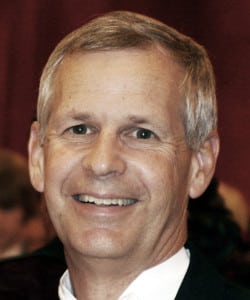
Charlie Ergen was one of three co-founders of EchoStar that founded the company in 1980 with the ambition of becoming a C-band satellite distributor. It is fair to say that 46 years later, Charlie Ergen’s impact on the satellite and broadcast markets has been huge. DISH Network, a subsidiary of EchoStar, became one of the largest pay-TV operators, and Ergen has been behind some of the most ambitious moves in the industry. A great example of this was acquiring Hughes Communications that enabled it to play far more in the broadband arena. It has also launched some of the largest, most advanced satellites in recent years. In 2016, the launch of EchoStar XIX was one the biggest satellites ever launched at the time, then surpassed by the Jupiter 3 launch in 2023.
Ergen is one of the most well-known entrepreneurs in this sector and has been behind some of the biggest moves. Whether broadcast, broadband, wireless, the company has been at the forefront of shaping a communications revolution in the United States. From humble beginnings in 1980, Charlie Ergen has been a powerhouse of our industry with breathtaking moves and pivots. He is one of the boldest entrepreneurs we have seen in the last 40+ years and he is still going strong. EchoStar is a name that resonates throughout the industry and one that is transcending the boundaries of satellite, wireless, telecoms, and broadband.
Lori Garver

Today, NASA embraces commercial solutions for everything from transporting astronauts to the International Space Station, landing experiments on the Moon, to supplying satellite imagery. It’s easy to forget this wasn’t always the way of doing things. Lori Garver is one of the agents of change who worked to bring the government agency into the 21st century and embrace the innovation happening in the commercial space industry. Over her years of working at NASA and serving as deputy administrator from 2009 to 2013, Garver worked for Congressional funding for the Commercial Crew program, which now sees SpaceX regularly transport astronauts to and from the ISS. Her work brought her many detractors in NASA, the space industry, and Congress — but Garver persevered, and the approaches she championed have largely been embraced today. Garver remained an outspoken advocate for progress after NASA, and went on to make a huge impact for gender diversity in the space industry by co-founding the Brooke Owens Fellowship, which now has more than 350 alumni since its founding.
“It’s hard to think of any space policy decision that’s occurred in my lifetime with a bigger, more positive effect than NASA’s Commercial Crew and Cargo programs; and it’s impossible to imagine those programs happening without Lori Garver. She’s never been afraid to take big shots, and she’s always been willing to put in the work on the little things behind the scenes, as well. Her work at NASA created huge ripples with profound effects that are still shaping our industry. And she’s had a similarly outsized effect on the future of aerospace with her incredible personal impact on so many young professionals through the Brooke Owens Fellowship,” says William Pomerantz, head of Space Ventures at AeroVironment, who co-founded the fellowship with Garver, along with Cassie Kloberdanz Lee in 2016.
Hugh Panero

Every so often in the satellite industry a new market becomes apparent. Recently, we have seen much talk about direct-to-device (D2D). Almost three decades ago one of the hottest markets in satellite was satellite radio, ad-free radio that was tailor-made for the U.S. consumer. Hugh Panero co-founded XM Radio in the late 1990s and was the CEO until 2007. He was Via Satellite’s Satellite Executive of the Year for 2002. The company became a key player with close to 10 million subscribers. Panero, while not in the industry as long as some others, left a lasting impact. “Many executives launch new technologies; relatively few build an entirely new industry and attract millions of loyal paying customers from essentially a blank sheet of paper. Hugh’s vision, strategic leadership, and relentless execution made that possible, and his contributions helped redefine how Americans experience audio entertainment,” Tom Watts, founder and managing partner of Sawtooth Capital Advisors, tells Via Satellite.
Armand Musey, president and founder of Summit Ridge Group, was equally effusive of his impact. He adds, “It is easy to forget how uncertain satellite radio looked when XM started. Hugh Panero removed that uncertainty by building a real business with millions of paying subscribers. The company he led became half of SiriusXM, and the subscription model he validated still shapes how the audio industry thinks about paid content.”
Sara Spangelo

Sara Spangelo has broadened the bounds of what’s possible with satellite connectivity — more than once. Frustrated by the limits of existing communications infrastructure, Spangelo co-founded satellite IoT startup Swarm in 2016. Swarm built out a network of sandwich-sized satellites connecting to tiny, handheld hardware to dramatically lower the price for satellite IoT, making connectivity possible for use cases where it previously wasn’t affordable. SpaceX took notice, acquiring the company in 2021 for its intellectual property and expertise. Spangelo joined SpaceX as senior director of Satellite Engineering where she co-lead SpaceX’s Direct-to-Cell program, now Starlink Mobile. Joining a year before the landmark partnership with T-Mobile was announced, Spangelo was there during the critical time when SpaceX signed with telcos all over the world and established the separate Starlink Mobile constellation. Over three years with SpaceX, Spangelo helped make ubiquitous connectivity possible for cellular customers around the world.
Spangelo has a rare combination of steadfast determination and genuine empathy, says Katelyn Sweeney, who worked on Spangelo’s team at SpaceX. “She drove our team through some of the most challenging tech and business problems, but she still never lost sight of the people behind it. I feel like my personal bar for excellence is raised from working for her, and I firmly believe the world is a better place because of the teams and technologies she’s developed,” Sweeney tells Via Satellite.
Since leaving SpaceX in late 2024, Spangelo has set her sights on the energy industry, founding Ambrosia Energy, a startup that aims to make solar and battery systems the most cost-effective energy source. There is no doubt she will leave a lasting mark on the energy sector as well.
Eric Sung

Over the last few years in the antenna arena, Intellian has made quite a name for itself winning huge deals with the likes of Iridium, OneWeb, and SES. It has established itself as one of the leading antenna manufacturers worldwide. The company was the first-ever winner of the Via Satellite Technology of the Year award in 2018 for the v240MT Tri-Band antenna system which was all about flexibility and cutting edge technology. It has developed products across key verticals such as maritime, land mobility, military/government and has become one of the most successful players in the antenna arena. Eric Sung, the CEO of Intellian, is one of the main architects of Intellian’s stunning rise to one of the top developers and sellers of antenna technology.
One of its signature early deals was with Iridium. On that deal, Sung worked with Wouter Deknopper, vice-president and general manager of Maritime business at Iridium. “Under his leadership, Intellian has followed an extraordinary trajectory: from a new and ambitious underdog in maritime satcom to a global technology leader with strong positions across maritime and multiple other verticals,” Deknopper says. “That success reflects not only commercial execution, but a clear and consistent commitment to innovation, especially during what has been a true rollercoaster period of change for our industry. Eric and the Intellian team have helped move the market forward.”
Dylan Taylor

Dylan Taylor played a role shaping the growth of the commercial space industry as an angel investor and an advocate, and is now building a new generation of space company with Voyager Technologies. Taylor had a long career as a business executive but he held a lifelong interest in space. He started out in the space industry as an early-stage investor, where he quietly shaped the birth of the New Space era by investing in more than 50 companies, many of which are heavy-hitters today. He founded the nonprofit Space For Humanity in 2017 before founding Voyager Technologies in 2019.
At Voyager, Taylor has pursued a vertical integration playbook, acquiring various capabilities across commercial and civil space and defense. One of the most significant was the acquisition of Nanoracks, one of the first companies to commercialize access to the International Space Station (ISS). “Since Voyager acquired Nanoracks, I’ve had a front-row seat to Dylan’s relentless drive to build a truly sustainable commercial ecosystem, from Low-Earth Orbit to the lunar surface and beyond. He is a space visionary, disciplined operator, and someone who believes, at his core, that what we build in space is ultimately in service of humanity,” Nanoracks founder Jeffrey Manber, now special representative to the chairman and CEO, Voyager Technologies, tells Via Satellite.
Voyager supports missions across the industry spanning civil space missions and the ISS, to defense programs, commercial satellites, and lunar programs. Taylor is genuinely passionate about the future of human spaceflight, even experiencing it firsthand as a passenger on a Blue Origin New Shepard flight in 2019. By bringing together defense and space technologies with a commercial space station, Taylor is shaping how the future commercial market in space will develop.
Part Two, published on July 8
Part One, published on June 10
Rene Anselmo
As the founder of the first privately owned international satellite communications company, Rene Anselmo was the pioneer of the commercial satellite industry we have today. While leading a Spanish language TV network in the 1960s, Anselmo was frustrated by the prices for satellite transmission and decided to finance the creation of a new satellite operator. At that time, Intelsat was an effective monopoly on international satellite service. Anselmo had to go to bat for his nascent venture, lobbying Congress to break Intelsat’s monopoly. He famously wrote letters from “Spot the dog,” critiquing the establishment, with the slogan that “Truth and technology will triumph over bullshit and bureaucracy.”

Anselmo did triumph, securing a directive from the Reagan administration in 1984 that separate international communications satellite systems be approved, and PanAmSat launched PanAmSat-1 in 1988. “Against a concerted effort among the world’s telecom entities to block his startup, he succeeded not only in ending the international monopoly, but also individual national monopolies when, as the result of PanAmSat’s commercial success, he got landing rights in formerly closed markets,” Henry Goldberg, who was Anselmo’s regulatory lawyer, tells Via Satellite.
Anselmo was honored as Via Satellite’s inaugural Satellite Executive of the Year in 1988. He later died at age 69 in 1995. PanAmSat went on to become one of the world’s largest satellite operators, before it was acquired by Intelsat in 2006 for $3.2 billion. “Rene gave people permission to be bold — not reckless, but bold together. He made the mission fun, he made the fight worth joining, and he made everyone around him believe that a very small upstart private satellite company could change the rules of global communications. And they did,” longtime satellite executive and PanAmSat alum Mike Antonovich tells Via Satellite.
Peter Beck

Peter Beck is one of the most fascinating success stories in the “new space” era, building one of the world’s most active launch companies with no formal training, in a country with little space heritage. Beck got his start experimenting with engines, building rocket bikes and rocket packs before founding Rocket Lab in 2006 in New Zealand. Incredibly, the company’s Electron rocket reached orbit on just its second test flight in 2018. Electron has since reached the 50-launch milestone faster than any other commercially developed rocket in history. Beck has been on the front end of multiple tech innovations, embracing smallsats as a market before they were taken seriously by the industry. Rocket Lab was also the first company to launch a 3D printed rocket engine and to fully embrace carbon composite material for rockets.
Beck’s vision is larger than launch, and he has been clear-eyed about his vision to build Rocket Lab into an end-to-end space company. Not only has Rocket Lab supported many smallsats in the journey to orbit, but the company’s components and buses support commercial and defense missions across the industry, as well as the Artemis program and interplanetary exploration. Beck and Rocket Lab’s underdog success is truly the story of how democratized space has become. At the same time, he keeps a humble outlook. “It was important for me to build a multi-generational, large space company here in New Zealand,” Beck told Via Satellite in 2023. “I want the company to outlive me … Space is a long-term project.”
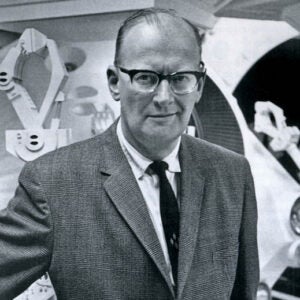
Arthur C. Clarke