The move reflects growing interest in running AI directly onboard spacecraft rather than relying on ground stations to process information after it is transmitted back to Earth. The latency of deep space communication makes onboard processing increasingly attractive for future missions, where waiting for instructions from the ground can slow operations.
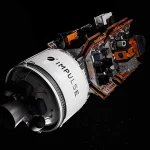
Google’s Gemma large language model was placed in orbit aboard a satellite, according to the report from Loft Orbital. The report describes the effort as putting an AI language model into orbit, though full mission details and objectives were not described in the available summary. The combination pairs a major AI company’s model with NASA mission infrastructure.
The deployment represents an early step toward onboard AI reasoning for spacecraft. By hosting a language model in orbit, the mission tests whether spacecraft can begin to interpret and act on their own data locally, rather than depending entirely on the ground control loop that transmits raw data down and commands back up.
The significance, as described in the source, lies in the technical demonstration itself. Running a large language model on a satellite in orbit is a meaningful move toward autonomous spacecraft that can reason about their own data without a ground uplink. The pairing of commercial AI with NASA’s mission infrastructure signals how quickly commercial AI is entering the space operations stack. If onboard AI becomes standard on satellites, the ground control model that has defined spaceflight since Sputnik could change rapidly.
What to watch is whether further mission details and objectives are released, as the current summary does not fully describe them.