Steve Creech, acting manager of NASA’s Human Landing System Program, laid out the plans during an October 5 presentation at the International Astronautical Congress in Antalya, Türkiye. The timelines follow a February overhaul of the Artemis architecture, which moved Artemis III forward a year and repurposed it from the program’s first crewed landing into a mission for lander vehicle tests in low Earth orbit. The first moon landing was shifted to Artemis IV, targeted for early 2028, while NASA preserved its goal of landing astronauts by the end of 2028.
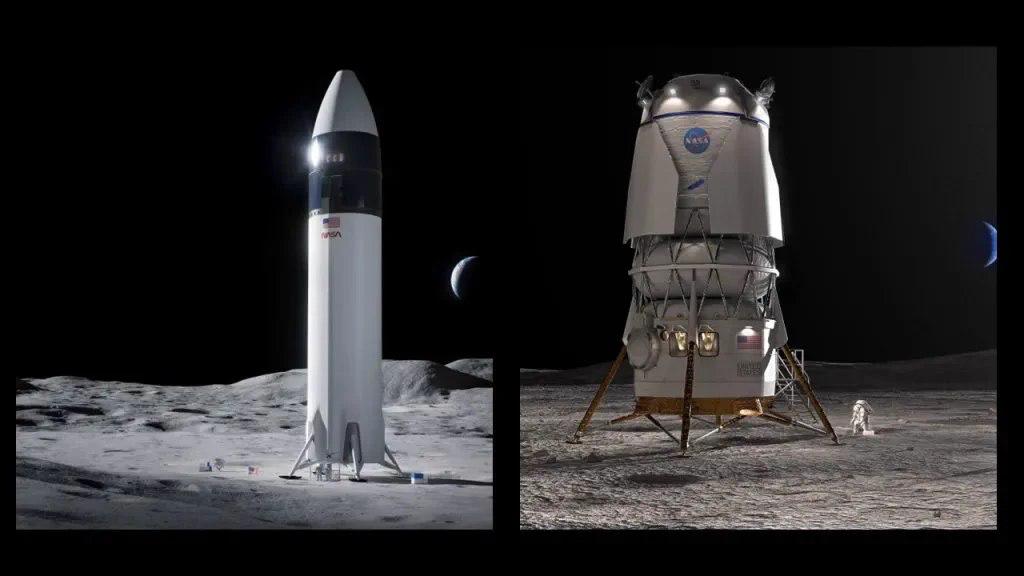
On Artemis III, four astronauts will launch aboard Orion to low Earth orbit, where they will rendezvous and dock with test versions of both companies’ landers for interoperability checkouts. Those demonstrations will help inform which lander NASA chooses for Artemis IV. SpaceX plans to fly one of its existing Version 3 Starship upper stages with slight modifications, including a docking system and nosecone cover, but without a crew cabin for the mission. Blue Origin plans to fly a more complete Blue Moon Mark 2 test vehicle incorporating a crew cabin, partial life support, and flight software, allowing astronauts to enter the lander from Orion in zero gravity.
NASA listed several SpaceX goals for 2026, including the first return and catch of the upgraded V3 booster, the first catch of a Ship upper stage, the first Starship launch from Florida’s Space Coast, and the initial build of the lunar lander crew cabin. Starship’s most recent test flight launched September 28 from Starbase in South Texas. SpaceX must also demonstrate the first on-orbit propellant transfer, a requirement because Starship’s tanks must be topped off to fly beyond low Earth orbit. A lunar landing mission for Starship could require up to a dozen tanker launches to an orbiting fuel depot. Artemis III will not require any refueling flights, but SpaceX is expected to launch its first tanker within months of that mission, with an uncrewed lunar landing targeted before the end of 2027.
Blue Origin, developing its 52-foot Blue Moon Mark 2 powered by three BE-7 engines, faces manufacturing and testing milestones through late 2026, including continued BE-7 testing and qualification of its BT-7 maneuvering thrusters. The company must also complete an Artemis III interim design review and a critical design review for a 2028 landing demonstration. Blue Origin is working to restore its pad at Launch Complex-36 and return New Glenn to flight after a May explosion that caused extensive damage. NASA’s presentation places that milestone in the fourth quarter of 2026, though a Reuters report suggests it may slip to early 2027. The company’s smaller, uncrewed Blue Moon Mark 1 lander is set to launch to the lunar surface in the first quarter of 2027 under the Commercial Lunar Payload Services program.
Both companies face more than a dozen test demonstrations and vehicle milestones before NASA selects a lander for the first crewed moon landing since the Apollo program ended in 1972.
The next major markers include the return of New Glenn to flight, the Blue Moon Mark 1 lunar launch, and the completion of Starship’s crew cabin build, all leading toward the Artemis III interoperability demonstrations in the third quarter of 2027.