ORBES is advancing autonomous in-space operations through a portfolio of robotic inspection systems, escort satellites and zero-gravity testing technologies designed to improve the safety, efficiency and sustainability of space missions. Headquartered in Los Angeles, California, the company focuses on developing robotic platforms capable of performing inspection, maintenance, logistics support and external situational awareness for space stations, satellites and other orbital infrastructure. By combining autonomous robotics with Earth-based microgravity simulation systems, ORBES is building technologies that support long-duration missions while reducing the need for astronaut intervention in routine operational tasks.

ORBES is developing robotic systems that are designed to complement human crews by performing repetitive operational tasks while providing continuous situational awareness inside and outside spacecraft. The company’s technologies are intended to enhance mission productivity, improve asset management and support safer operations through autonomous and remotely supervised robotic assistance. By integrating robotics, autonomous navigation and inspection technologies into a unified operational framework, ORBES aims to enable spacecraft operators to manage orbital assets more efficiently while preparing for the expanding commercial space economy. Designed to function in microgravity, ORB assists astronauts by carrying out routine housekeeping and operational support activities that would otherwise require valuable crew time. The robot is intended to automate repetitive tasks, allowing crew members to focus on scientific experiments, mission-critical operations and other higher-value activities. ORB is designed to support a variety of station functions, including internal inspections, equipment monitoring, inventory management and item logistics. By continuously moving throughout the station, the robot can assist in locating equipment, tracking supplies, documenting the condition of onboard systems and helping maintain an organized operational environment. Automating these routine activities has the potential to significantly reduce operational costs for future commercial space stations by minimizing the amount of manual housekeeping work required during long-duration missions.

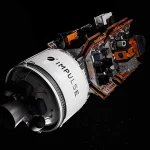
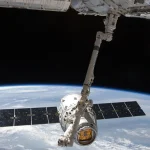
Long-duration space habitats require continuous monitoring of equipment, environmental systems, storage areas and structural components to ensure reliable operation. ORB is designed to extend station operational capability by performing regular inspection routines that help identify anomalies before they develop into larger operational issues. The robotic assistant can repeatedly inspect designated locations without fatigue, providing consistent documentation of station conditions while supporting preventive maintenance strategies. The ability to automate inspection and logistics activities also becomes increasingly important as commercial stations expand in size and accommodate larger crews, more scientific payloads and diverse commercial operations. ORB is designed to assist with internal logistics by helping astronauts locate, organize and transport items throughout the station. Efficient inventory management becomes increasingly valuable during long-duration missions where rapid access to equipment can improve operational efficiency and reduce crew workload. By supporting logistics activities, the robotic assistant contributes to more organized spacecraft operations while reducing time spent searching for equipment or manually transporting supplies between work areas. Complementing the internal capabilities of ORB is Exo-ORB, an autonomous escort satellite designed to inspect spacecraft and orbital assets from outside. Exo-ORB provides an external perspective by operating independently around spacecraft, allowing operators to observe structures from multiple viewing angles. This third-person perspective enables detailed visual inspection of spacecraft exteriors, antennas, solar arrays, docking mechanisms, robotic systems and other external components that may otherwise be difficult to observe.
Also Read: What is the role of AI in Space Exploration and Satellite Operations?
The escort satellite expands inspection capabilities beyond the limitations of onboard imaging systems while providing operators with greater situational awareness during routine operations and complex mission activities. Exo-ORB is designed to support external inspection of valuable space infrastructure by providing close-proximity imaging and continuous monitoring around spacecraft. The ability to inspect an asset without requiring human extravehicular activity or specialized servicing missions can improve operational flexibility while supporting earlier identification of structural changes, deployment issues or other external anomalies. These capabilities are particularly valuable for operators seeking to maximize spacecraft longevity while reducing operational uncertainty. ORBES also positions Exo-ORB for national security applications where continuous monitoring of critical orbital assets is essential. Escort satellites can provide persistent external observation of strategic spacecraft, helping operators maintain awareness of surrounding conditions and detect potential anomalies or unexpected activity. By providing an independent inspection platform capable of operating in close proximity to protected assets, Exo-ORB contributes additional situational awareness for defense-related missions where maintaining the integrity of spacecraft is a critical operational requirement. The ability to capture detailed external perspectives supports both routine inspection and mission assurance activities. Exo-ORB is designed to support these future platforms by enabling autonomous inspection of large structures without interrupting ongoing mission operations. The escort satellite can document structural conditions, monitor equipment deployment and assist operators in assessing the overall health of orbital infrastructure through continuous visual observation. This capability supports predictive maintenance strategies while reducing dependence on manual inspection procedures.

Beyond engineering and operational applications, ORBES is also exploring the use of the robotic platforms for space filmmaking. Free-flying robotic platforms create opportunities to capture dynamic perspectives that are difficult to achieve using fixed camera installations. By operating independently around spacecraft or within station interiors, robotic imaging systems can support cinematic video capture, educational content, scientific documentation and commercial media production from unique vantage points in microgravity. The company develops zero-gravity test rigs that enable robotic systems to be trained, evaluated and refined under conditions that simulate aspects of microgravity while remaining on Earth. These testing platforms allow engineers to validate robotic navigation, motion control, autonomy algorithms and operational procedures before deployment into orbit. Ground-based testing plays a critical role in reducing development risk by allowing repeated experimentation and system optimization under controlled conditions. The ability to iterate hardware and software during terrestrial testing supports more reliable performance once robotic platforms are deployed in space. ORBES addresses this evolving need through an integrated portfolio that includes internal robotic assistants, autonomous escort satellites and advanced zero-gravity testing systems. These technologies support inspection, maintenance, logistics, external situational awareness and robotic development workflows that contribute to safer and more efficient space operations. By combining autonomous robotics with practical engineering tools for mission preparation, ORBES is developing technologies that can support the next generation of commercial, scientific and national security space missions while helping reduce operational complexity for future orbital infrastructure.
About ORBES
ORBES is a space robotics company headquartered in Los Angeles, California, focused on developing autonomous robotic systems for in-space inspection, maintenance and operations. The company designs robotic assistants for crewed space stations, escort satellites for external spacecraft inspection and zero-gravity test rigs that enable the development and validation of robotic technologies on Earth. The portfolio includes ORB, an autonomous robotic assistant for internal station operations and Exo-ORB, an escort satellite designed to provide external inspection and situational awareness for spacecraft and orbital infrastructure. By combining robotics, autonomous navigation and microgravity testing technologies, ORBES supports commercial space stations, satellite operators, defense applications and future orbital missions with solutions for safer and more efficient space operations.