1. Company Profile
Beijing Micro-Nano Star Technology Co., Ltd. was established in August 2017 and completed the shareholding reform on January 20, 2024. The core team mainly comes from the Fifth Academy of Aerospace Science and Technology. Micro-Nano Star is mainly engaged in satellite R&D and manufacturing business. It has the capabilities of satellite whole-satellite design demonstration and integration testing, and has the development capabilities of satellite platforms, communication payloads, optical remote sensing payloads and microwave remote sensing payloads. In addition, Micro-Nano Star also has self-research capabilities for the integration of communication systems such as satellite ground communication terminals and gateway stations. 2. Company founder Gao Enyu: Founder of Micro-Star and currently Chairman & General Manager of Micro-Star. Doctorate jointly trained by Beijing Institute of Technology and Pennsylvania State University in the United States. Gao Enyu once served as the chief designer at the Fifth Academy of Aerospace Science and Technology, which also provided great assistance to the early team building of Micro-Nano Starry Sky. Gao Enyu’s final beneficial shareholding in MicroStar is 14.4766%, and the voting right ratio is 23.2008%.
3. Company layout
Beijing: Satellite R&D Center, Satellite Flight Control Center, Satellite Factory.
Wuxi: Commercial satellite manufacturing base (with a total investment of 1 billion, after completion, it will have the ability to produce 100 500 kg satellites and 50 1000 kg satellites annually).
Measurement and control stations: Beijing, Shanghai, Xinjiang, Yunnan.
Overseas sales offices: Europe, Africa, and the Middle East.
4. Main business situation
Micro-Nano Star is mainly engaged in satellite R&D and manufacturing services. It has the ability to independently develop satellite platforms and on-board core components, as well as complete satellite design demonstration and integration testing.
(1) Satellite platform
1. MN10 nanosatellite platform: 10 kg basic platform with a carrying capacity of not less than 5kg, used for low-resolution remote sensing and data collection satellites. 2.6U CubeSat platform: 10 kg standard CubeSat platform with a carrying capacity of not less than 4 kg, used for low-resolution remote sensing and data collection satellites. 3.MN10A micro-satellite platform: 30 kg enhanced platform with a carrying capacity of not less than 10 kg, used for medium-resolution remote sensing satellites. 4.MN50 micro-satellite platform: 50 kg enhanced platform with a carrying capacity of not less than 20 kg, used for wide-area medium-resolution remote sensing satellites. 5. MN100 small satellite platform: 100 kg basic platform with a carrying capacity of not less than 35 kg, used for remote sensing, communications, Internet of Things, and navigation satellites. 6. MN200 small satellite platform: 200 kg basic platform with a carrying capacity of not less than 80 kg, used for high-resolution remote sensing satellites. 7. MN200S small satellite platform: 200 kg radar imaging platform with a carrying capacity of not less than 80 kg, used for high-resolution remote sensing satellites. 8.MN1000 high-orbit satellite platform: 1000 kg basic platform with a carrying capacity of not less than 150 kg, used for high-orbit communication satellites.
(2) Satellite components
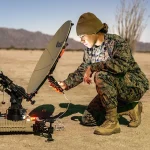
The on-board UV communication machine communicates with the ground station through the UHF/VHF antenna. The antenna adopts the form of a monopole and uses a stowable deployment mechanism for miniaturization. The deployment action is completed by powering up. The antenna is an omnidirectional antenna, covering almost the entire direction. (3) Satellite communication ground terminal: Ku&Ka dual-band satellite communication portable station. Ps: Micro-Nano Starry Sky started with nanosatellites and small satellites. In fact, for Gao Enyu, he has worked in the Fifth Academy for so many years. He knows what the technical route should be, but there is no way. He only raised so much money in the early stage. Without sufficient funds, he can only start from a young age, starting with the manufacturing task of small satellites of about 10 kilograms. Since then, after several years of development, the company has continuously updated its technology and is now able to make 500 kg-class satellites and 1000 kg-class satellites, and has the ability to develop 2t-class satellites. Micro-Nano Star’s factory in Wuxi can produce 100 50 kg satellites and 50 1,000 kg satellites annually. 5. Financing situation Time Round Amount Investment institution
2017
angel wheel
tens of millions
Creative Angel Fund, Yuanhang Capital, China Science and Technology Star
2018
Series A
tens of millions of yuan
Yonghua Capital, Yangtze Aerospace Industry Fund, etc.
September 2019
A+ round
tens of millions of yuan
Shenzhen Venture Capital, Kexin Capital, Yonghua Capital, China Science and Technology Star, Chuangxiang Future, etc.
2020
A++ round
Nearly 100 million yuan
Link Capital, CITIC Construction Investment, Creative Future, etc.
August 2021
Pre-B round
Nearly 300 million yuan
Lightspeed China, High Energy Capital, Gopher Asset, Dinghui Investment, Meihua Venture Capital, etc.
2022
Round B & Round B+
Nearly 400 million yuan
China Development Bank Manufacturing Transformation and Upgrading Fund, Yuexiu Industrial Fund, Donghao Lanshengruili Investment, Haitong Innovation Investment, Qingdao Fund of Funds, etc.
June 24, 2024
C1 round
1 billion yuan
Yuanhe Zhongyuan-Wuxi Economic Development Shangxian Industrial Investment Fund led the investment, Liangxi Science and Technology Innovation Industry Fund of Funds (Bohua Capital Management) followed the investment, and the old shareholder Qingdao Huizhu Amphora continued to support
6. Summary Before 2015, the market demand for satellites gradually emerged, but the quotations within the system at that time were far higher than what commercial users could afford. After 2015, with the liberalization of national policies, some commercial satellite companies began to appear, and Micro-Nano Star is one of them. At that time, the main opportunity in the market was that according to the production model within the system, the cost and efficiency of aerospace products could not be improved in the short term. The “Micro Stars” saw this opportunity and started to quit one after another. Therefore, after the establishment of Micro-Nano Star, most of the work was carried out around reducing satellite costs, shortening the development cycle and ensuring satellite reliability. Now these companies can reduce the cost of a satellite to almost one-third of what it used to be. After companies like MicroStar came out, they gradually optimized the supply chain structure of the satellite industry, made a great contribution to reducing satellite development costs, and began to gradually return satellites to the essence of commodities. In addition, the release of Xingwang and Yuanxin’s large-scale constellation construction plan has also injected confidence into the development of this industry. The reduction in satellite development costs has also brought many new opportunities to the formation of a closed commercial loop in the downstream satellite application industry chain.
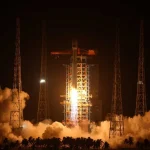
In August 2017, Micro-Nano Star was established. On October 27, 2018, the public welfare small satellite-“Future” satellite jointly developed by CCTV’s “Come on to the Future” program and Micro-Nano Star was launched at the Jiuquan Satellite Launch Center. Although the Suzaku-1 Yaoyi rocket failed in this launch, resulting in the loss of the satellite. However, the launch of the “Future” satellite set a record for commercial aerospace at that time to complete satellite development and launch in the shortest time. This launch also allowed Micro-Nano Star to quickly gain recognition from the capital market, laying the foundation for subsequent financing. In 2019, Micro-Nano Star Sky successively conducted three launch missions, verifying the maturity and reliability of the platform, and quickly launched the “one rocket, multiple satellites” model mission. On December 20, 2019, the Yizheng-1 (Tianyan 01), Star Times-8 (Tianyan 02) and Future-1R satellites independently developed by Micro-Nano Star were successfully launched at the Taiyuan Satellite Launch Center, and the satellites successfully entered their intended orbits. This is the fifth launch mission since the establishment of Micro-Nano Star. The success of this mission also shows that Micro-Nano Star has the development capability of “multiple satellites with one arrow”. Since then, Micro-Nano Star has successively obtained two rounds of financing exceeding 100 million yuan in the capital market, and began to develop and build batch production capabilities for 500kg satellites. On April 26, 2021, China Star Network Group was established, becoming a landmark event in China’s satellite industry. In 2022, Micro-Nano Star successfully completed Series B and B+ rounds of financing, receiving nearly 400 million yuan in financial support. Since then, Micro-Nano Star has gradually carried out the construction of satellite design and development capabilities in different technical states, and gradually entered the ranks of high-end satellite development units. In the past seven years, Micro-Nano Star has created many firsts, launching my country’s first 0.5-meter optical satellite manufactured by a private enterprise, my country’s first X-band commercial SAR satellite, and my country’s first commercial Ku-band SAR satellite. Up to now, Micro-Nano Star has successfully launched 24 satellites of various types, and will officially become a commercial aerospace unicorn company on June 24, 2024.
However, MicroStar currently has many investors and its equity is somewhat dispersed. Although the top three shareholders are all related to Gao Enyu, the first largest shareholder is Beijing MicroStar Enterprise Management Center (Limited Partnership), accounting for 7.2258% of the shares; the second largest shareholder is Beijing Guoyu Star Enterprise Management Center (Limited Partnership), accounting for 6.8903% of the shares. The executive partners of both companies are Gao Enyu, and the third largest shareholder is Gao Enyu himself, accounting for 6.5306%; the three together account for 20.6467% of the shares. According to common practice, part of the equity is generally diluted when listing, that is, part of the capital must be increased to investors on the stock exchange. If Gao Enyu does not sign a concerted action agreement with other institutions or individuals, the dispersed equity may cause MicroStar to become an acquisition target after its listing, resulting in a change in the company’s control, which will in turn pose potential risks to the company’s subsequent operations.