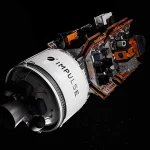
The THAAD missile defense production agreement represents a major expansion of one of the most important upstream components in the U.S. missile defense supply chain and is expected to become the largest THAAD propulsion award L3Harris has received to date.
THAAD is a mobile, land-based missile defense system designed to intercept short-, medium- and intermediate-range ballistic missiles during the terminal phase of flight. Unlike many lower-altitude missile defenses, THAAD can engage targets both inside and just outside Earth’s atmosphere. It destroys incoming warheads through direct kinetic impact rather than an explosive warhead, an approach commonly known as hit-to-kill interception.
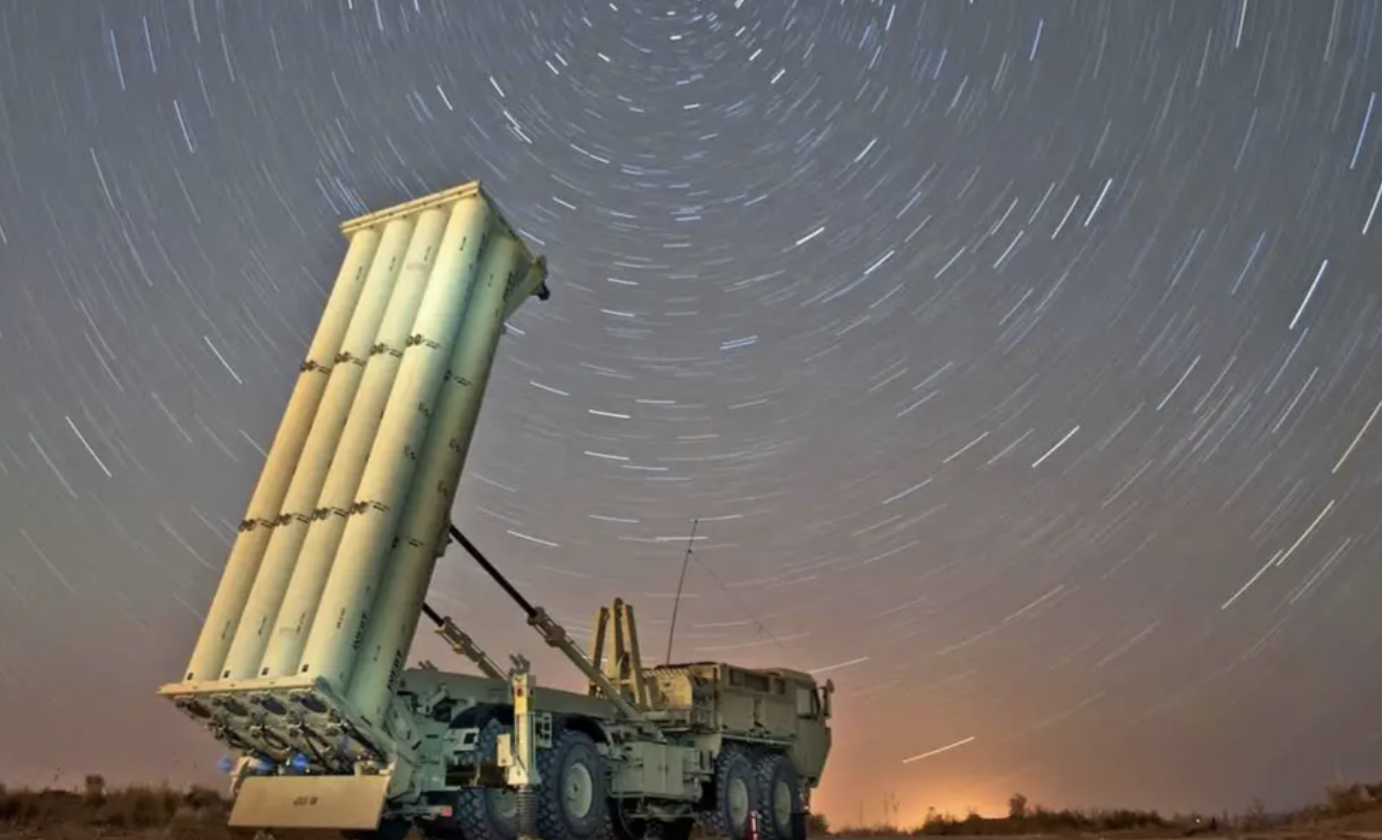
L3Harris supplies two critical propulsion systems for the interceptor. Its Solid Rocket Boost Motor provides the initial acceleration needed to send the THAAD interceptor toward an incoming missile, while its Liquid Divert and Attitude Control System, or LDACS, provides the rapid maneuvering capability needed to keep the kinetic kill vehicle on target during the final stages of an intercept.
The solid rocket motors are manufactured at L3Harris facilities in Huntsville, Alabama, and Camden, Arkansas, while the LDACS system is produced in Los Angeles. L3Harris said it is already delivering both systems on or ahead of its existing contract schedules. The company has also been investing heavily in missile production capacity, constructing roughly 60 facilities and adding or upgrading nearly one million square feet across its solid rocket motor operations in Alabama, Virginia and Arkansas.
The fourfold propulsion increase is part of a much larger effort to dramatically expand THAAD production. In January, Lockheed Martin, the prime contractor for THAAD, signed a framework agreement with the government to increase annual interceptor production capacity from 96 missiles to 400. In June, that framework progressed into an undefinitized seven-year contract action worth up to $35 billion, providing Lockheed Martin with the long-term demand signal needed to expand factories, suppliers and production capacity.
Quadrupling L3Harris’ propulsion capacity therefore addresses a critical upstream requirement for achieving the planned increase from 96 to 400 THAAD interceptors per year. Increasing final missile assembly capacity has limited value unless suppliers can produce rocket motors, guidance components and other critical hardware at corresponding rates.
The July 27 THAAD agreement is not yet a finalized production contract. L3Harris said the seven-year agreement is expected to be definitized later in 2026. It establishes the framework and production target under which the company and its suppliers can prepare for substantially higher output.
L3Harris also announced a separate framework agreement on July 27 covering propulsion systems for Lockheed Martin’s PAC-3 Missile Segment Enhancement interceptor. That agreement is intended to nearly triple L3Harris production of propulsion products supporting PAC-3 MSE, including its two-pulse solid rocket motor and other components responsible for maneuverability and lethality. Together, the THAAD and PAC-3 agreements represent a broad expansion of propulsion capacity across two of the most important U.S. air and missile defense programs.
The THAAD expansion also has a direct connection to the growing role of space in missile defense. Although THAAD interceptors launch from the ground, the system operates within a wider architecture increasingly dependent on satellites for missile warning, detection and tracking. THAAD itself can conduct intercepts outside Earth’s atmosphere, placing part of its engagement envelope at the boundary between traditional air defense and space-based missile defense.
L3Harris is simultaneously becoming a major supplier to that space-based layer. On July 13, the U.S. Space Force’s Space Development Agency selected the company to build 18 Accelerated Missile Defense Tranche 3 satellites supporting the Golden Dome missile defense architecture. The award has a potential value of approximately $955 million, with the satellites designed to detect and track advanced ballistic and hypersonic missile threats from orbit.
The combination gives L3Harris a role on both ends of the missile defense chain. Its satellites can contribute to the detection and tracking of missile threats from space, while its propulsion systems help accelerate and maneuver the interceptors tasked with destroying those threats.
For the broader U.S. defense industrial base, the agreements highlight how missile production depends on far more than final assembly. A shortage of propulsion systems or other specialized components can constrain the output of an entire interceptor program even when demand and funding for additional missiles are already in place.
The next major milestone will be the definitization of L3Harris’ THAAD propulsion agreement later this year and the company’s ability to translate the fourfold capacity target into sustained production. Lockheed Martin’s move from a January framework agreement to an up-to-$35 billion contract in June shows how quickly the Pentagon is attempting to convert long-term production commitments into actual manufacturing capacity.
If the planned increases are achieved, annual THAAD interceptor capacity would rise from 96 to 400 missiles, supported by a corresponding expansion in the propulsion systems needed to put those interceptors into flight. That would represent one of the most significant expansions of U.S. ballistic missile defense manufacturing capacity in years.