At present, our country mainly has two giant satellite Internet constellations, namely the “GW” constellation led by China Star Network Group and the Qianfan Constellation led by Shanghai Yuanxin, also known as the “G60” constellation. The “GW” constellation currently launches only test satellites, and no network satellites have been launched yet. Qianfan Star Network has currently conducted two network satellite launches. At 14:42 on August 6, 2024, the Qianfan Constellation Polar Orbit 01 satellite was successfully launched. At 19:06 on October 15, 2024, the Qianfan Constellation Polar Orbit 02 satellite was successfully launched. Both launches were carried out in the “18-satellite-one-shot” manner, and the satellites successfully entered the intended orbit. The first two launches of networked satellites were more about verification of technology and solutions. After the technology and solutions are proven, the importance of the supply chain will become increasingly important. Next, let’s briefly talk about the core supply chain companies of Qianfan Constellation. First, let’s talk about the Eighth Academy of Aerospace Science and Technology.
The first two launches of Qianfan Constellation’s network satellites used Chang Liujia rockets from the Eighth Institute. Let’s talk briefly about Chang Liujia.
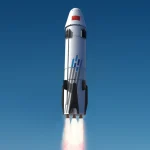
The transport capacity of Changliujia SSO (700km) is about 5t. The first launch will be on March 29, 2022. It is designed using modular, combined and serialized solutions based on Changliu. One of the special things about Chang Liujia is that Chang Liujia is my country’s first rocket to use solid boosters. Chang Liujia is a two-stage and a half configuration, with a liquid core stage with four solid boosters, which realizes the combination of solid-liquid power systems. The solid power thrust is large and the time is short, while the liquid power thrust is stable and the specific impulse is high. The solid booster is provided by the Fourth Institute, with a diameter of 2 meters and a total length of 15.1 meters. Each booster is equipped with an FG-112 engine, using butyl hydroxyl propellant, with a single thrust of 1214 kN. The first stage has a diameter of 3.35 meters and is equipped with two YF-100GAII liquid oxygen/kerosene engines, with a single thrust of 1188 kN. The diameter of the second stage is also 3.35 meters. It is equipped with a YF-115GIA liquid oxygen/kerosene engine with a thrust of 180KN. If the second stage is started a second time, it is equipped with a YF-115B. The standard fairing is 4.2 meters long and 11 meters long. The satellite’s envelope range is 3.8 meters in diameter and 5.2 meters long. According to different satellite requirements, the fairing can also be changed to 3.35 meters, 3.8 meters and 5.2 meters. Liujia adopts the “one horizontal and two vertical” test and release model, that is, horizontal transfer, vertical assembly, and vertical testing. The current test and release cycle is about two weeks. When igniting, start with level one first, then boost and then start again. In addition, the special point of Chang Liujia is that Chang Liujia is the only model among my country’s new generation launch vehicles that can be launched from inland launch sites. The shortcoming of Chang Liujia is that it needs to be adapted to the landing area of the original model, so the solid booster is not separated at the optimal separation point, resulting in a waste of transport capacity and affecting the carrying capacity of Chang Liujia to a certain extent.
In addition to Chang Liujia, the Eighth Academy also launched a new rocket-Chang Twelve. Unless there is a big surprise, Yuan Xin will definitely buy Chang Twelve in the future, so I will briefly talk about Chang Twelve.
Chang Twelve is a two-stage configuration with a diameter of 3.8 meters. The first stage is equipped with four YF-100Ks with a single thrust of 1250KN. The second stage is equipped with two liquid oxygen/kerosene engines with a thrust of 180KN. The SSO (700km) capacity is not less than 6t. The standard fairings are 4.2 meters and 5.2 meters, and can also be adapted to other sizes. Chang Twelve plans to make its first flight in Hainan Commercial Development Zone this year. It has completed its second transfer and erection drill last month. Since it has not yet made its first launch, we can only briefly talk about it. After the first launch, we can talk about this rocket in detail.
It can be expected that in the next one or two years, the Eighth Academy will definitely be Yuan Xin’s main rocket supplier. From the perspective of market supply, those rocket companies that are in the early stages of development are not included, nor are companies that have developed very early but are currently progressing very slowly. The only ones left are the First Academy of Aerospace Science and Technology, the Eighth Academy of Aerospace Science and Technology, Aerospace Science and Technology Commercial Rocket Company, Blue Arrow Aerospace, Tianbing Technology, Interstellar Glory, China Aerospace, Galaxy Power, Eastern Space, Arrow Technology, and Deep Blue Aerospace. The current national tasks of the First Academy are very heavy. The space station, fire detection, and lunar exploration are basically undertaken by the First Academy. We want to achieve manned landing on the moon before 2030. The development of Chang 10 is a very important task for the First Academy. Chang 8 of the First Academy may also undertake many of Yuan Xin’s tasks. However, once the star network satellites are launched, at least half of Yuan Xin’s supply will be taken away. Then there is the commercial rocket company. The commercial rocket company is led by the Eighth Institute of Technology. The relationship between commercial rockets and the Eighth Institute of Technology in the future will probably have to be discussed. The rest are private rocket companies. Originally, Tianbing was developing relatively quickly, but the Gongyi test bed incident has dealt a big blow to Tianbing. It remains to be seen when Tianlong 3 will be launched. If Tianlong 3 can be launched, some of the rocket supply may also be replenished. Then there is the Blue Arrow. The current rocket models of the Blue Arrow are relatively useless. The SSO (500km) capacity of the Suzaku-2 is 1.5t, and the improved version is 4t. It is a bit useless to undertake the networking task, and can only wait for the Suzaku-3. Suzaku-3 is said to be making its first flight next year. If it succeeds, it will also be an important supplement to the rocket’s capacity. Interstellar Glory’s Hyperbolic 3 is also said to be making its first flight at the end of 2025. These three companies are relatively fast. The fast refers to their research and development progress and the establishment of their supply chain. Assuming that the Tianlong 3, Suzaku 3, and Hyperbolic 3 rockets all succeed in their first flights, then when production is expanded later, the supply chain capabilities will be tested. There are still several problems. The first is when will they make their first flight? This is not a single factor variable, but a variable affected by multiple links and multiple departments. The second was whether Yuan Xin dared to put his satellite on it during their first flight. The third one is a successful first flight, but there is still a way to go before it becomes a mature rocket. China Aerospace, Galaxy Power, and Oriental Space previously focused on solids. The success of solids is not the same as the success of liquids, and team building is also a very important issue. There are only so many people who can do liquids, and those who want to get out of the system are almost the same. The SSO (500km) of Lijian-1 is 1.5t. The SSO (700 km) capacity of Pallas 1 is 270 kg. They want to take on the task. On the one hand, they must speed up the progress of liquid research and development. On the other hand, they must also lay out the liquid supply chain as soon as possible to be able to take on Yuan Xin’s task. For Gravity One, if it is a solid upper stage, the SS0 (500km) transport capacity is 4.2t. If it is a liquid upper stage, the SSO (500km) is 5.9t. If it is to undertake the task of Yuan Xin, it must either exert force on the liquid or improve the solid transport capacity. The founding team of Eastern Space has the core backbone of Chang Shiyi. After all, it can develop the world’s largest solid rocket. It is also possible to increase the transport capacity on a solid basis. Arrow Yuan is liquid when it comes up. If Yuanxingzhe 1 can successfully make its first flight, it may also be an important addition to Yuan Xin’s rocket supplier. However, Yuan Xinzhe’s current first flight time has been revealed to be the end of 2025, so Yuan Xin cannot count on this rocket next year. Deep Blue Nebula No. 1 has an SSO (500km) transport capacity of 1t. It has not been completed yet. Even if it is completed, how can it undertake the networking task with a transport capacity of 1t.
Therefore, in the next year, the Eighth Academy will undoubtedly be Yuan Xin’s core rocket supplier. Yuan Xin wants to complete the launch of 648 GEN1 satellites by the end of 2025, mainly relying on the rockets of the Eighth Institute.