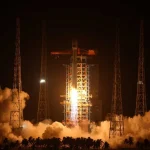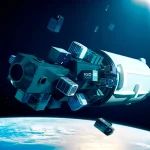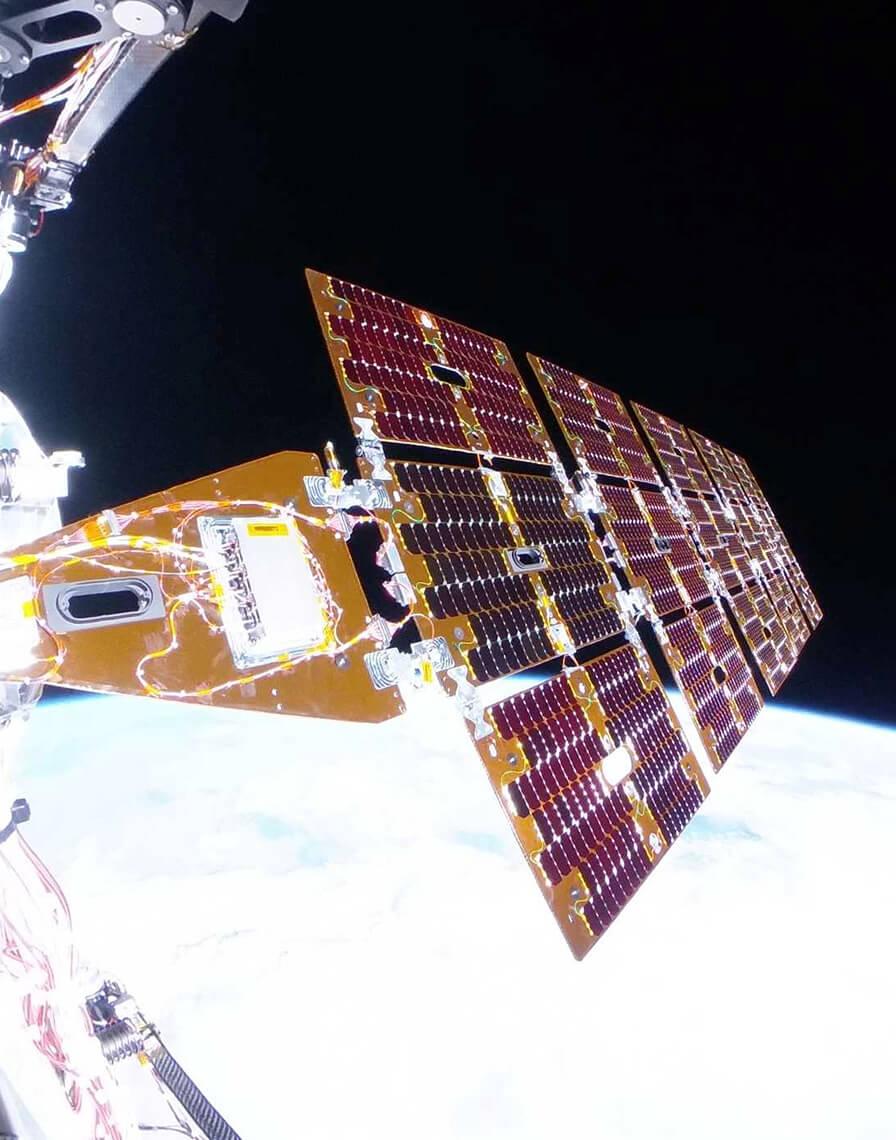
LINK launched July 3 on an unprecedented mission to rendezvous with Swift and boost the observatory to a higher altitude before atmospheric drag pulls it down past a point of no return. About three weeks after launch, LINK began spinning at an unexpected rate, causing a temporary communications dropout and a reset of its satellite platform. Two of LINK’s three reaction wheels, which control the spacecraft’s orientation, stopped working.
The urgency is acute. Swift, which has no thrusters of its own, faces a boundary NASA places at around 186 miles, roughly 300 kilometers, above Earth. The observatory is expected to reach that altitude by October. The original plan called for LINK to meet up with Swift in early August, just a month after launch, as soon as commissioning work wrapped up. That timeline is no longer achievable.
In an update posted August 6, NASA officials described the recovery effort. LINK was originally in a multi-axis spin rotating at about 9 degrees per second, which resulted in sporadic communications and impeded its progress toward Swift. Using a series of burns from one of LINK’s electric propulsion thrusters, the Katalyst team slowed the spin to about 1.47 degrees per second and plans to hold it there while proceeding with next steps.
Those next steps include uploading flight software updates with new attitude controllers designed to maintain LINK’s stability in its current configuration. NASA officials said the updates would allow LINK to begin maneuvering to align with Swift’s orbit. The updates are expected to be beamed up in the coming days.
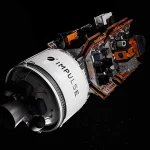
Swift, officially the Neil Gehrels Swift Observatory, launched in 2004 to study gamma-ray bursts, the most energetic events in the universe. The $250 million telescope started at an altitude of about 375 miles, roughly 600 kilometers, but has fallen considerably since then, with the descent accelerating as the lower it goes, the more atmosphere it encounters and the greater the frictional drag becomes. The telescope is still working normally, which is why NASA wants to save it. Last September, the agency awarded Katalyst $30 million to build LINK, a refrigerator-sized spacecraft with three robotic arms, and fly the rescue mission.
The situation now places two spacecraft in jeopardy at once. A mission designed to solve one problem has become a second emergency, with mission teams racing against time to stabilize LINK before Swift crosses the point of no return. Katalyst met a very tight timeline to prepare LINK for launch and cleared a number of commissioning milestones before running into trouble.
Mission teams have not given up on the rescue attempt. In the coming days, engineers plan to upload the flight software updates that would let LINK resume maneuvering toward Swift’s orbit. Whether those updates restore enough stability to complete the rendezvous before October will determine the outcome for both spacecraft.