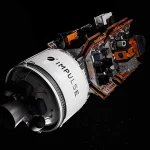
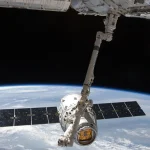
Starlab is developing a next-generation commercial space station designed to provide a permanent destination for scientific research, technology development and commercial activities in low Earth orbit (LEO). Headquartered in Texas, United States, the company is building a commercially operated orbital platform that aims to ensure a continuous human presence in LEO following the retirement of the International Space Station (ISS). Starlab has been developed to address these evolving requirements by offering a flexible orbital environment designed for scientific discovery, commercial innovation and international collaboration while maintaining compatibility with future transportation systems and mission architectures.

Starlab is being developed as a commercially owned and operated space station that will serve as a multi-purpose orbital destination after the International Space Station concludes the operational life. The station is designed as an integrated ecosystem capable of supporting government missions, commercial customers, academic institutions and international space agencies. The approach enables multiple organizations to access microgravity infrastructure through a shared platform while expanding opportunities for scientific research and commercial utilization in orbit. The station is intended to provide routine access to space for organizations seeking to conduct experiments, validate new technologies, manufacture high-value products and prepare for future deep-space exploration. At the core of the Starlab space station is a large inflatable habitat that combines crew accommodations, laboratory facilities and operational workspaces within a single pressurized environment. The spacious habitat is designed to provide astronauts with significantly more usable internal volume than conventional rigid modules of similar launch dimensions. The station incorporates dedicated work areas, research laboratories, storage systems, life-support infrastructure and operational equipment necessary for continuous human occupancy and long-duration missions. One of Starlab’s primary objectives is to maintain an uninterrupted human presence in low Earth orbit. Starlab has been designed to provide the infrastructure necessary for regular crewed missions while supporting safe habitation, efficient station operations and sustained scientific activity.

Scientific research remains one of the primary missions of the Starlab space station. The microgravity environment available in low Earth orbit provides unique conditions that cannot be replicated for extended periods on Earth, enabling researchers to investigate biological processes, physical sciences, materials science, fluid dynamics, combustion and advanced manufacturing. By offering modern laboratory facilities equipped for multidisciplinary investigations, Starlab is expected to support experiments that improve scientific understanding while contributing to innovations in medicine, biotechnology, pharmaceuticals, advanced materials, agriculture and engineering. Researchers will be able to conduct long-duration investigations requiring continuous exposure to microgravity, allowing experiments to progress beyond the limitations of short-duration suborbital flights. Beyond scientific research, Starlab is designed to facilitate commercial manufacturing in microgravity. The unique environment of space allows manufacturers to produce certain materials and products with characteristics that are difficult or impossible to achieve under Earth’s gravity. These capabilities include advanced material processing, crystal growth, fiber optic manufacturing, semiconductor research, pharmaceutical development and biotechnology applications. By providing dedicated orbital infrastructure for manufacturing activities, Starlab seeks to expand commercial utilization of low Earth orbit while enabling companies to develop products that benefit both space exploration and terrestrial industries.
Also Read: What is International Space Station (ISS)?
Starlab provides an orbital environment where new spacecraft systems, robotics, communications equipment, autonomous technologies, sensors, power systems and life-support technologies can be tested under actual space conditions. Technology demonstrations conducted aboard the station can help reduce technical risks while accelerating the development of next-generation spacecraft intended for lunar exploration, Mars missions, Earth observation, satellite servicing and other future space initiatives. This capability makes the station an important platform for both public and private organizations developing advanced aerospace technologies. The Starlab space station is intended to serve a diverse international customer base by supporting cooperation among governments, research organizations, commercial companies and academic institutions. The station’s commercial operating model encourages participation from organizations that may not have direct access to dedicated orbital infrastructure. By providing standardized access to laboratory facilities and mission support services, Starlab enables researchers and institutions from different countries to conduct experiments, exchange scientific knowledge and collaborate on long-term research programs in space. Commercial space stations rely on dependable transportation systems to deliver astronauts, cargo, scientific payloads and operational supplies. Starlab is being developed to accommodate multiple transportation providers, allowing the station to receive visiting spacecraft that support crew rotation, cargo delivery, scientific missions and station logistics. This flexibility enhances operational resilience while promoting a competitive commercial transportation ecosystem capable of supporting routine orbital operations. Regular transportation services will enable continuous station utilization while ensuring researchers and commercial customers have reliable access to low Earth orbit.

Starlab’s business model extends beyond scientific research by creating opportunities for commercial enterprises, industrial partners, educational institutions and government organizations to establish a sustained presence in space. Through research services, technology development, manufacturing capabilities and commercial mission support, the station contributes to the broader transition from government-led orbital operations toward commercially driven space ecosystems. This approach supports long-term sustainability while encouraging continued private investment in space infrastructure. Starlab is developing a commercial space station that combines advanced habitation systems, research laboratories, manufacturing capabilities and flexible mission support within a single orbital platform. By providing infrastructure for continuous human presence, multidisciplinary scientific research, commercial manufacturing, technology demonstrations and international collaboration, the station is designed to support a wide range of government and commercial missions in low Earth orbit.
About Starlab
Starlab is a U.S-based commercial space company headquartered in Texas, United States, focused on developing a next-generation commercial space station for low Earth orbit (LEO). The company is building an orbital platform designed to support scientific research, technology demonstrations, in-space manufacturing and commercial operations following the retirement of the International Space Station (ISS). Starlab’s space station integrates a large inflatable habitat, research facilities and systems for continuous crewed operations to serve government agencies, commercial organizations, academic institutions and international partners. Through the commercial space infrastructure, Starlab aims to expand access to low Earth orbit and support the growing commercial space economy.