In the past, the development of aerospace products such as rockets and satellites usually involved large-scale national collaboration. However, Space-X, as a model for the rise of global private commercial aerospace companies, has broken the traditional model of each aerospace subsystem being undertaken by different development units. It independently undertakes most of the key core work of the design, R&D and production of rockets and spacecrafts, thereby establishing a modern commercial production system with batch, scale and generalization as the core.
In terms of launch capability guarantee, Space-X has built a very powerful launch capability layout system through a combination of leasing and self-construction. In 2007, Cape Canaveral SLC-40 was leased and renovated, mainly used to support Falcon 9 launch missions, and also has manned launch capabilities; in 2014, it signed an agreement with NASA to obtain the 20-year exclusive use rights of the Kennedy Space Center LC-39A, which is mainly used to support complex launch missions including Falcon Heavy, and also has manned launch capabilities; in 2023, it will lease the Vandenberg Space Force Base LC-6 from ULA. In addition, Space-X has also built its own interstellar base, which is mainly responsible for the development, production, assembly and testing of “super-heavy starships” and the task of launching “super-heavy starships”. This is also the first aerospace base in the United States to be independently constructed and operated by a private aerospace company.
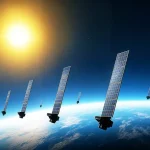
In terms of research and development capability support, Space-X’s capability layout is relatively concentrated. By adopting a centralized layout, it breaks the traditional model in which each sub-system was undertaken by different development units, and is solely responsible for most of the key core work of the design, development and production of rockets and spacecrafts. As the former headquarters, the Hawthorne factory in California houses the production and assembly base for Falcon 9, Falcon Heavy, Dragon spacecraft, Merlin engine and Raptor engine. It was formerly a factory for Boeing 747 passenger aircraft, so there are many aerospace companies and supporting downstream parts factories in the surrounding area. The main production and assembly base of Starlink satellites is located in Redmond, Seattle, Washington. The Hawthorne headquarters factory is mainly used for the R&D and production of precision components such as special chips and printed circuit boards for Starlink satellites. The factory in Oster, Texas is mainly responsible for the R&D and manufacturing of user ground terminals. As for the “Super Heavy Starship”, at the beginning, because manufacturing the prototype required a lot of freedom, temporary tents were mainly used to adjust the production process in time and integrate the latest technology. As the manufacturing process of “Super Heavy Starship” gradually solidified, Space-X built the “Starship” super factory to ensure the production, final assembly and testing of “Super Heavy Starship”. Regarding product testing, Space-X’s testing capabilities are mainly located in McGregor, Boca Chica, and Hawthorne. As the main test area, McGregor is responsible for the testing of all engines; Boca Chica is mainly used to support the conventional structural testing, suborbital and orbital flight testing of the “Super Heavy Starship”; Hawthorne is mainly used to support the primary and secondary structural testing of Falcon 9. In addition, Space-X has also leased some of NASA’s experimental equipment at very low prices through government support.
In terms of supply chain support, Space-X breaks the traditional sub-system outsourcing model of the U.S. aerospace industry and produces as much as possible the parts used in rockets and spacecrafts. This also reduces the quality control risks caused by external procurement of parts to a certain extent. More than 70% of the key components on the rocket are independently supplied by Space-X, and the independent matching ratio of “Starlink” and “StarShield” is more than 80%. At the same time, Space-X continues to strengthen supplier management, integrate external resources through a large number of mergers and acquisitions, and promote hierarchical management of subcontractors. This means that Space-X does not have to work closely with a large number of fixed suppliers like traditional enterprises (Boeing, Lockheed Martin) to develop and produce rockets and other aerospace products. In the actual operation process, due to the limited production volume of rockets and spacecrafts, Space-X produces a variety of different parts on one production line as much as possible in order to reduce the production line. This integrated production model covering major subsystems not only allows Space-X to achieve significant cost reductions, but also allows it to better optimize and coordinate the production process of rockets and spacecraft, providing the possibility for better quality control. In addition, Space-X is sparing no effort to develop rocket and spacecraft reuse technology to speed up production and development progress and improve efficiency.
In terms of company operations, Space-X has not only successfully reduced product development costs by reducing management levels internally and minimizing product outsourcing externally, but also simplified the company’s decision-making process and improved the company’s overall operational efficiency. At the same time, Space-X also comprehensively integrated its self-developed software platform with third-party software systems, and simplified the mission system through training and simulation, thereby achieving optimal configuration of front and rear personnel and rapid response to launch missions. The vast majority of Space-X’s staff work at the headquarters. The design and manufacturing of rockets and spacecraft are also carried out at the headquarters, and tests are conducted continuously at selected launch sites, which greatly promotes the effective coordination and efficient allocation of all the company’s resources. In addition, Space-X has also set up a mission control center at its headquarters, which is responsible for the remote control and operation management of spacecraft in orbit and rocket launch. The construction of this mission control center allows Space-X technicians to obtain rocket and spacecraft data information faster, which not only promotes the efficient use of company resources, but also streamlines a large amount of repetitive basic work.