1. Overview of the U.S. Space Launch Site
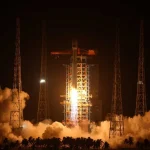
The United States has multiple space launch sites, which are distributed in different geographical locations to meet the needs of various orbital launch missions and are operated and managed by different agencies (such as NASA, the U.S. Space Force, and private space companies (such as SpaceX)), including Cape Canaveral Space Force Base, Vandenberg Air Force Base, Wallops Flight Facility, Kennedy Space Center, Edwards Air Force Base, Pacific Spaceport Complex, Mid-Atlantic Regional Launch Site, Reagan Test Site, and Mojave Air and Space Port.
2. Introduction to some space launch sites
(1) Cape Canaveral Space Force Base
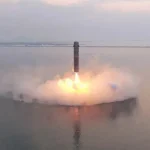
Cape Canaveral Space Force Base opened in 1949 and is located in Cape Canaveral, Brevard County, Florida, at latitude 28°29′N. The United States’ first artificial earth satellite, the first astronaut, the first spacecraft to orbit Mars, and the first spacecraft to leave the solar system were all launched from here. In June 2010, SpaceX conducted the first launch of the Falcon 9 launch vehicle at the SLC-40 station in Card Point. In addition, the LC-13 workstation area before the corner is also used for the recovery and landing of the Falcon 9 first sub-stage and the Falcon Heavy first sub-stage. On September 16, 2015, NASA leased the LC-36 launch station to Blue Origin.
(2) Vandenberg Space Force Base
Vandenberg Space Force Base was opened in 1941 and is located 14.8 kilometers northwest of Los Angeles, California, at a latitude of 34°43′N. In addition to launching spacecraft, Vandenberg Space Force Base can also conduct missile tests. On February 28, 1959, the world’s first polar-orbiting satellite, Discoverer 1, was launched from Vandenberg Space Force Base on a Thor Agena rocket. Vandenberg Space Force Base cooperates with commercial aerospace companies in a variety of ways, such as SpaceX, Firefly, Relativity Space, etc.
(3) Kennedy Space Center
The Kennedy Space Center was opened in July 1962 and is located on Merritt Island, Florida, at a latitude of 28°31′N. It is mainly responsible for assembling, testing and launching NASA’s manned spacecraft. The Kennedy Space Center is adjacent to the Cape Canaveral Space Force Base. The two launch sites share certain resources to a certain extent and have formed a relatively close cooperative relationship. As the most historic launch station at the Kennedy Space Center, LC-39A was used to carry out all U.S. moon landing missions. In 2014, NASA signed a 20-year lease contract with SpaceX to exclusively lease the LC-39A station to SpaceX. After SpaceX obtained the LC-39A station, it underwent extensive modifications to enable it to adapt to the launch needs of Falcon 9 and Falcon Heavy rockets.
3. Analysis of the construction and operation model of the U.S. space launch site
In terms of construction and operation of space launch sites, the United States has the following models. The first is for commercial aerospace companies to rent government launch stations, invest funds to transform the leased stations according to their own launch needs, and pay rent for land and launch station facilities. The U.S. military or NASA provides supporting services such as measurement and security control to commercial aerospace companies. The model of my country’s Dongfeng Commercial Aerospace Innovation Pilot Zone is somewhat similar to this. However, commercial aerospace companies in the Dongfeng Commercial Aerospace Innovation Pilot Zone do not rent existing stations for renovation, but directly build new launch stations. The second type is that commercial aerospace companies directly use launch stations invested and constructed by local governments. There are many state and local governments in the United States that use local financial funds to invest in the construction, maintenance and improvement of launch stations, provide launch services to commercial aerospace companies, and charge launch service fees to these commercial aerospace companies. The construction and operation of my country’s Hainan Commercial Space Launch Site is somewhat similar to this model. Hainan Commercial Space Launch Co., Ltd. provides launch services to rocket companies by operating the Hainan Commercial Space Launch Site and collects launch service fees. The third type is that commercial aerospace companies independently carry out the construction and operation of launch stations. The Commercial Space Transportation Office under the Federal Aviation Administration (FAA) has established regulatory processes for commercial space launch licensing procedures and launch site operation licenses. Commercial aerospace companies can apply for rocket launch licenses and launch site operating licenses based on these regulatory processes.