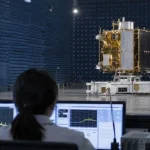
On April 24, 1970, when the melody of “The East Is Red” resounded through space, few people realized that the ground preparations for safely sending a behemoth launch vehicle into space were a huge systematic project in itself. Over the past fifty years, space launch technology has changed rapidly, but one core proposition has always run through it, and that is how to transport, assemble, test, and send the rocket to the launch pad in the shortest time, with the highest reliability, and at the lowest cost. This is the “test launch mode” of the rocket.
The so-called test and launch mode refers to the technical and physical state of the rocket during the transfer, final assembly, and testing process in the technical area and launch area of the launch site. These three states can basically reflect the technical status of the rocket, the test and launch process, ground facilities and equipment, and the characteristics of the overall layout of the launch site. Once the test and launch mode is determined, the entire process flow of the rocket at the launch site and the overall scale and plan of the launch site infrastructure are determined. If the design of the test process is too complex, it will prolong the occupation time of the technical area; if the transportation method is improperly selected, it may cause drastic changes in the status of the arrow, causing reliability risks. Facing the increasingly fierce competition in global commercial aerospace, what kind of test and launch mode to choose is not only a technical issue, but also a strategic issue.
According to the combination of technical and physical conditions of final assembly, testing, and transfer, there are currently three main test and launch modes commonly used for launch vehicles in various countries: one flat, two vertical, three vertical, and three horizontal. One flat and two vertical is the classic model of my country’s early liquid rockets; three flat represents the engineering pursuit of high reliability, especially suitable for high-risk missions such as manned spaceflight; and three flat is a low-cost and high-efficiency solution born in the wave of commercialization.
“One level and two vertical” refers to the test and launch mode in which the launch vehicle adopts graded horizontal transfer at the launch site, and the launch vehicle and satellite complete vertical assembly and vertical testing in the launch area. In the early days of Xichang launch site construction, this model was the absolute main force. At that time, the preparation for launch of a model often took several weeks or even longer. This seems unimaginable today, but at that stage it was already a great improvement. my country’s CZ-2C, CZ-3A series and CZ-4 series rockets all use this mode, and it is still used in launch missions so far.
“Three vertical” refers to the test and launch mode in which the launch vehicle and satellite complete vertical assembly in the technical area, vertical testing and then vertical transfer to the launch area. This method can minimize the significant changes in the rocket’s center of gravity and ensure the stability of the rocket. At the same time, the main testing items of the rocket are all carried out in the technical area. Only a few functional inspections are done in the launch area. Work done in the launch area in the past is moved to the technical area as much as possible, thus avoiding the delay of the work plan or the impact on the quality of the rocket components due to severe weather conditions. Currently, the American Saturn 5, SLS, Atlas 5, European Ariane 5, Japanese H-2A, and our country’s CZ-2F, CZ-5, CZ-7 and other rockets all use this mode.
“Sanping” refers to the test and launch mode in which the launch vehicle and satellite complete horizontal assembly in the technical area, horizontal testing and then horizontal transfer to the launch area for vertical launch. The advantage of this mode is that there is no need to build a tall vertical assembly test factory (which can easily cost billions), and the facilities in the technical area are relatively simple. The American Falcon 9, as well as my country’s CZ-6, CZ-11, Kuaizhou and other rockets all use this mode.
From the perspective of specific practice, there is no absolute “pros and cons” among the three models, only “whether they are suitable”. The three-vertical mode is most suitable for missions with extremely high reliability requirements such as manned spaceflight and large-scale deep space exploration. The combination of my country’s Shenzhou series spacecraft and Chang-2F rocket is an example, but the price is huge initial investment and a long preparation period. The three-level mode is most suitable for commercial launches, rapid response launches, small and medium-sized launch vehicle missions, and areas with large ground wind fields (the ground wind load of the rocket is reduced by raising the vertical arm). For commercial aerospace companies pursuing “quick response” and cost control, Sanping has almost become a standard configuration. The one-level and two-vertical model is mainly suitable for situations where the carrying capacity requirements are medium, the frequency is not high, or simple modifications are carried out on the basis of existing traditional launch site facilities.
From a domestic perspective, most of the current models of commercial rocket companies adopt the “three-flat” model or the new “three-vertical” model. Here we will mainly talk about these two models.
1. “Three Levels” test and launch mode
Mainly includes the following parts:
1. Product transportation. Rocket sub-stages arrive at the launch site by sea or road transport; satellites arrive at the launch site by sea, road transport or air transport.
2. Satellite assembly, testing and filling, and cover buckling.
(1) When the satellite is launched without fueling, the satellite completes fairing assembly in the fueling buckle factory building, and is horizontally transferred to the Sanping Rocket Factory in the technical area to complete satellite-rocket docking.
(2) When launching and refueling a satellite, after the satellite undergoes final assembly testing in the final assembly and test plant (including satellite cleaning and status recovery; satellite status inspection; satellite final assembly electrical test; solar wing deployment and electrical test; thermal control implementation; status inspection before satellite transfer), under normal circumstances, it will be pushed through the corridor to the loading station. Note that the satellite filling and shielding are completed in the fairing and cover factory building (including fairing dust removal, instrument installation and testing; load bracket inspection, docking with the satellite, installation of separation springs and locking devices; cover closing), and then the star cover assembly is transferred horizontally to the Sanping Rocket Factory in the technical area to complete the satellite and rocket docking.
Regarding the current demand for satellite launches, more than 90% of the demand is concentrated on the two giant satellite Internet constellations that have been announced by our country. The satellites of these two constellations include near-polar orbit satellites and inclined orbit satellites. Before the satellites leave the factory, the solar wings have been installed according to the launch status and the filling has been completed. After arriving at the launch site, under normal circumstances, there will no longer be a sailboard deployment test at the launch site, and there is no need for fuel refueling.
3. Rocket assembly test. This includes the reprinting, status recovery, docking, and tank airtightness inspection of each sub-stage of the rocket; sub-system test preparation, sub-system and matching test, and general inspection; rocket sub-stage docking; installation of pyrotechnics and forward and reverse thrust rockets; preparation for transport status; and hoisting of the entire rocket to the transfer vehicle.
4. Rockets transition. The entire rocket is transferred to the launch station by the transfer vehicle, docked and locked with the launch pad, connected to the ground, and the entire rocket is erected.
5. Star cover assembly transportation and docking. The rocket and star cover assembly are hoisted and docked, and the star-arrow interface inspection is completed.
6. Filling and ignition. Joint debugging of fueling signals, propellant filling, pre-launch inspection, ignition and launch, and rocket take-off.
2. New “three vertical” test and launch mode
The new “three-vertical” test and launch model is a systematic optimization and upgrade of the traditional “three-vertical” model in order to cope with high-density and normalized launch requirements. It is centered on “vertical assembly, vertical testing, and vertical transfer”, but has made breakthroughs in specific implementation methods, technologies, and process efficiency. The core goal is to achieve rapid response and low cost while ensuring high reliability. Mainly include the following aspects:
1. The first sub-stage/booster assembly and the second sub-stage are transported vertically to the technical area of the launch site to complete the installation of pyrotechnics and DT-3 filling;
2. The first sub-stage/booster assembly, second sub-stage, and star cover assembly are vertically transported to the launch station respectively, and hoisted and docked;
3. Arrow-to-ground interface connection, satellite testing, and power system testing;
4. General inspection of the entire arrow and preparation before filling;
5. Rocket filling (mainly divided into two types, the filling process is: ground pipeline pre-cooling → rocket tank pre-cooling → high-flow filling → parking → hot oxygen emission → pre-launch supercooling supplement → emptying and falling off → 0s → withdrawal; ground pipe pre-cooling → rocket tank pre-cooling → high-flow subcooling and filling → low-flow supercooling and supplementing → emptying and dropping → 0s → withdrawal) and launch.
Currently, in the face of the deployment requirements of giant low-orbit satellite Internet constellations such as the “GW” constellation and the “G60” constellation, as well as the fierce competition in global commercial aerospace, it is crucial to continuously improve the construction of test and launch capabilities. It can not only systematically enhance the networking speed and operational efficiency of my country’s low-orbit constellations, but also significantly improve the adaptability and rapid response capabilities of launch missions, providing a solid guarantee for seizing orbital resources and meeting high-density networking challenges.