By Nick David, Editorial Lead, SatNews
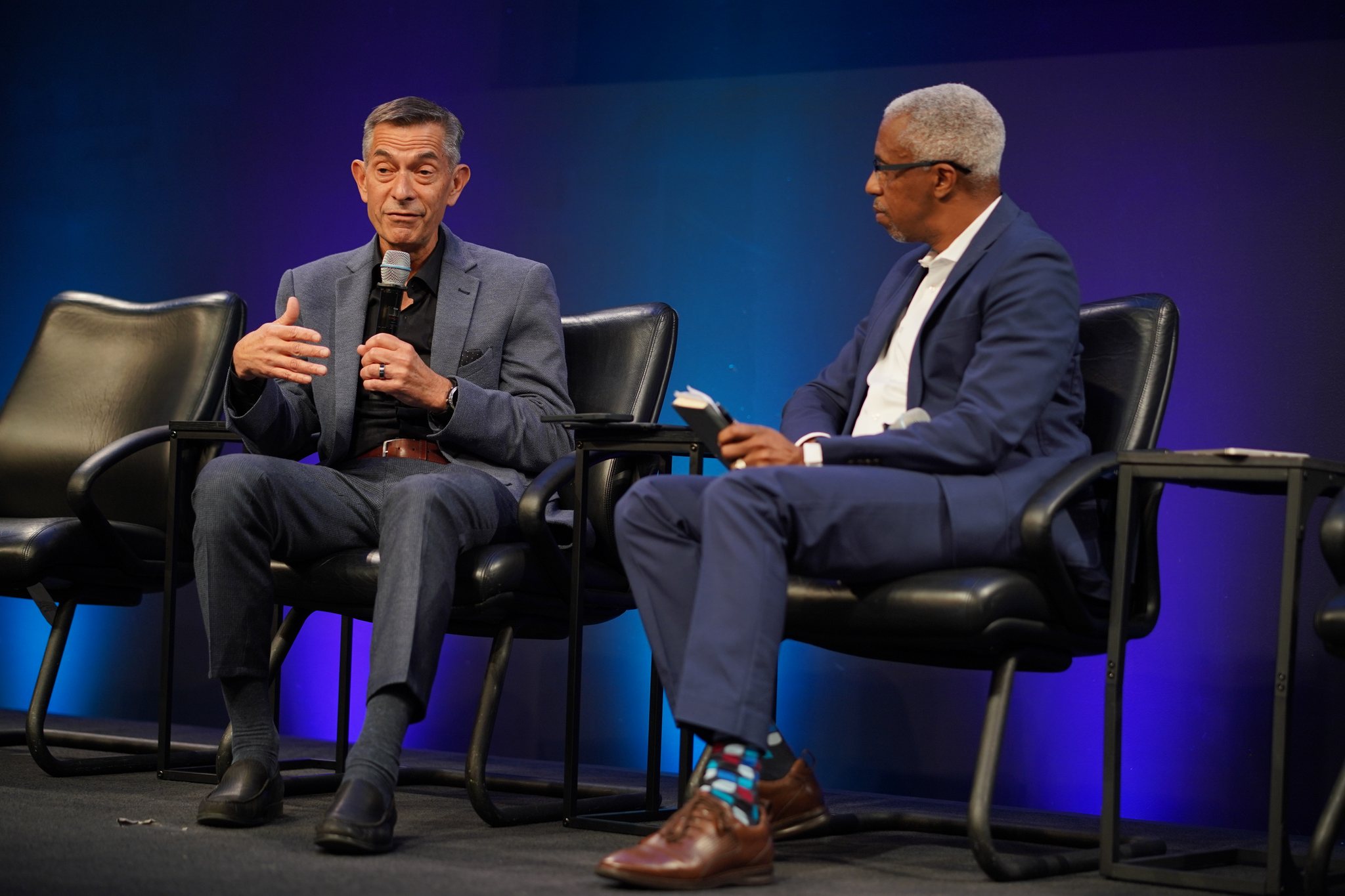
Three Pentagon officials took the MilSat Symposium stage at Silicon Valley Space Week on Wednesday afternoon. Each gave startups the same advice: bring something that works.
Space Development Agency Director GP Sandhoo went first. Too many companies arrive with ideas rather than mature technology, he said, and the small-business research awards many of them live on rarely produce winners. In his “30-some-odd years of having done this, it’s probably single digits, the successes that come out of that,” he said of SBIR and STTR programs. For many small companies, he added, those awards have become a lifeline.
He pointed to early aviation and the auto industry. Those industries succeeded in spite of government funding, Sandhoo said. The successful ones build it, show it and then sell it. SDA’s bar is lower than founders might expect: a “C+, B-” demonstration on one or two satellites can be good enough to buy a plane or a tranche.
“We’re not your customer”
At the Defense Innovation Unit, 90% of contracts go to non-traditional companies, said Maj. Gen. Steven “Bucky” Butow, senior adviser to DIU’s director. But founders need to know where DIU sits. “You need to know who your customer is, and we’re not your customer,” he said. DIU prototypes and validates. The portfolio acquisition executives buy.
To get companies across that gap, DIU’s Bridge program offers firms on DIU contracts what Butow called concierge services for the usual walls: facility and personnel clearances, SCIF access and authority to operate on government networks.
When he’s involved in a company’s first DIU effort, his first question is “What’s your path to revenue?” The urgency is real, he said: “Right now, when we don’t have budgets, the people in this room are the people we’re most concerned about, because you don’t have a lot of runway.”
The clearance catch-22
Col. Tim Trimailo, director of the Commercial Space Office at Space Systems Command, described the Space Force’s answer to the same wall in a fireside chat moderated by Milbank’s Dara Panahy. Startups, he said, can’t get a contract without a clearance and can’t get a clearance without a contract.
COMSO’s ACES program (Access to the Classified Ecosystem for Space), announced last week and built on DARPA pathfinding work, starts that process earlier. When a program office needs a classified conversation with a company, COMSO can add security classification specifications to SBIR projects, use cooperative research agreements or no-cost contracts, and help with facility clearances. “This is not circumventing any existing processes,” Trimailo said.
The view from the startup side
Momentus Chairman and CEO John Rood, a former under secretary of defense for policy who has also worked at Lockheed Martin and Raytheon, described the other end of the table. SBIRs are “insufficient to run even a small business on,” he said, though winning one competitively shows investors the idea has merit. The government system, he said, “is really optimized for large contractors.”
“We only have one kind of money. It’s called cash,” Rood said. “Every quarter is a survival quarter.”