On January 17, 2026, my country had problems with two consecutive rocket launches within one day, which aroused widespread concern.
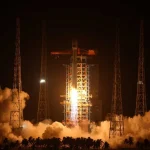
At 00:55, the Long March 3B carrier rocket failed to launch from the Xichang Satellite Launch Center.
At 12:08, the Ceres-2 (Yao-1) carrier rocket failed to launch at the Jiuquan Satellite Launch Center.
After the incident, I saw many official and unofficial reports and comments, which also triggered some personal thoughts.
From the time when our country had rocket launch records, to this day, not only our country’s rocket development technology is constantly changing, but also the public’s experience and perception of rocket launches. In the past, aerospace was the key for our country to break the nuclear monopoly of superpowers and build national self-confidence. Through repeated efforts, astronauts have proven to the world that “what foreigners can do, Chinese people can also do.” At this time, the public’s perception of aerospace is “we actually did it.” With the continuous improvement of our country’s comprehensive national strength, our country’s aerospace industry has also ushered in rapid development. Space missions have continued to increase, and launch failures have rarely occurred. Gradually, everyone has become accustomed to the news of successful space launches, and their perception of aerospace has become “this is how we should be, and this is China’s standard as a big country.” In this context of “accustomed to success”, everyone’s psychological baseline has been anchored at “100% success.” Any launch failure will be infinitely magnified.
Especially in the era of social media, complex technical failures are often quickly simplified as “rocket launch failure,” and emotional interpretations often run ahead of factual investigations. After each launch failure, in the “information vacuum period” before the official investigation reaches a conclusion, there will often be moments when emotional, fragmented, and even demonized interpretations are most rampant. The failure of the launch becomes an outlet for various emotions, leading to a rapid rise in public opinion. This is not only a public relations crisis, but also a deep test of a country’s science and technology governance system and the public’s scientific literacy.
When the news of a successful launch no longer causes the heart to beat faster, a dangerous sense of distance begins to quietly arise between the public and the aerospace industry. The media’s “de-processed” presentation of success has made years or even decades of technical research, countless failed iterations, and persistence in extreme environments highly compressed, making every successful launch seem like “born out of thin air.” The “clean sense” of aerospace images under the lens of the new era also makes it difficult for the younger generation to have a personal experience of the suffering and glory of the “two bombs and one satellite” era, because these are just historical stories for them, not personal memories. As this cognitive gap that only sees the final perfect “result” but cannot see the “cause” of the struggle continues to widen, after each launch failure, the overreaction of public opinion will directly translate into extraordinary pressure on the development team. A 100% launch success that is “accustomed” to the outside world will be “high pressure” internally. This invisible pressure may lead to over-conservatism in subsequent missions, stifling necessary technological innovation and risk exploration.
As the aerospace industry begins to move from a “relatively closed, highly controlled information environment” to an environment in which “all the people are watching and emotions are real-time,” the public’s perception of the aerospace industry has also begun to transform from a “national secret project” to a “public utility for all.” Especially after the emergence of commercial aerospace, market capital began to enter the aerospace industry. Public opinion (especially the amplified launch failure) is no longer just a matter of public sentiment, but directly related to capital flow, industry confidence and market valuation. In this environment, a severely amplified failure will have an extremely amplified “multiplier effect” along the business chain. On the capital side, for some non-professional investors and financial institutions, their decisions are extremely dependent on market sentiment and brand reputation. A public opinion crisis caused by an out-of-control launch failure of a commercial rocket company will be immediately interpreted as an “increased systemic risk”, which is very likely to lead to “valuation reduction, rising financing costs”, “wait and see the withdrawal of funds, new financing is blocked”, “investors require more stringent risk bets and exit terms” and other problems, seriously affecting the company’s survival and development. On the industrial side, commercial aerospace is a highly integrated ecosystem. If the launch failure of a key leading company is over-interpreted or even demonized, the negative impact may quickly overflow and affect the reputation and credit of the entire industry chain. The aerospace industry is a very special system. In addition to the existing supply chain system of the national team, my country’s commercial aerospace industry has not yet established a complete supply chain system. At present, overall enterprises are usually deeply bound to a few core suppliers to collaboratively promote research and development. However, in the early stages of cooperation, since the company’s products have not yet been finalized and entered the mass production stage, the scale of orders placed with suppliers is usually limited. On the contrary, suppliers need to cooperate with the overall enterprise to conduct a large number of repeated tests, verifications and design improvements. The problems of “high investment cost and long economic return cycle” are very obvious. Under this model, many potential suppliers are not willing to participate because in the short term there is the practical challenge of “high investment, low income”. However, most of the companies currently willing to participate focus on long-term strategies and hope to take the lead in cultivating technology and engineering capabilities that meet aerospace standards through coordinated development with the overall enterprise. After the entire industry enters the stage of large-scale development, they can obtain excess market returns by relying on the accumulated first-mover capability advantages. However, there will be a “capacity cultivation waiting period”. During the “capacity development waiting period”, market sentiment and the overall reputation of the industry become very important. Because many supply chain companies enter the aerospace industry across industries and have limited understanding of the entire aerospace industry, if the reputation of the entire industry chain is seriously damaged due to individual incidents, it will directly weaken their confidence in the future development prospects of commercial aerospace. Potential suppliers and partners in a wait-and-see state may re-evaluate cooperation risks and return expectations, and then delay or withdraw from cooperation, which will have an irreparable negative impact on the entire industrial ecology in the early stages of construction. At the same time, some top talents who plan to cross-industry may also raise doubts about the stability of the industry, thereby delaying their entry into the commercial aerospace field. On the regulatory side, the impact is even greater. Commercial aerospace is an emerging thing, and there are many things that cannot be followed. A launch failure by a leading company in the industry is very likely to trigger excessive and prudent supervision at the policy level, thereby inhibiting the innovation vitality of the entire industry. On the market side, future consumer markets such as satellite Internet and space tourism will be based on “a sense of security” and “reliability”. A widely disseminated picture of failure may implant long-term distrust in the hearts of potential consumers and destroy immature market demand.
Therefore, while we are working hard to develop aerospace technology, we urgently need to build a matching public-aerospace communication system. This is the only way for China’s aerospace industry to move from “powerful” to “great” – because the most distant journey to the stars begins with the most solid and healthy connection with the earth under our feet. If the deep symbiosis between aerospace and society cannot be achieved, then strength will be just suspended and fragile glory. However, this “deep symbiosis” will never form spontaneously. It must be realized through a forward-looking and systematic “public aerospace communication and co-education system”. This system should not be an explanatory tool after the fact, but a social infrastructure project that precedes launch. It is not only about the flow of information, but also the construction of trust, the sharing of meaning and the symbiosis of destiny. The purpose of building this symbiotic system is not only to “explain” and “propaganda”, but also to build trust, manage expectations, and jointly build value. This is the indispensable “soft power” foundation to ensure that my country’s aerospace industry obtains sustainable social support in the new era. The success of this system is no longer measured by how many articles are published, but by “when a launch is successful, whether the public understands its unique value rather than just feeling “routine” pride”; “when a launch fails, whether the public can give a rational space based on understanding instead of emotional accusations”; “in normal times, whether the public regards the aerospace industry as a public asset that is relevant to them and worthy of continued attention and discussion.”
If we never do this, China Aerospace may be able to continue to achieve “powerful” milestones one after another with its huge resource investment and outstanding engineering technology, but it will always be shrouded in some invisible crises and it will be difficult to move from “powerful” to “great”. The most important of them are the crisis of trust and the crisis of power. The first is a crisis of trust. If the aerospace industry continues to be mysterious and one-way propaganda, then public trust will always be fragile and based on perfect expectations. Once a launch fails, the long-term accumulated trust will continue to evaporate due to a lack of in-depth understanding, and will be replaced by a sense of betrayal and turbulent doubts. Every rocket launch will be accompanied by a gamble in public opinion. Moreover, due to the extreme opacity of information, it is easy to give rise to conspiracy theories and extreme emotions, because it is difficult for the public to distinguish between “normal risks” and “responsible accidents.” If once trust is lost, there is a lack of effective communication mechanisms, and the pace is set by the Internet, then any technical adjustments may be misinterpreted as covering up failures. The second is a power crisis. Aerospace requires huge investment of public resources and lifelong dedication of top talents. If the public’s impression of the aerospace industry gradually becomes a distant, mysterious and unquestionable “gold-eating beast” instead of a “common cause” worthy of their attention, understanding and pride, then the foundation of the aerospace industry’s long-term ability to obtain budgetary support and attract the best minds may be shaken. Moreover, great exploration usually requires a cultural atmosphere that tolerates failure and encourages fantastic ideas. A public opinion environment that only allows for success and cannot transparently discuss setbacks is also very likely to lead to internal decision-making becoming more conservative and avoiding necessary technological risks in order to “avoid accidents.” This will ultimately damage the courage and ability of my country’s aerospace industry to continue to explore.
The sign of a healthy aerospace ecosystem is not that there are no failures, but that when failures occur, professional investors can see the underestimated technical value, potential partners can discover more reliable improvement processes, and the public can see it as an educational and scientific practice worthy of attention. This is the most stable ballast stone and the most durable propellant for China’s aerospace industry.