China commercial aerospace
1. The 4D Gaojing-3-02 satellite was successfully launched
On March 15, 2025, my country used the Long March 2 Dingyao 100 carrier rocket at the Jiuquan Satellite Launch Center to successfully send the 4D Gaojing 302 satellite into the predetermined orbit.
Hello space:
This launch is another upgrade of China’s commercial remote sensing capabilities.
Reducing data acquisition from annual coverage to monthly coverage means faster and more accurate imaging services, which is a major benefit to natural resource monitoring, urban planning, emergency disaster relief and other fields.
2. Long March 12B completed the second-stage power system test run
On March 15, 2025, the reusable launch vehicle Long March 12B (CZ-12B) developed by China Commercial Vehicle Administration successfully completed the test run of the secondary power system. This test run used the YF-102V vacuum version engine developed by the Aerospace Development Corporation.
Hello space:
This test run focused on the engine
Started multiple times,
ignited multiple times,
Entry parameters vary widely
and
Long-term pre-cooling adaptability
, laying a solid foundation for the commercial application of Long March 12B.
3. Galaxy Power shoots two arrows and fourteen stars in one week
On March 17 and 21, 2025, Galaxy Power launched two Ceres-1 Yaotai-10 and Yaotai-17 rockets respectively, sending a total of 14 satellites of Yunyao Meteorological Constellation 43-48, 55-60, and Zhongke Satellite 06 and 07 into a 535km sun-synchronous orbit.
Hello space:
As of the latest launch, Ceres-1 has successfully completed 18 missions, placing a total of 77 satellites into predetermined orbits, making it one of the commercial launch vehicles with the most launches, the largest number of satellites and the highest success rate in the residential space field.
4. Joint test run of Yue Zhan 1 rocket engine and control system
On March 17, 2025, the Sixth Academy of Aerospace Science and Technology and Dahang Yuejian jointly organized a joint hot test run of the 80-ton liquid oxygen methane engine YF-209 and control system of the Yuezhan 1 reusable rocket, which was a complete success.
Hello space:
The core goal of this test run is to verify the complex flight sequence of the YF-209, especially the secondary start and thrust adjustment capabilities after long taxiing. Judging from the test results, the collaborative work of the YF-209 engine and control system performed stably, and the key technical links successfully passed the assessment, laying a solid foundation for the first flight of the first domestic “Chopstick Rocket” Yuanjian No. 1.
5. The first successful 400Gbps laser communication test in China
On March 18, 2025, Aurora Star successfully carried out the first domestic on-orbit 400Gbps ultra-high-speed laser communication data transmission test through the “Optical Transmission 01/02 Test Star” and achieved success.
Hello space:
This test used the self-developed product of Aurora Starcom
LT-II laser communication terminal
, not only supports multiple speeds, but is also compatible with coherent and non-coherent communication systems, demonstrating the high flexibility and stability of its technology.
This breakthrough means that China’s satellite Internet communication capabilities have reached a new level.
6. Multiple satellite projects have been approved for construction
Recently, the Yinglong Satellite Constellation (Phase I) project was officially approved by the National Development and Reform Commission. The 108-satellite network plan planned by Tianwei Technology also successfully passed the review of the International Telecommunications Union and successfully obtained international registration.
Hello space:
The continuous emergence of satellite constellation plans in various places has expanded the scale of my country’s commercial aerospace market and intensified competition in the satellite application market.
7. Beidou Space-time Fund completed equity investment in Qianxun Position and Hotshu Technology
On March 18, 2025, Beidou Space-Time Fund completed the equity investment in Qianxun Position and Hotshu Technology. At present, the two companies have established wholly-owned subsidiaries in Zhuzhou, Hunan.
Hello space:
This investment marks Zhuzhou’s further layout in the satellite industry chain. Qianxun Position has built a full-link Beidou ecosystem in positioning services, chip modules, smart terminals, solutions, etc.; Hotshu Technology is a supplier focusing on commercial aerospace thermal control subsystems and has the entire industry chain coverage of thermal control subsystems.
international commercial aerospace
1. Falcon 9 fired a record 3 consecutive launches in 13 hours
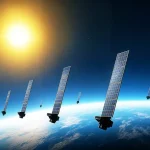
On March 15, Beijing time, the Falcon 9 rocket carried out three launch missions in about 13 hours. The Crew-10 Manned Dragon spacecraft was successfully launched; the 13th joint mission Transporter-13 was carried out, launching 74 small satellites; and the 241st batch of 23 Starlink satellites were successfully launched into the predetermined orbit.
Hello space:
Falcon 9’s “13 hours of three consecutive launches” once again demonstrated SpaceX’s ultimate capabilities in rocket reuse, rapid turnaround and mission scheduling. Especially in missions such as manned spaceflight, small satellite assembly, and Starlink, it fully proves the high maturity of its launch system.
2. The starship will set off for Mars at the end of 2026
SpaceX founder Elon Musk announced on social media
Landing on Mars
. Musk said: If the Mars landing is successful, a manned Mars mission may be implemented as early as 2029, but 2031 is more likely.
Hello space:
Musk has always liked to adjust the schedule of the Starship Mars mission, so this plan does not need to be taken too seriously. At present, the starship has conducted 8 test flights, but there are still many technical challenges before it can truly operate stably.
3. Astronaut returned to Earth after 9 months in space
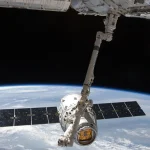
On March 19, 2025, Beijing time, American astronauts Wilmore and Williams, who had been stranded on the International Space Station for more than nine months, returned to Earth aboard SpaceX’s Dragon spacecraft.
Hello space:
From the original eight-day space trip to being “trapped” on the space station for more than nine months, the Boeing Starliner has not yet achieved reliable manned flight capabilities. In the end, it was SpaceX’s Dragon spacecraft that performed the rescue mission.
This incident also proves once again that technical reliability determines the right to speak in the market. In the future, new commercial aerospace forces represented by SpaceX will continue to challenge the market space of traditional aerospace giants.