SFL Missions Inc. continues to expand its satellite platform portfolio, delivering cost-effective, high-performance spacecraft solutions across a wide range of mass classes, from nanosatellites to larger small satellites. With a focus on flexibility, scalability and mission adaptability, the company designs, builds and operates satellites that support diverse applications including Earth observation, communications, RF geolocation, scientific research and technology demonstration. SFL Missions’ approach emphasizes proven heritage designs combined with modular architectures, enabling customers to deploy reliable satellite systems designed to specific mission requirements while optimizing cost and development timelines.
Small Satellite Platforms
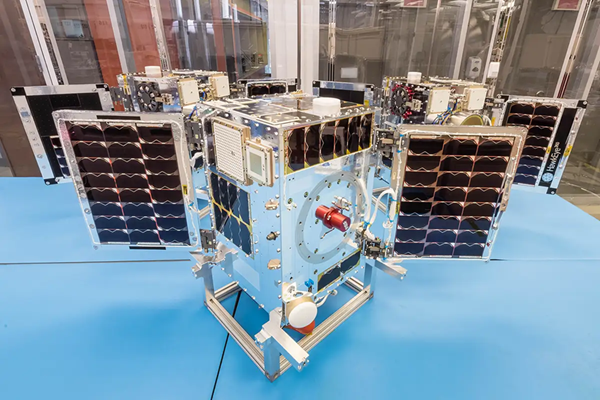
SFL Missions’ small satellite platforms, typically ranging from 100 to 500 kg, are designed to support complex missions requiring larger payload capacities and advanced performance. These platforms enable a wide variety of applications, including atmospheric monitoring, ship tracking, communications, space science and Earth observation. At the center of this category is the DAUNTLESS platform, a cost-efficient satellite bus capable of supporting payloads up to 300 kg. The platform is available in multiple configurations, including DAUNTLESS, DAUNTLESS-E and DAUNTLESS-EG, with variants designed to comply with ESPA and ESPA-Grande standards. This compatibility simplifies launch integration and expands access to rideshare opportunities. The DAUNTLESS architecture is designed to provide robust performance and adaptability, enabling integration with a wide range of payloads while maintaining cost efficiency for larger satellite missions.
Microsatellite Platforms
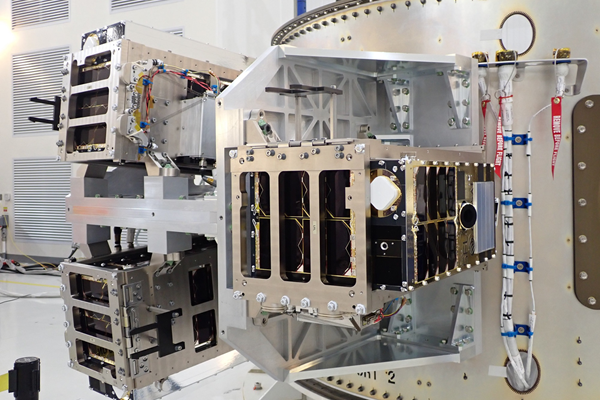
SFL Missions offers a range of microsatellite platforms spanning 15 to 150 kg, capable of carrying payloads up to 90 kg. These platforms are engineered to balance performance, payload capacity and cost efficiency, making them suitable for both commercial and scientific missions. The NEMO platform serves as a proven and widely used microsatellite solution, supporting multiple operational missions. Designed for payloads up to 12 kg, NEMO integrates with the XPOD deployer, enabling pre-deployment of appendages such as solar panels and antennas. This approach reduces mission risk by minimizing deployment complexity after launch. The DEFIANT platform provides a mid-size solution optimized for payloads up to 30 kg, offering a balance between compact design and enhanced mission capability. It is well-suited for missions requiring higher performance without significantly increasing launch costs. For missions requiring larger payloads, the NAUTILUS platform supports payloads up to 90 kg, including advanced optical instruments for high-resolution and multispectral imaging. This platform enables more demanding Earth observation and scientific applications while maintaining the benefits of a microsatellite architecture.
Nanosatellites and CubeSats
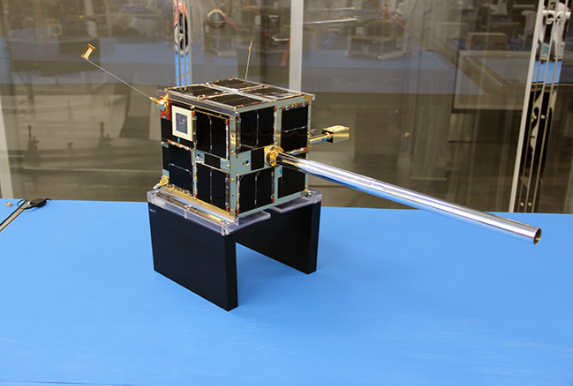
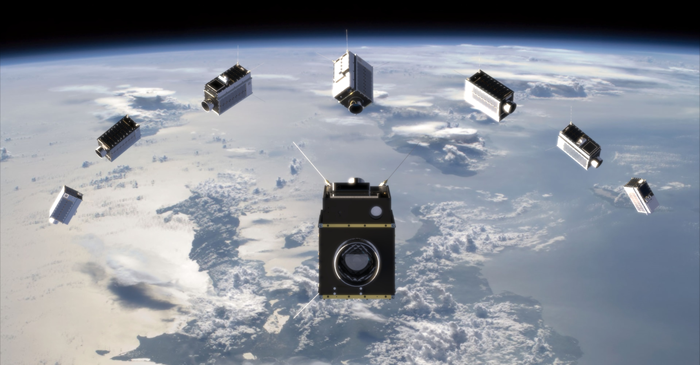
SFL Missions also develops nanosatellites ranging from 3 to 24 kg, designed to support low-cost missions with payload capacities up to 15 kg. These platforms are widely used for scientific research, maritime monitoring and technology demonstration, offering a cost-efficient entry point for space missions. Complementing this capability is SFL Missions’ CubeSat portfolio, which includes platforms such as THUNDER (3U), SPARTAN (6U) and JAEGER (12U/16U). These CubeSats are designed to support a variety of applications, from communications to experimental technologies, while maintaining compact form factors. The CubeSat platforms are built with heritage avionics and advanced attitude control systems, ensuring reliable performance across missions. They are fully compatible with commercial off-the-shelf (COTS) deployers, enabling flexible launch options and reducing integration costs. SFL Missions has supported multiple CubeSat missions, including projects such as Kepler Communications, CanX-2 and CanX-7, demonstrating the adaptability and reliability of the nanosatellite and CubeSat platforms.
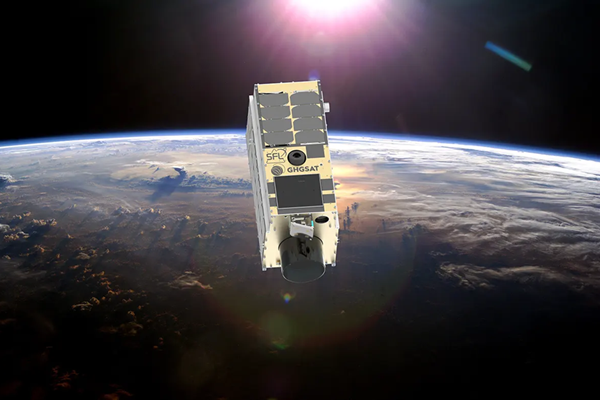
Across all platform classes, SFL Missions emphasizes modularity and mission adaptability, enabling customers to configure satellites for a wide range of applications without extensive redesign. The company’s platforms support integration of multiple instruments, allowing a single satellite to perform diverse mission functions. The use of standardized interfaces and deployer compatibility further enhances flexibility, enabling efficient launch integration and reduced time-to-orbit. This approach supports the growing demand for rapid deployment of satellite constellations and responsive space missions. SFL Missions Inc. addresses this demand by offering a comprehensive range of spacecraft solutions that span multiple size classes and mission requirements. By combining proven engineering heritage with adaptable platform designs, SFL Missions enables organizations to deploy reliable satellite systems for both commercial and scientific applications. The portfolio supports the development of next-generation space missions, contributing to the advancement of global connectivity, Earth observation and space research.
About SFL Missions
SFL Missions Inc. is a Canada-based provider of small satellite platforms and mission services, specializing in the design, manufacture and operation of cost-effective spacecraft. Headquartered in Ontario, Canada, the company delivers scalable satellite solutions across nanosatellite, microsatellite, and small satellite classes. SFL Missions offers a portfolio of modular satellite buses, including platforms for CubeSats, microsatellites and larger small satellites, supporting a wide range of applications such as Earth observation, communications, RF geolocation, atmospheric monitoring and scientific research. The platforms are designed to balance performance, payload capacity and cost efficiency, enabling flexible mission configurations. With capabilities spanning spacecraft development, integration and operational support, SFL Missions provides end-to-end solutions that support both commercial and research-driven space missions.