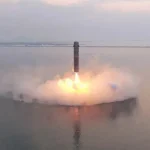
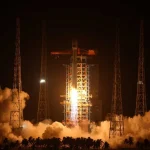
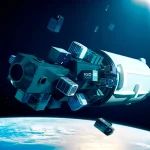
On May 23, 2026, Beijing time, Starship completed its 12th orbital-level test flight at Launch Pad 2 of the Starship Base in Texas. This is the first launch of the Starship V3 version and the first flight of the B19 super-heavy booster and S39 spacecraft combination. The results of this test flight were mixed. The S39 spacecraft successfully deployed 22 simulated Starlink satellites and splashed down in the Indian Ocean, but the B19 booster failed to complete the scheduled splashdown recovery process.
Many people will interpret this launch as a routine performance upgrade and think it is just an iterative optimization of engine thrust improvement and structural lightweighting. However, it is not difficult to find out when reviewing the changes in the entire V3 system that this upgrade goes beyond simple parameter adjustment and achieves a comprehensive reconstruction of the underlying design logic.
Today let’s talk about what innovations Starship V3 has made, and what is its importance?
01
Redefining Starship V3
If divided by development stages, Starship V1, V2 and V3 have completely different positioning: V1 era (1-6 test flights): The core goal is to verify the basic flight, separation and recovery logic, and solve the problem of “can it fly”; V2 era (7-11 test flights): optimize the aerodynamic shape and thermal protection system, gradually complete the basic configuration finalization, continue to expose problems, and rapidly iterate; V3 era (starting from the 12th test flight): completely jump out of the scope of pure technical verification, with long-term operation, high-frequency reuse, deep space mission adaptation, and commercial launch as the core goals to create a set of sustainable space infrastructure. The first two generations of starships are typical experimental products. The most representative one is the development logic of the Raptor engine: SpaceX manufactured about 600 Raptor engines in the V2 stage, far exceeding conventional needs, and promoted research and development in an extreme trial and error mode. For comparison, NASA spent US$3.5 billion to purchase RS-25 engines, with a total of only 24 units. The pursuit is to be absolutely reliable before flying. The design core of V3 has completely changed. It is no longer just pursuing flight, but taking into account hundreds of multiple launches, long-term on-orbit residence, on-orbit fuel replenishment, deep space mission execution, large-scale satellite deployment and other hard indicators. During this test flight, even if one engine each of the booster and the spacecraft failed, the remaining engines still completed all scheduled tasks by extending the combustion time; while deploying the satellite, the S39 used the last two simulated Starlinks to photograph the rocket body in reverse to verify the thermal protection status in orbit, and even actively removed a heat insulation tile to test the tolerance limit of the system after damage. This extreme test is not only the core strategy of SpaceX’s rapid iteration, but also the key to its Mars mission and achieving complete reusability. This test flight also successfully completed the preliminary verification of the stability of the entire V3 system.
02
What changes have been made in Starship V3?
1. B19 super-heavy booster upgrade. The full arrow height of Starship V3 reaches 124.4 meters, which is about 1.3 meters higher than the 123.1 meters of V2. The increase is mainly concentrated on the B19 super-heavy booster. The height increases from 71 meters to 72.3 meters, and the propellant loading capacity increases from 3400 tons to 3650 tons; The number of grid rudders was reduced from the original 4 to 3, the layout was changed to a T-shape, the size of a single rudder was increased by approximately 50%, and the structural strength was further enhanced. The installation position is moved downward as a whole to reduce the high-temperature impact of the secondary tail flame on the grid rudder during the thermal separation stage. The tower capture structure that was originally set independently under the grid rudder was directly integrated into the grid rudder body. The grid rudder rotating shaft, actuator and fixed structure are all built into the main tank to obtain better thermal and aerodynamic protection. The thermal separation solution uses an integrated truss structure integrated with the B19, completely eliminating the disposable thermal separation ring that could be separated and discarded in the past. At the same time, in order to prevent the secondary tail flame from directly impacting the top of the primary tank during separation, the B19 also added 6 heat-proof reinforcement plates at the positions corresponding to the 6 secondary engines; the methane downcomer replaced the independent small landing tank and dispersion pipeline of the V2 version and directly penetrated the main fuel tank to form an integrated structure. The size is equivalent to the Falcon 9 first-stage rocket body. This structure can enable 33 Raptor 3 engines to ignite simultaneously, allowing the B19 to complete the flip maneuver faster when it separates. 2. Propulsion system upgrade Starship V3 has been completely replaced with a new generation of Raptor 3 engine. This is the core upgrade of V3 and is more like a redesigned engine. Compared with the Raptor 2 used by the V2, the B19 uses 33 sea-level Raptor 3s, and the S39 uses 3 sea-level Raptor 3s and 3 vacuum version Raptor 3s; all engines use redesigned ignition systems, and the propulsion capacity is further enhanced compared to the Raptor 2. The sea-level version’s single thrust is increased from 230 tons to 250 tons, an increase of about 9%; the vacuum version’s thrust is increased from 258 tons to 275 tons. After 33 engines are connected in parallel, the total thrust of the super-heavy booster reaches about 8,250 tons; in terms of appearance and system integration, Raptor 3 integrates all the previously exposed complex pipelines, sensors and controllers into the engine, and covers them with a thermal protection structure, completely eliminating peripheral equipment such as the engine’s external heat shield, arrow side rectification shield, and carbon dioxide fire extinguishing system; The dry weight of the sea-level version of the engine has been reduced from 1,630 kilograms of the Raptor 2 to 1,525 kilograms, and the weight of a single engine has been reduced by 105 kilograms. By systematically simplifying the engine body, rocket body supporting fluid pipelines and hardware structures, each engine installed can save about 1 ton of structural mass for the entire rocket. Based on the calculation of 33 units in the first level and 6 units in the second level, the cumulative theoretical weight reduction of the entire system can reach 42.9 tons. 3. S39 spacecraft upgrade. The S39 inherited the main structure of the previous generation, and increased the propellant load to 1,600 tons while maintaining the same height. The six engines were replaced with 3 sea-level Raptor 3s and 3 vacuum version Raptor 3s, with a total thrust of 1,600 tons; the tail end fluid and electrical lines were re-routed, and the engine protective cover and large tail end enclosed space were eliminated. The tail flap actuator system has also been upgraded from two actuators per flap to one actuator integrated with three motors, which not only reduces mass and cost, but also provides higher redundancy for return to the launch site operation; the PEZ distributor mechanism used for Starlink satellite deployment has been replaced with new actuators and inverters, further increasing the speed of single-satellite deployment. For long-term on-orbit missions, S39 has a new high-pressure gas isolation valve, a head supply system with 100% vacuum jacket coverage, a high-voltage electric cryogenic recirculation system, and a dedicated system to manage the interaction between low-temperature propellants and engines during long-term taxiing to ensure a stable propellant state when staying in orbit for a long time. At the same time, four new docking drogues are added on the leeward side of the hull and equipped with a ship-to-ship propellant transfer interface, giving the starship the ability to dock in orbit and refuel. 4. Avionics system upgrade: For the first time, the Starship V3 avionics system adopts a distributed architecture designed for high-frequency transmission, complete reuse, and high reliability. A total of about 60 customized avionics units are configured on the first and second levels, integrating batteries, inverters and high-voltage power distribution into a single module, with a peak output power of about 9MW and distributed fault isolation capabilities; the upgraded multi-sensor navigation system covers the entire flight stage and improves the ability to adapt to complex environments. A new precision radio frequency sensor can measure the propellant level in real time in a microgravity environment, providing key data support for on-orbit refueling. At the same time, the upgraded imaging system can provide approximately 50 channels of video signals and achieve low-latency return transmission through the 480Mbps redundant Starlink high-speed link, giving the starship near-real-time flight status awareness capabilities. 5. Starship Base No. 2 Launch Pad. The No. 2 launch pad responsible for this mission is also used for launch for the first time. The propellant storage area has been expanded and more pump units have been added, significantly shortening the refueling time before launch. The “chopstick” structure of the launch tower was changed from hydraulic drive to electromechanical drive. The length of the capture arm was shortened and the response speed was improved to adapt to higher frequency capture requirements. The launcher structure and fixtures were completely redesigned, and load distribution, pullback reliability, and the protection capability of the aircraft when it flew out were all greatly improved. A two-way flame splitter and a top plate flame deflector are added internally to eliminate the ablation phenomenon from the source, and there is no need to renovate and maintain these surfaces after launch. In addition, the propellant filling system was upgraded from a single QD interface to a dual independent QD structure for methane and liquid oxygen, and the ventilation valve, isolation valve and filter were moved back to the side reinforced bunker to achieve improved system isolation and safety redundancy.
03
Who is Starship V3 modified for?
All the changes in Starship V3 actually point to the same goal: to turn the starship from flying to a set of space infrastructure that can be operated for a long time. And behind it, there are at least three huge demands that are approaching at the same time. 1. NASA’s moon landing schedule rests on the shoulders of the starship. According to the latest plan, the Artemis 3 mission will conduct a rendezvous and docking test between the Orion spacecraft and a commercial lunar lander in low-Earth orbit at the end of 2027, followed closely by Artemis 4, which will carry out a manned lunar landing at the end of 2028. Whether serving as the lunar landing system itself or undertaking propellant transfer tasks, starships must have on-orbit docking and large-scale propellant transfer capabilities. This is also the fundamental reason why V3 added new docking drogues, propellant transfer interfaces and radio frequency liquid level sensors. Without these capabilities, the moon-landing version of the starship would not even be able to reach the Earth-moon transfer orbit. SpaceX has promised NASA to prioritize government missions and will not wait for the moon landing window. The rhythm of the starship will directly affect the pace of the United States’ return to the moon. 2. SpaceX’s business empire is built on the capacity of starships. In the past year, SpaceX spent $17 billion to acquire spectrum, merged with xAI, announced the deployment of 1 million orbiting data center satellites, and even planned to develop its own chips. These seemingly unrelated actions are actually betting on the same thing: the cost of kilogram-level launches has dropped from a few thousand dollars to a few hundred dollars. At present, Falcon 9 has reduced the internal cost to about US$15 million per time, but the capacity ceiling is there. Only Starship V3, with its single-time transport capacity of hundreds of tons, fully reusable design, and flight-oriented launch frequency, can support businesses with high transport capacity requirements such as Starlink mobile phone direct connection and large-scale orbital data centers. It is worth noting that the Starship Base in Florida has approved the annual number of Starship launches, providing policy support for the high-frequency launches of Starship V3 and further promoting its commercial value. The 1 million computing power constellation proposed by Musk will directly fill the capacity demand of Starship V3, which is enough to show SpaceX’s absolute dependence on V3. 3. The capacity gap in the global launch market urgently needs to be filled by Starship V3. The contradiction between supply and demand of transportation capacity in the current global commercial aerospace market has become very prominent: Falcon 9 flew 165 times throughout 2025, and its transportation capacity is still sold out, and its launch schedule in the next two years is almost full; Europe’s Ariane 6 rocket can only launch about 5 times per year, and its transportation capacity is limited; the Blue Origin New Glenn rocket is stuck in technical difficulties and has been unable to achieve stable launches. This means that in the next few years, the Western commercial aerospace market is likely to be in a state of long-term capacity shortage. And this gap is starving a lot of potential space economic demand. If Starship V3 can truly achieve a 100-ton transport capacity, a launch cost of hundreds of dollars per kilogram, and high-frequency go-arounds in the future, then it will not only change the rocket industry, it will directly change the scale of the entire space economy. Because many business models that could not be established in the past became realistic for the first time only after shipping capacity became cheap enough. In order to truly develop the fields of satellite Internet, orbital data centers, space manufacturing, and deep space resource development, the key is to have space transportation capacity that is cheap enough, launches frequently, and operates stably. And V3 is trying to become that inflection point.