China commercial aerospace
1. Lijian-2 bundled joint static test was successful
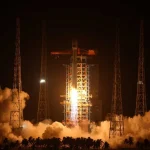
Recently, Lijian-2 successfully completed the bundled joint static test, becoming my country’s first CBC configuration rocket to implement the “maximum internal pressure + maximum overload” double extreme condition verification.
Hello space:
The bundled joint static test simulated the loading environment of the rocket under real flight conditions, verified the high reliability of the Lijian-2 structural design, and is one step closer to the first flight in September this year.
2. Tianjin plans to launch a “double super constellation” of 48 satellites
Recently, the “Tianjin Ultra-Low Orbit Ultra-High-Resolution Constellation Project” (referred to as “Double Super Constellation”) completed key technology verification. The project is jointly initiated by Seth Base and Tianjin TEDA Holdings. It is expected to complete the first phase of 8 satellite launches and networking by 2027, and a total of 48 satellites are planned in the long term.
Hello space:
The “Double Super Constellation” orbital frequency band resources have been approved by the International Telecommunications Union. The constellation plans to evenly distribute 48 satellites in 12 orbital planes, with 4 satellites deployed in each orbital plane and arranged at equal phase intervals, to build an ultra-high-resolution remote sensing observation system with global coverage.
3. Try three times a day! Rocket and satellite engine tests were successful
On April 10, the high-thrust test area, upper stage test area, and attitude and orbit control test area of the Beijing Aerospace Experimental Technology Institute of the Sixth Academy of Aerospace Science and Technology conducted an ignition test of an oxygen-enriched generator for an engine, a YF-75D hydrogen-oxygen engine high-model calibration test, and a satellite apogee engine thermal-elevation high-model test on the same day, all with success.
Hello space:
In order to cope with high-density aerospace test tasks, the Beijing Institute of Aerospace Test Technology continues to optimize the test process and operation mode, improve test efficiency, and shorten the test cycle. This three-day test can lay a solid foundation for China’s future high-density space launches.
4. Hong Kong Intercontinental Space Spanish Satellite AIT Center will be officially launched
Intercontinental Aerospace’s Satellite Assembly, Integration and Testing Center (AIT Center) in Spain will be officially launched in the near future. The center integrates satellite assembly, environmental simulation testing, and on-orbit verification, filling the gap in high-end manufacturing capacity for commercial aerospace in Europe.
Hello space:
Intercontinental Aerospace Technology Group, formerly Hong Kong Aerospace Technology Group, is the first listed company in Hong Kong to engage in commercial aerospace business. The commissioning of the center marks that Intercontinental Aerospace has completed the global layout of the entire chain of “parts-electronic systems-complete satellites”. The full operation of Intercontinental Aerospace’s three major overseas bases (Thailand Satellite Manufacturing Center, Malaysian Satellite Electronics Manufacturing Base, and Spanish Satellite Assembly Integration and Testing Center) has opened up a new path for the commercial aerospace industry chain to go overseas.
international commercial aerospace
1. The U.S. Space Force reassigns ULA’s GPS satellite launch mission to SpaceX
On April 7, local time, the U.S. Space Force announced that it would transfer the launch mission of the GPS III SV-08 satellite from United Launch Alliance (ULA) to SpaceX.
Hello space:
This is the second time in recent months that the U.S. Space Force has transferred ULA’s GPS satellite launch mission to SpaceX. The last time was the GPS III SV-07 satellite launch mission last year. Traditional aerospace giants are losing ground. Who can break the monopoly that SpaceX has gradually formed?
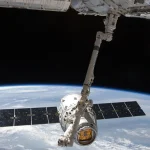
2. The “space tanker” MEV-1 successfully completed the satellite’s 5-year life extension mission
Recently, the mission life extension vehicle MEV-1 developed by Northrop Grumman’s space logistics company Space Logistics LLC completed its five-year life extension service and returned Intelsat’s IS-901 satellite to the “graveyard orbit” (that is, the place where space debris is processed) and successfully separated from it.
Hello space:
The life extension service provided by MEV-1 enabled the IS-901 satellite to successfully “extend its life” for another five years after exceeding its design life, verifying the feasibility of satellite life extension. This is also the first time that two commercial spacecraft have separated in the “graveyard orbit”.