In the past two years, China’s commercial aerospace industry has announced “innovations” almost every month. New models, new configurations, new materials, and new routes are emerging one after another. There is a lot of news, a lot of press conferences, and more and more technical terms. But if you lengthen the timeline, you will find a phenomenon that deserves more vigilance: fewer innovations are actually changing engineering systems, cost structures, and industrial operating logic. We are entering a stage of “more and more innovation labels and less and less structural innovation”. If the definition of “innovation” is not recalibrated, it is easy for China’s commercial aerospace industry to misjudge the real progress when emotions are high. It is against this background that Nihao Space launches: “The Top 10 Most Innovative Companies in China’s Commercial Aerospace in 2026”. We’d like to answer a more specific question:
At a stage when engineering and scale have become the main themes, what innovations have begun to truly affect the way China’s commercial aerospace operates?
01
Innovation in commercial space is changing
In the past six months, we have systematically sorted out rockets, satellites, constellations, applications, key components and other aspects, and after communicating with many business leaders and technical leaders, we have formed four judgments: 1. Technical level: Single-point technological breakthroughs are no longer scarce, and the difficulty is long-term stable operation in a real engineering environment; 2. Engineering level: One-time success is no longer important, and whether it can be repeatedly realized is the watershed; 3. Industrial level: Innovation begins to directly affect the cost structure, delivery rhythm and industrial division of labor; 4. Path differentiation: Innovation is concentrating on “two ends” – system-level innovation and key underlying capabilities. This means that the traditional innovation evaluation method centered on “first time”, “only” and “technological leadership” is becoming ineffective.
02
How does Hello Space define “innovation”?
In the early stages of the industry, innovation is mainly reflected in whether technology can be realized. It can become the focus of the industry after completing orbit entry or engineering verification. But at the current stage, we believe that it is meaningful only if we enter engineering to realize innovation and system collaboration. Therefore, the selection criteria for this list focus on three dimensions: 1. Project realization ability: whether it has completed real project verification, rather than staying in the concept or experimental stage; 2. System synergy value: whether it can be embedded in rockets, satellites, constellations or application systems to produce synergistic gains; 3. Industrial structure impact: whether it has changed the existing cost, efficiency or industrial division of labor. At the same time, it needs to be made clear that we do not use the following factors as the main evaluation basis: We do not use the number of papers and patents as the core indicators; We do not automatically add points for labels such as “first time” and “Domestic only”; We do not evaluate conceptual innovations that have not yet entered the engineering verification stage. This is not a list of cutting-edge technologies, but a list of innovations that have entered engineering practice.
03
Four innovation paths
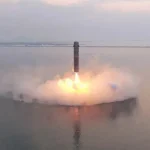
Based on the above criteria, the shortlisted companies present four representative innovation paths. 1. System-level innovation The core of system-level innovation is not to improve individual performance, but to change the original operating logic. NationStar Aerospace | Space Computing Constellation has completed the networking of the first batch of 12 computing power satellites in the “Star Computing” project, and on-orbit distributed computing has begun to form a capability framework, promoting the transformation of specific application scenarios from “computing in days and places” to “computing in days and days”. Galaxy Aerospace|Rolled fully flexible solar wing launched and verified in orbit the rolled fully flexible solar wing solution, which greatly improves satellite power density and deployment efficiency, and provides a new system-level solution for quality control and energy management of giant constellations. This type of innovation determines the future constellation form and system structure. 2. Breakthroughs in engineering capabilities. This type of innovation solves the most realistic problem in commercial aerospace—whether it can be done repeatedly, stably, and on a large scale. Blue Arrow Aerospace | Zhuque 3 made its first flight to complete the orbital stage launch mission, and simultaneously verified the key technology of first-stage recovery, building the foundation of China’s engineering capabilities for recyclable liquid rockets. Zhongke Aerospace | Lihong 1 completed the suborbital flight test and successfully recovered the returnable payload module, verifying the highly reliable parachute deceleration and precise landing point control technology, and promoting suborbital technology towards commercial engineering applications. The significance of this type of innovation is to make breakthroughs no longer an accidental event, but a replicable capability. 3. Key underlying capabilities. This type of innovation is often not conspicuous, but it determines the “lower limit” of commercial aerospace. Hangju Technology|Flexible and reusable thermal protection materials have completed real flight verification, promoted the transformation of the thermal protection system from “additional structure” to “main function”, and provided key engineering conditions for the maintenance and reuse of recyclable rockets. Hua Magnesium Titanium | Liquid Crystal Phased Array Antenna Achieving commercial mass production of liquid crystal phased array antennas significantly reduces cost, power consumption and volume, which is an important support for the large-scale application of satellite communication terminals. The maturity of such underlying capabilities determines whether the industry can truly scale. 4. Constellation-level communication infrastructure Aurora Starcom | 400Gbps inter-satellite laser communication completed the country’s first on-orbit 400Gbps inter-satellite laser communication test, providing key technical verification for future satellite Internet network operations. Inter-satellite link capabilities are the infrastructure layer that will realize the value of future constellations.
04
Why didn’t you deliberately gather 10 companies?
We did not deliberately fill 10 stores. It’s not because there is a lack of companies in the industry, but because there are not many innovations that have truly entered the engineering system and have a structural impact. Innovation does not mean iteration, nor does it mean following, nor does it mean PPT expression. In engineering-intensive industries, the threshold for innovation has always been high. If this reality makes the list look “not good enough”, it shows that China’s commercial aerospace is in a period when it needs to face the stage gap more realistically.
05
A question worth thinking about
As more and more companies invest resources in scale, mass production and cost control, is China’s commercial aerospace entering a period of “innovation contraction”? This isn’t necessarily a bad thing. Mature industries often require a project digestion period. But real innovation still needs to continue to appear, otherwise the industry will enter path lock-in. Future innovation directions may focus on: A more stable engineering system; A more collaborative system structure; Clearer application scenarios. True innovation never disappears. But it gets harder and more rewarding.
Conclusion
This list is not a conclusion, but a phased coordinate chart. It attempts to give a calm judgment between “innovative emotions” and “engineering reality”.
In 2026, the real innovation value of China’s commercial aerospace industry will be who can truly write innovation into the engineering system.