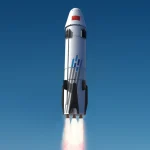
A launch vehicle is a space transportation tool that relies on the reaction force generated by the rocket engine’s injection of working medium to propel forward and deliver payloads such as artificial satellites, manned spacecraft, and space stations into predetermined orbits. As the main vehicle for humans to enter space, rockets determine a country’s ability to enter, utilize and control space. They are the core foundation of the aerospace field and an important symbol of the modern scientific and technological development level and comprehensive national strength of various countries.
1. Development history of commercial launch vehicles in my country
In 2015, the National Development and Reform Commission, the Ministry of Finance, the State Administration of Science, Technology and Industry for National Defense and other departments jointly issued the “National Civilian Space Infrastructure Medium and Long-term Development Plan (2015-2025)”, and my country’s commercial aerospace industry began to take off. Since then, with the successive issuance of various policies, my country’s commercial rocket industry has developed rapidly, and a number of commercial aerospace companies have emerged. During this period, we mainly relied on the technical teams formed by pioneers from traditional aerospace companies for financing, relied on resources within the system, and relied on the development and launch of the simplest solid rockets to gradually try to open up all aspects of the commercial launch vehicle industry. Since then, some companies have begun to try to develop and launch 3.35m liquid rockets. In this process, some companies have also made some demonstrative progress, and the commercial rocket industry has developed strongly.
2. Current status of commercial launch vehicle development in my country
Launch vehicles are the fulcrum that drives the entire aerospace industry. The improvement of carrier efficiency and the reduction of carrier costs are the cornerstones of the rapid development of the entire commercial aerospace industry. In the past 10 years, the number of rocket launches globally and in my country has generally maintained an upward trend. However, as the demand for various types of launches such as constellation networking and deep space exploration has increased, the contradiction between more stars and fewer arrows has become increasingly prominent, and the market demand for launch vehicles in the commercial aerospace market has grown rapidly.
3. Development prospects of my country’s commercial launch vehicles
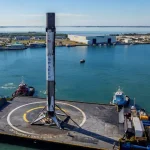
As the reuse of Falcon 9 rockets reduces rocket development and launch costs, the reuse of rocket technology has gradually become a common consensus among major space powers. The development of the rocket industry has gradually moved towards the problem of “how to solve the problem of low-cost access to space.” Major aerospace countries have accelerated the development of launch vehicles with reusable characteristics. my country’s private rocket companies are also actively conducting relevant research, accelerating breakthroughs in key technologies represented by power and control, and promoting the engineering application of reusable rockets.
In the future, driven by the stimulation of the mega-constellation networking plan and the demand for various applications such as space travel, space mining, and deep space exploration, commercial aerospace will build a large-scale market around mass consumption and achieve a large-scale and stable profitable business model. As reusable rocket technology matures in the future and relevant aerospace laws and regulations are established and improved, the aerospace industry will bring profound changes to various mass consumer industries. At the same time, based on the commercial rocket industry, various new economic growth points will continue to be generated, including cultural and creative industries.
4. Analysis of commercial rocket industry chain
The launch vehicle is mainly composed of three major systems: structural system, power system and control system. The structural system is the foundation of the launch vehicle, which combines the various systems of the launch vehicle to form a complete rocket body. The power system is the device that propels the launch vehicle into flight, and is mainly composed of engines, pressurized transmission and other components. The control system is a device that guides and controls the rocket to adjust its flight path and guidance according to established guidance rules during flight. It includes two parts: the guidance system and the attitude control system. Among them, the structural system has a high investment in fixed assets, and the process design and production process are relatively professional; the power system is mainly based on engines, and the solid engines are mainly purchased within the system. The liquid engines are divided into liquid oxygen kerosene and liquid oxygen methane. Among them, liquid oxygen kerosene is relatively mature and mainly comes from the Sixth Institute of Aerospace Science and Technology. Liquid oxygen methane is mainly developed by commercial rocket companies; electrical system products are relatively mature and require high supporting capabilities in the upstream and downstream industrial chains.
At present, domestic companies engaged in the overall launch vehicle industry include: the First Academy of Aerospace Science and Technology, the Eighth Academy of Aerospace Science and Technology, Blue Arrow Aerospace (Decoding Blue Arrow Aerospace Technology Co., Ltd., how the world’s first liquid oxygen methane rocket was successfully put into orbit), Tianbing Technology (Decoding Beijing Tianbing Technology Co., Ltd., a private rocket company How did the company achieve success in its first launch), Interstellar Glory (decoding Beijing Interstellar Glory Space Technology Co., Ltd., China’s first private company to achieve a rocket into orbit), Galaxy Power (decoding Beijing Galaxy Power Aerospace Technology Co., Ltd., my country’s first commercial rocket company with double-digit launches), China Science and Technology Aerospace (Decode Guangzhou Zhongke Aerospace Exploration Technology Co., Ltd., the first mixed-ownership commercial aerospace company in China), Oriental Space (the biggest dark horse in commercial aerospace in 2024 | Decode Oriental Space (Shandong) Technology Co., Ltd.), Arrow Technology (Decode Beijing Arrow Technology Co., Ltd., the first domestic company to adopt ” A private rocket company with the “stainless steel rocket body + liquid oxygen methane” solution), Deep Blue Aerospace (a new approach, focusing on the research and development of recyclable rockets | Decoding Jiangsu Deep Blue Aerospace Co., Ltd.), Tianhui Aerospace (the deputy chief engineer of Changliu is in charge, incubated by NPU, how is this company different | Decoding Shaanxi Tianhui Aerospace Technology Co., Ltd.) and other companies. According to different propellants, launch vehicles are divided into solid rockets, liquid rockets and solid-liquid hybrid rockets. Liquid engines are further divided into liquid oxygen kerosene and liquid oxygen methane. The main representative companies of liquid oxygen and kerosene rockets include Tianbing Technology, Galaxy Power, Zhongke Aerospace, Oriental Space, Deep Blue Aerospace, Tianhui Aerospace, etc. Representative companies of liquid oxygen methane rockets include Blue Arrow Aerospace, Interstellar Glory, and Arrow Technology (purchasing the engine of Jiuzhou Cloud Arrow (my country’s first 10km-level reusable rocket vertical take-off and landing test that blew up the screen, do you really understand the treasure company behind the test | Decoding Jiuzhou Cloud Arrow (Beijing) Space Technology Co., Ltd.)).
5. Analysis of future competitive situation
(1) Cost reduction is the main theme of the industry
Developing launch vehicles costs a lot of money, and cost is one of the main factors restricting the development of the aerospace industry. With the development of aerospace technology, reducing the commercial cost of launch vehicles and meeting market needs is the key to the large-scale commercial application of launch vehicles, and it is also the cornerstone of building the entire commercial aerospace ecosystem. The technical solutions for the next-generation launch vehicles under development by China and the United States are all reusable rockets, which shows that the wave of reusable technology has completely swept the entire commercial rocket industry. Musk has captured approximately 70% of the current world commercial launch service market through the Falcon 9 reusable rocket. With such a huge advantage, other rocket companies will not be able to survive in the market if they do not develop reusable rockets and reduce rocket development costs.
(2) Price war is inevitable
At present, the rocket models under development by domestic commercial rocket companies are highly homogeneous. Although there are some differences in rocket diameter, take-off thrust, materials, etc., the overall plans are basically based on the Falcon 9. When each company introduces its own products, it also introduces its own products against the Falcon 9. The homogeneous solution also makes it inevitable that a price war will break out in the future, just like the mobile phone industry back then. Although my country’s rocket industry is currently in a situation of “more stars and fewer arrows”, as the batch of rockets currently under development are put into service one after another, even if our country currently plans two superstar communication constellations, it may still not be enough to support the survival needs of rocket companies. Factors such as limited market capacity may force a fierce price war between commercial aerospace rocket companies.