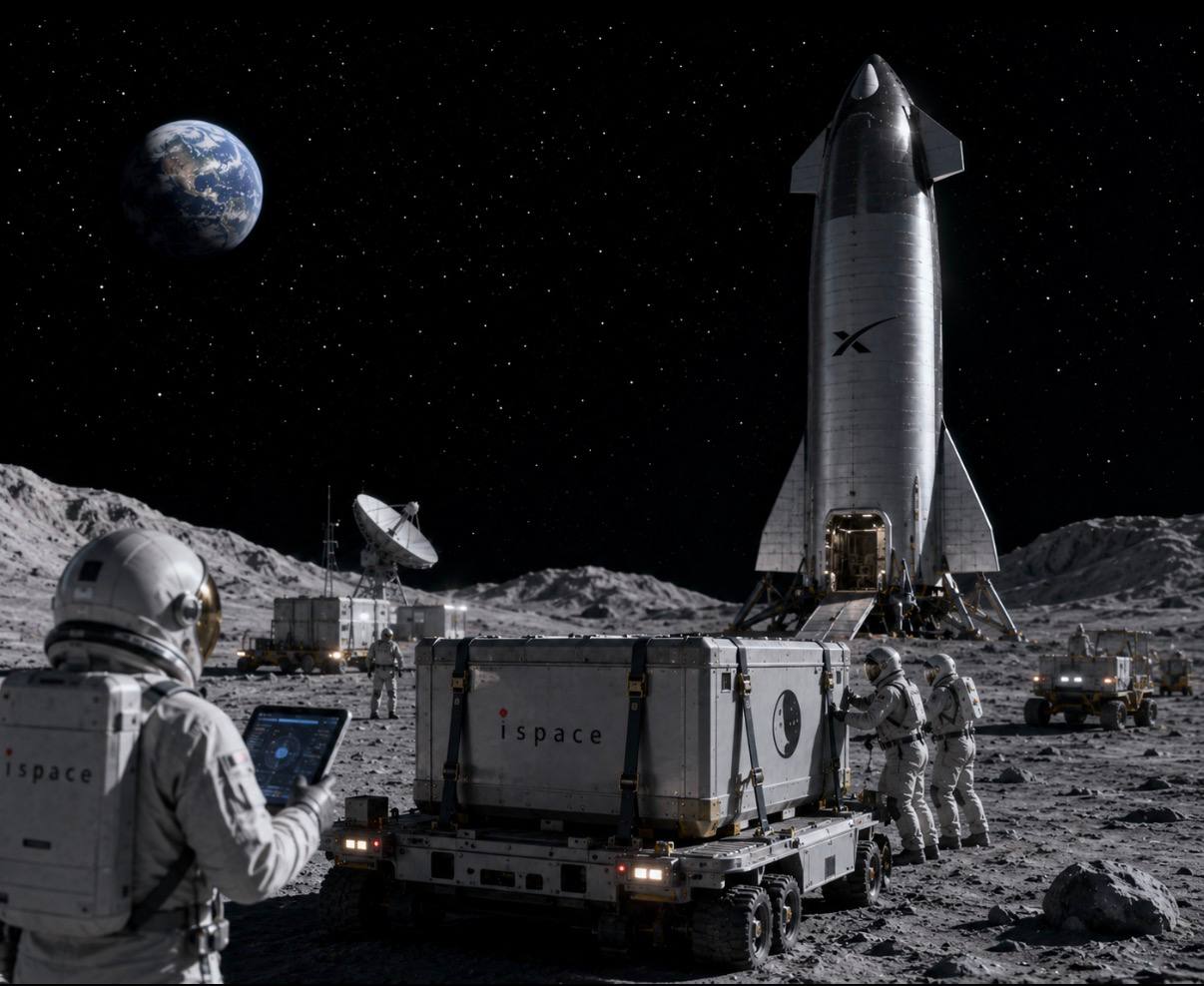
The decision marks a notable pivot for a company known for flying its own spacecraft to the Moon. Rather than limiting itself to landing operations, ispace is now selling access to Starship’s cargo capacity to third-party customers, establishing itself as a reseller of lunar delivery capability.
Under the new service, ispace has reserved roughly 1,100 pounds of cargo space aboard a Starship lunar lander mission, with the offering scheduled to start in 2030. The company, which has conducted prior lunar lander missions, is framing the initiative as a distinct business line focused on brokering Starship lunar cargo access for other customers. Investors responded positively, sending ispace shares higher after the announcement.
The service establishes ispace as a lunar logistics intermediary, effectively a freight forwarder for cargo bound for the Moon. By selling Starship’s cargo capacity to third parties, the company is building a business around lunar delivery access rather than solely operating its own landers, signaling that Starship’s Moon-bound capabilities are already being commercialized ahead of the rocket completing its own development milestones.
The next milestone named is the planned 2030 start of the Lunar Integration and Transportation Service. If lunar commerce is real enough for a Japanese startup to build a freight brokerage around it, the Moon economy may be closer than most people think.