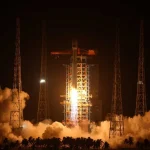
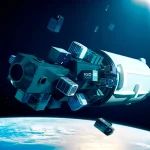
On the third attempt of Starship Flight 13, Booster 20 and Ship 40 lifted off at 5:51 p.m. CDT on July 24. This flight was another suborbital mission for Starship and had many important objectives to accomplish.
Booster 20 successfully conducted the boostback burn but suffered issues during the final landing, resulting in a hard impact with the water. However, Ship 40 was flawless, including the deployment of 20 Starlinks, an in-space Raptor relight, and an on-target splashdown.
Flight 13 Attempts
SpaceX seemed on track to set a record for the fastest rollout-to-stack-to-launch so far in the Starship program. For the entire day on July 16, the weather was acceptable, and during propellant loading, no issues were tracked. However, at T- one minute, SpaceX held the count for a few seconds for some final checks of certain pressures.
Flight 13 proceeded to engine ignition, where it appeared that only 29 of 33 engines ignited, triggering a flight abort and a scrub for the day.
SpaceX CEO Elon Musk stated that “Some of the engines didn’t start, triggering an automatic launch abort.” This was the first-ever full-stack ignition abort for the Starship program. A while after the abort, Elon Musk also confirmed that two Raptors will be removed and replaced.
Some of the engines didn’t start, triggering an automatic launch abort.
Now offloading propellant.
Next launch attempt hopefully in a few days.
— Elon Musk (@elonmusk) July 16, 2026
Following the T-0 abort of Starship Flight 13 on July 16, SpaceX has since destacked both Ship 40 and Booster 20, and rolled both vehicles back to their respective bays for additional work. Ship 40 then reemerged on July 21 and was parked just outside Mega Bay 2 after allowing Ship 42’s transfer tubes to enter the bay for installation.
Booster 20 rolled back out to the launch site late in the day on July 21 and was placed on Pad 2 overnight. With the T-0 abort, it appears that SpaceX has replaced at least four engines and swapped one out and then back in again. The engines swapped out were E4, E5, E6, E12, and E13.
Due to the extensive engine work, SpaceX opted to perform what appeared to be a leak check of the replaced engines on July 22 to ensure they weren’t leaking.
Let’s run it back!
After Booster 20’s preflight testing this morning, SpaceX is stacking Ship 40 onto it again at Starbase Pad 2 for Starship Flight 13. The launch remains targeted for tomorrow, July 23, pending weather.@NASASpaceflight pic.twitter.com/xJlwjz8WER
— Ceaser G (@CeaserG33) July 23, 2026
This leak check involves forcing open the main propellant valves on the engines and ensuring the engine-to-booster interfaces don’t leak.
Ship 40 was rolled out shortly after the booster test and stacked on Booster 20 at T-22:19:00.
SpaceX confirmed the testing was successful; the new launch day is set for July 23 with a 90-minute window starting at 5:45 pm CDT, exactly one week after the T-0 abort. However, according to SpaceX, weather is currently a significant watch item for launch, which proved to be the case as SpaceX scrubbed with several hours until the opening of the window, moving the launch to Friday.
Friday’s countdown enjoyed much-improved weather.
Before the flight lifted off, SpaceX explained exactly what happened during the T-0 abort on July 16, which was the first attempt for Flight 13. Apparently, six of the Raptors on Booster 20 had low LOX turbopump pressure due to moisture issues in the pumps.
It is unclear why moisture was present in the engines, but it caused four engines not to ignite. All six engines were swapped out with engines already at Starbase, then leak-checked, and the pumps were spun up for ops checks.
At 5:51 p.m. CDT, Flight 13 lifted off from Pad 2 with all 33 engines running throughout ascent.
Fury.
My highest-resolution image yet taken of Super Heavy’s 33 Raptor 3 engines singing in unison during today’s flight test of Booster 20 and Ship 40 from Pad 2 in Starbase, Texas.
– @NASASpaceflight
Prints (this will be up soon): https://t.co/9KPqMTd9A7 pic.twitter.com/5K0Ik9pl8C
— Max Evans (@_MaxQ_) July 25, 2026
Stage separation and the flip were perfect, with the boostback burn ending early and the booster heading for its landing location in the Gulf.
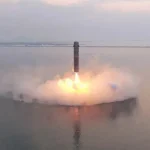
The landing burn of Booster 20 had 10 Raptors ignite, then reduced to 8, then to 5, and the booster landed going a bit too fast.
Starship Flight 13: Booster 20 not enough engines fired up for the landing burn, so no successful booster splashdown.
Ship continues to do well.https://t.co/QE8P04f5Vd pic.twitter.com/h6YTE9tm0d
— NSF – NASASpaceflight.com (@NASASpaceflight) July 24, 2026
Ship 40 enjoyed a flawless flight, achieving all its objectives and even provided extended views of its heatshield condition by failing to blow up after toppling into the ocean, as is usually expected.
This is amazing and well done to the drone operator. They’ll have gotten so much data out of this floaty Ship 40. https://t.co/l6XkLt4ub2 pic.twitter.com/k3zJbQ5CFe
— NSF – NASASpaceflight.com (@NASASpaceflight) July 25, 2026
Flight 12 Recap
Flight 12 with Booster 19 and Ship 39 lifted off on May 22 and immediately had all 33 engines running during ascent. Then, nearly two minutes into the ascent burn, a single Raptor 3 engine shut down for an unknown reason. Even with a single engine out, the booster completed its ascent burn.
Then, during hot staging and stage separation, Booster 19 was flipped 90 degrees the wrong way, which caused several issues during the flip and relight of the Raptor engines. This led to several Raptors having energetic events, and the entire boost-back burn being shut down very early. Booster 19 would then glide down, attempt a landing burn, but ultimately blow up before hitting the water.

Flight 12 Liftoff (Credit: Max Evans for NSF)
Ship 39 continued its ascent burn, and at about 40 seconds after stage separation, a single Raptor Vacuum engine would shut down. The ship would then demonstrate its engine-out capability and complete the ascent burn, reaching its planned suborbital trajectory.
Ship 39 would then deploy its 22 satellites, which included two Dodger Dogs, which were Starlink V2 minis modified to fit with the pez and have cameras and flashlights attached. These two satellites would then take pictures of the ship’s heat shield before burning up behind the ship during reentry. Likely due to the engine out on ascent, SpaceX opted not to perform the in-space burn of one of the Raptor 3 sea-level engines.
Views of Starship in space from a @Starlink satellite pic.twitter.com/5hfw1n8v1o
— SpaceX (@SpaceX) May 22, 2026
The ship would then perform a near-flawless reentry and dynamic banking maneuver before splashing down in the Indian Ocean right on target. While Booster 19 and Ship 39 had their issues, the vehicles performed very well for being the first flight of Block 3 of Starship. It was also the first flight from Pad 2, which had barely been touched after Flight 12 lifted off, validating the new design.
Booster 20
The vehicles for this flight were Booster 20 and Ship 40, both of which underwent changes and upgrades based on additional testing and flight data.
First off, Booster 20 had a few noticeable changes on the outside. The forward dome of the booster had additional steel heat-shield protection used during hot staging. Another noticeable change was the addition of a doubler over a seam weld just below the common dome on the quick disconnect side of the booster. This doubler was in the exact same spot where B18.3 crumpled during its first can crusher test on January 20, 2026.
STARSHIP FLIGHT 12 MISHAP INVESTIGATION CLOSED AND FLIGHT 13 GREEN LIGHT GIVEN
The SpaceX-led Starship Flight 12 mishap investigation has now been closed, and the FAA has given the green light for SpaceX to proceed with Flight 13 operations, provided all safety and other… pic.twitter.com/mn5Gu9qSus
— Jake (Max-Q)
(@J_A_Rees_94) July 13, 2026
Other upgrades were intended to address the failed boost-back burn, which prompted a mishap investigation. This mishap investigation has since been closed, and states that the most likely causes for the failure were heat effects on engine components during ascent and erroneous engine alarm system settings.
To fix these issues, hardware mods were made to improve relight reliability, along with engine alarms and aborts to match conditions observed in the multi-engine flight environment.
With these upgrades, Booster 20 had a much better chance of making it past the boost-back burn, which it did. However, it did not conduct a successful landing burn.
Ship 40
The only major visual differences on Ship 40 were some heat shielding and a pair of new directional vents on the sides of the Liquid Oxygen (LOX) tank. Otherwise, upgrades were made to address issues during stage separation and ascent.
To help prevent issues during booster flips, the engine startup sequence was modified to introduce greater timing variability, more reliably flipping the booster in the desired direction.
There were also several software and hardware changes made to prevent the Raptor Vacuum engine failure that occurred during ascent on Flight 12.
The heat shield also featured several experiments, including leeward-side tile patches on the tank walls and on the aft flaps to test different attachment methods. The aft skirt of the ship also featured modified tiles and attachment mechanisms. Across the heat shield, there were load-sensing tiles, which will help gather data during ascent, as this flight will experience higher dynamic pressures than previous flights.
Lastly, tiles were painted white to simulate missing tiles for the Starlink V3 satellites to photograph.
Mission Objectives, Trajectory, Timeline, and Launch Windows
The mission objectives for Flight 13 were mostly the same as those for Flight 12. However, there were a few changes and additions; the booster performed a more aggressive ascent burn after Max Q, which tested load-sensing heat shield tiles on the ship, and the ship deployed actual V3 Starlink satellites rather than mass simulators and the two dodger dogs from Flight 12.
The trajectory was the same as the last flight, with the stack heading south of Cuba and still landing in the Indian Ocean. However, there were a few timeline changes during preflight and in-flight.

Flight 13 Prelaunch Timeline (Credit: SpaceX)
For Flight 12, SpaceX began propellant loading of the stack at T-00:38:53, with Ship LOX loading for Flight 13 now starting at T-00:37:30, resulting in fueling that is now 1 minute and 23 seconds faster overall. So the total fueling time is now down to 35 minutes and 20 seconds; this also means the other times were adjusted accordingly to make the fueling faster.
During flight, Max Q occurred 13 seconds later, but Most Engines Cutoff (MECO) occurred four seconds sooner, as SpaceX opted not to throttle down as much after Max Q to see how well the stack holds up.

Flight 13 Flight Timeline (Credit: SpaceX)
At T+00:16:40, the payload deployment time came for the 20 Starlink V3 satellites. This was the first time this version of Starlink flew.
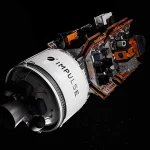
Six of these Starlinks were fitted with lights and cameras to look at Ship 40’s heat shield before reentry. All of the Starlinks also deployed their solar arrays and antennas to test newer hardware and will attempt to connect with the larger Starlink constellation via high-capacity lasers.
Flight 13 may be the final suborbital flight for a long time, as SpaceX is likely to push for orbit on Flight 14. However, a booster catch may have to wait.
(Lead image via Colleen for NSF).

The post Starship Flight 13 achieves new firsts for SpaceX appeared first on NASASpaceFlight.com.