China’s Tianwen-3 Mars sample return mission has entered prototype development, with two Long March 5 launches planned for late 2028 or early 2029 and the return of approximately 500 grams of Martian material targeted for around 2031. If successful, Tianwen-3 could become the first mission to deliver samples from Mars to Earth, while supporting China’s broader expansion into lunar exploration, asteroid science and crewed deep-space missions.
Hou Zengqian, Tianwen-3’s chief scientist and an academician of the Chinese Academy of Sciences, said scientific preparations are proceeding alongside spacecraft development. The mission’s primary objective is to search for evidence of past life and improve understanding of Mars’ geological evolution and habitability.
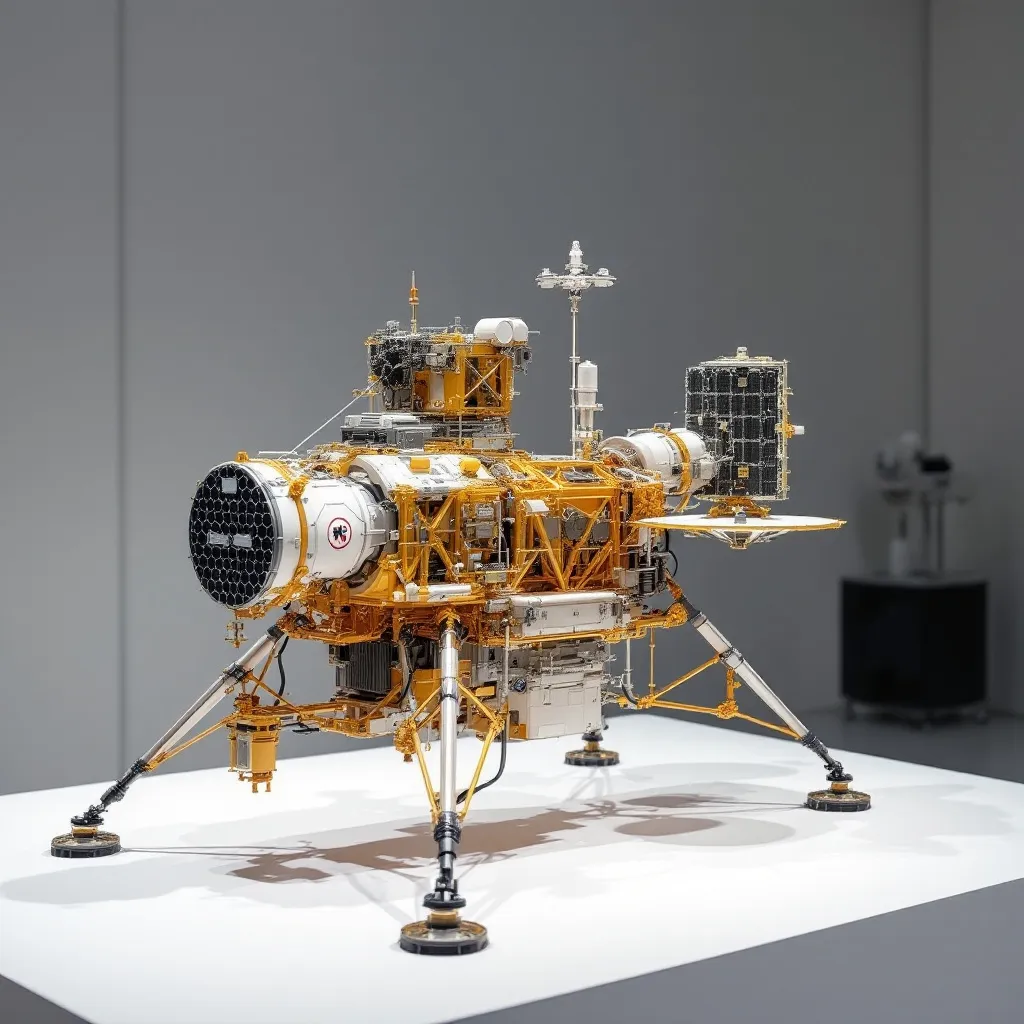
Tianwen-3 will use a two-launch architecture involving a lander, ascent vehicle, orbiter, service module and Earth-return capsule. After landing, the spacecraft will collect surface material and drill as deep as two meters to obtain samples protected from radiation and surface weathering.
The samples will be loaded into an ascent vehicle and launched into Mars orbit. A robotic arm aboard the waiting orbiter will retrieve the sample container before the return spacecraft begins its journey to Earth.
The operation is considerably more complex than China’s Chang’e lunar sample-return missions. Mars’ greater distance creates long communication delays, preventing real-time control during critical phases such as landing, sample transfer and orbital rendezvous. The spacecraft must also complete an autonomous launch from the Martian surface and meet an orbiter moving at several kilometers per second.
Eight candidate landing areas have been identified. Mission planners are evaluating them for engineering safety, scientific value and the likelihood of preserving signs of ancient biological activity, with a final site expected to be selected after further analysis.
Data from the Tianwen-1 orbiter, which entered Mars orbit in February 2021, are supporting this process. Researchers are compiling five years of observations into a global geological map of Mars at a scale of 1:5 million, scheduled for completion before the end of 2028.
Returned material is expected to undergo initial containment and analysis at facilities operated by the Deep Space Exploration Laboratory in Anhui province. Because the samples could contain previously unknown biological or chemical material, planetary-protection procedures will be a central part of recovery, transport and laboratory examination.
A Potential Lead in Mars Sample Return
Tianwen-3’s schedule places China in a position to secure a major planetary-science first. NASA’s Perseverance rover has already collected and sealed scientifically selected Martian samples, but the architecture and timetable for retrieving them remain under review after rising costs and technical complexity affected the U.S.-led Mars Sample Return program.
China’s approach uses fewer surface elements and draws on experience from the Chang’e 5 and Chang’e 6 lunar sample-return missions. However, Tianwen-3 will still require several capabilities China has not previously demonstrated at Mars, including precision landing near scientifically valuable terrain, subsurface drilling, ascent from another planet and autonomous rendezvous in Mars orbit.
Lunar Missions Move Toward an Integrated Program
The Mars effort is advancing alongside changes in China’s lunar program. The China Manned Space Agency is now overseeing robotic lunar missions previously managed by the China National Space Administration, beginning with Chang’e 7. The adjustment is intended to pool personnel, technology and infrastructure across China’s robotic and crewed lunar plans.
China this month transferred a portion of the Chang’e 6 samples to the United Nations for permanent display in Vienna. Chang’e 6 returned material from the lunar far side in June 2024, completing the first sample-return mission from that region.
Chang’e 7, which will study the lunar south pole and search for water ice, was postponed in August after launch conditions were judged unsuitable. The mission is now expected no earlier than early 2027. Its solar-powered lander, rover and hopping probe require a tightly constrained arrival window that provides sufficient illumination for landing, navigation and surface operations.
Chang’e 8 remains officially planned for around 2029, despite unconfirmed reports concerning possible changes to the mission. The spacecraft is expected to target the Leibnitz-Beta Plateau and conduct technology demonstrations supporting the proposed International Lunar Research Station. China has selected 10 international cooperation projects involving organizations from 11 countries and regions, with up to 200 kg of payload capacity allocated to overseas partners.
Student-Led Apophis Mission Enters Construction
Tsinghua University’s START asteroid mission has also progressed from design review into spacecraft construction. The approximately 300 kg probe is scheduled to launch aboard a Zhuque-3 rocket in early 2028.
After deployment, START will use solar-electric propulsion to raise its orbit to approximately 31,600 km before conducting a high-speed flyby of asteroid Apophis in April 2029. The spacecraft is designed to pass within about 7 km of the asteroid at a relative velocity of 8.74 km per second, with images and scientific data expected to reach Earth within seven days.
The encounter will coincide with Apophis’ exceptionally close approach to Earth, providing an opportunity to examine how Earth’s gravity affects the asteroid’s surface, rotation and internal structure.
China is expanding launch infrastructure to support these parallel missions. The Wenchang commercial spaceport is entering its third construction phase, with four additional universal launch pads planned. Commercial pads 3 and 4 could support their first missions before the end of 2026.
Construction is also nearing completion on Launch Complex 301, which is being built to support Long March 10 missions. China’s crewed lunar landing architecture calls for separate launches of the Mengzhou crew spacecraft and Lanyue lunar lander before the two vehicles rendezvous in lunar orbit, supporting a landing attempt before the end of the decade.
China’s expanding deep-space programs and launch infrastructure reflect the growing capacity of its wider space supply chain, which is bringing more competitively priced satellites, payloads and assembly, integration and testing equipment to the international market. Organizations planning satellite missions can contact STARPATH GLOBAL to discuss their technical requirements, budgets and suitable Chinese suppliers. This support can extend from early mission definition and equipment selection to satellite manufacturing and payload integration.