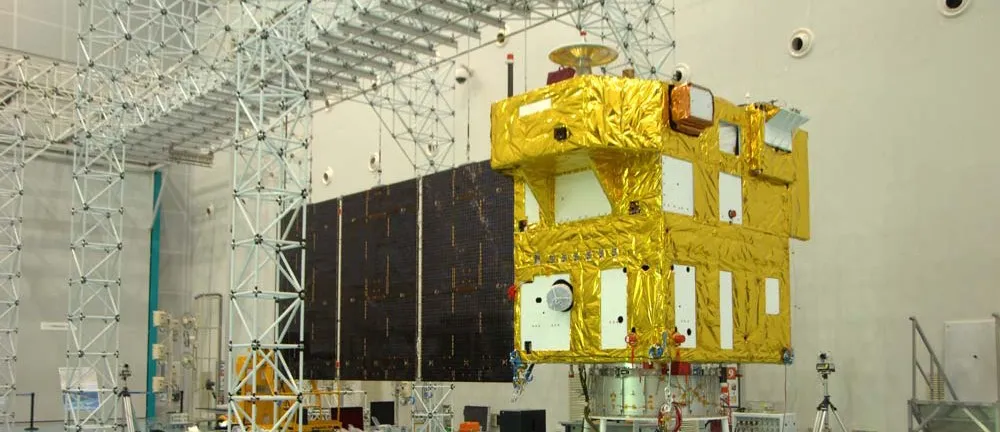
Satellite thermal control may sound like a niche business, but it is critical to a spacecraft’s survival. Yet not every company in the field is equally capable. Some quietly deliver hardware that flies; others excel at telling a compelling story. Assessing a satellite thermal control company requires a closer look at several factors.
Technical Capabilities
Overall Assessment
The first question is whether the company has in-house capabilities across the technology stack and can independently develop its core products. A strong satellite thermal control company should control the full chain, from materials and critical components to system-level design, rather than operate merely as an assembly business.
Product-Level Metrics
Heat pipes, multilayer insulation, thermal control coatings, phase-change materials and fluid loops all warrant scrutiny. The following sections examine evaluation criteria for the first four categories.
1. Heat Pipes
The key metrics are maximum heat transport capacity, thermal resistance, temperature uniformity, service life and flight heritage, and startup capability.
Maximum heat transport capacity is the greatest thermal power a heat pipe can transfer. A good heat pipe should maintain its rated capacity without significant degradation across the expected range of operating inclinations.
Thermal resistance is the temperature difference between the evaporator and condenser divided by the heat transfer rate. Lower is better: it means the pipe can transfer more heat for a given temperature difference, or maintain a smaller temperature difference for the same heat load.
Temperature uniformity describes how evenly temperature is distributed along the heat pipe. A good heat pipe should operate at a nearly uniform temperature under its rated heat load.
Startup capability includes starting from a frozen condition and starting against gravity. These capabilities are particularly important for deep-space and low-temperature missions.
Overall, stronger heat pipes offer lower thermal resistance at the same heat transfer rate, less capacity degradation under equivalent inclination conditions, and extensive supporting data from operation in orbit.
2. Multilayer Insulation (MLI)
The key metrics for multilayer insulation are effective emissivity, solar absorptance of the outermost layer, areal density, and layer count and configuration.
Effective emissivity depends on the number of layers. More layers generally reduce effective emissivity, but also increase weight and cost.
Lower solar absorptance on the outermost layer is preferable because it means less solar heat enters the spacecraft.
Areal density is the mass per unit area; lower values are preferable.
Layer count and configuration require a balance between insulation performance and weight. Adding layers improves insulation, but increases mass and cost.
Overall, better MLI combines lower effective emissivity and lower areal density while meeting the required insulation performance, with an outermost layer that is more resistant to degradation from space radiation.
3. Thermal Control Coatings
The key metrics for thermal control coatings are solar absorptance, hemispherical emissivity, the absorptance-to-emissivity ratio, and environmental stability.
Solar absorptance is the fraction of incident solar radiation absorbed by the coating. Lower values are preferable for surfaces intended to reject heat or limit heat absorption.
Hemispherical emissivity describes a coating’s ability to radiate heat outward. Higher values are preferable for surfaces that need to dissipate heat.
The absorptance-to-emissivity ratio is solar absorptance divided by emissivity. A lower ratio corresponds to a lower surface temperature.
Environmental stability includes resistance to ultraviolet radiation, atomic oxygen erosion and thermal cycling, as well as adhesion.
Overall, stronger coatings combine low solar absorptance, high hemispherical emissivity and a low absorptance-to-emissivity ratio, with minimal degradation demonstrated through space-environment testing.
4. Phase-Change Materials (PCM)
The key metrics for phase-change materials are latent heat, thermal conductivity, cycling stability, and phase-change temperature.
Latent heat is the energy absorbed or released per unit mass during a phase transition. Higher values are preferable: a material with greater latent heat can buffer more thermal energy for the same mass, helping reduce weight.
Higher thermal conductivity allows faster heat absorption and release, with more uniform temperature control.
Poor cycling stability means performance may deteriorate significantly over the satellite’s service life.
The phase-change temperature must match the temperature-control objective. Selecting a PCM with a phase-change temperature slightly below the target control temperature allows it to provide effective thermal buffering.
Overall, better PCMs offer high latent heat, high thermal conductivity—or sufficient conductivity achieved through composite modification—good cycling stability, and a phase-change temperature suited to the mission.
Other Evaluation Criteria
Flight Heritage
In satellite thermal control, the most valuable asset is not an elegant design but a substantial record of operation in orbit.
Ground testing can simulate temperature, vacuum and vibration. It cannot fully reproduce two-phase flow behavior in microgravity, the effects of long-term radiation exposure on material properties, or latent defects associated with manufacturing consistency.
From this perspective, a company’s strongest technical moat may be its flight heritage rather than any individual patent.
When assessing a supplier, ask how many satellites have flown its thermal control products, how many anomalies have occurred, what caused each anomaly, and what corrective actions were taken. Were those actions validated on other spacecraft programs? How many in-orbit anomaly cases are recorded in its failure modes and effects analysis (FMEA) database? Have those lessons been incorporated into its design standards?
If a company can only point to thermal vacuum and thermal balance tests, its capabilities warrant closer scrutiny.
Flight heritage is among the most compelling—and hardest to fabricate—measures of capability in aerospace. Once a satellite reaches orbit, there is no opportunity for maintenance, replenishment of working fluid or component replacement. Ground simulations and environmental testing can never fully replicate actual operating conditions in space.
Production Capacity and Consistency
As China continues deploying low-Earth-orbit satellite internet constellations, its satellite industry is shifting from building a handful of spacecraft each year toward industrial production of hundreds annually.
For satellite prime contractors, consistency between production batches and reliable delivery schedules are therefore critical measures of a thermal control supplier’s capabilities.
An assessment should also examine how readily the company can expand production and the extent of its manufacturing automation.
Orders and Contract Quality
Orders need to be evaluated from two perspectives: quantity and quality.
One starting point is whether the company has secured orders from China SatNet and SpaceSail, and what share of their procurement it has won. But focusing solely on market share provides only a superficial view.
As the market shifts from government missions and small batches of customized hardware to constellation-scale production, the business model is changing. Trends in gross margins on volume production should become a central measure of a satellite thermal control company’s performance.
Constellation operators are much more sensitive to thermal control procurement prices than government mission customers. They typically push for lower prices and may require contractual annual price reductions. If gross margins on volume production continue to deteriorate, even substantial revenue growth may conceal weaknesses in the business.
Contract quality is equally important. A technical cooperation agreement is fundamentally different from a purchase contract.
When a company reports a large order book, it is also necessary to establish whether those orders cover thermal control for individual onboard units or a comprehensive range of thermal control products for an entire satellite. The difference is substantial.