By Nick David, Editorial Lead, SatNews
Two U.S. companies are sending refuelable satellites to geostationary orbit. They won’t be able to refuel each other.
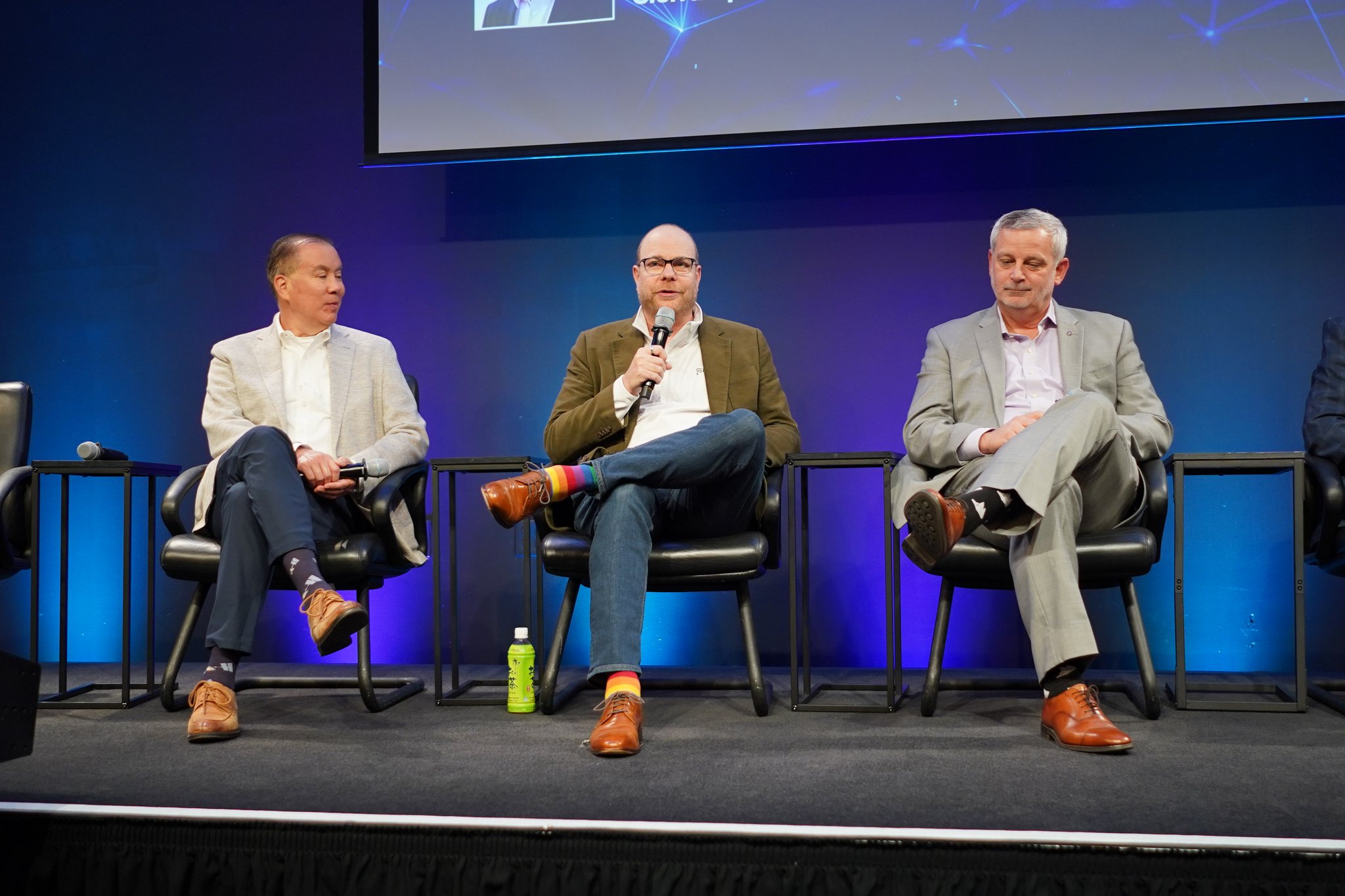
“Right now, Northrop Grumman and Sierra Space both have fully refuelable satellites going up into GEO and other orbits. We’ve chosen different interfaces,” Erik Daehler, senior vice president of defense technology at Sierra Space, said Wednesday at Silicon Valley Space Week’s MilSat Symposium. “We have different plugs. We literally are going to walk up to each other and say, ‘I can’t refuel you. I’m sorry.’”
The reason to refuel at all is military, Daehler said on the panel “Building Warfighter-Ready Space Systems: Autonomy, Logistics, and On-Orbit Servicing.” “We’re really doing refueling because our adversaries are refueling their spacecraft so that they can fly them like fighters.” He wants the government to lead on a standard so every company can build to it.
When moderator Andy Kwas, a Northrop Grumman Fellow, pressed the panel for a year, Daehler gave him a clock instead: 18 months “from the day that the Space Force tells us to go dock with the SJ-25 and refuel from them,” a reference to the Chinese satellite that reportedly refueled another in GEO last year. Order that demo, he said, and every company on the stage would adapt its system to that interface.
The panel also included Jeff Chiow, chair of Greenberg Traurig’s government contracts practice.
There’s already a standard. It’s optional.
Owen Cupp, an executive director in Boeing’s engineering and technology innovation group for Mission Systems, said a common interface payload standard already exists, but acquisition offices treat it as optional, much as a military standard often isn’t a firm requirement.
Space Systems Command named Northrop Grumman’s Passive Refueling Module its preferred refueling interface in January 2024.
Momentus Chairman and CEO John Rood, a former under secretary of defense for policy, warned against freezing one plug in place. “Why is the plug in your hotel room in Europe gigantic and weighs six times as much as something you can buy for your Apple computer? Because it’s a government-mandated standard which has not been updated for 50 years,” he said.
Rood would rather see groups like CONFERS and COSMIC converge on open standards, starting with simple aids such as grapple bars and orientation markers on spacecraft.
“The adversary gets a vote”
U.S. Space Command has pushed sustained space maneuver, with an emphasis on refueling, and the Space Force has stood up a mission area design team for it, said David Denhard, the command’s chief scientist and technical adviser. He was blunt about the money: on-orbit servicing “hasn’t been one we’ve put a lot of money behind.”
“But if we have an adversary that all of a sudden we wake up one day and can refuel in GEO, that’s a problem for us, and that also drives urgency and dollars,” Denhard said.
What he wants from industry is a cost-benefit case, servicers that can do more than one job (pairing servicing with space domain awareness, for example) and full architectures rather than concepts.
The next test comes in 2027, when the Space Force plans refueling and relocation demonstrations with Astroscale U.S. and Starfish Space using standardized docking fixtures, SatNews reported in September.