By Nick David, Editorial Lead, SatNews
Satellite makers say they did what the Pentagon asked and built for high-rate production. Now they want the money to show up on schedule.
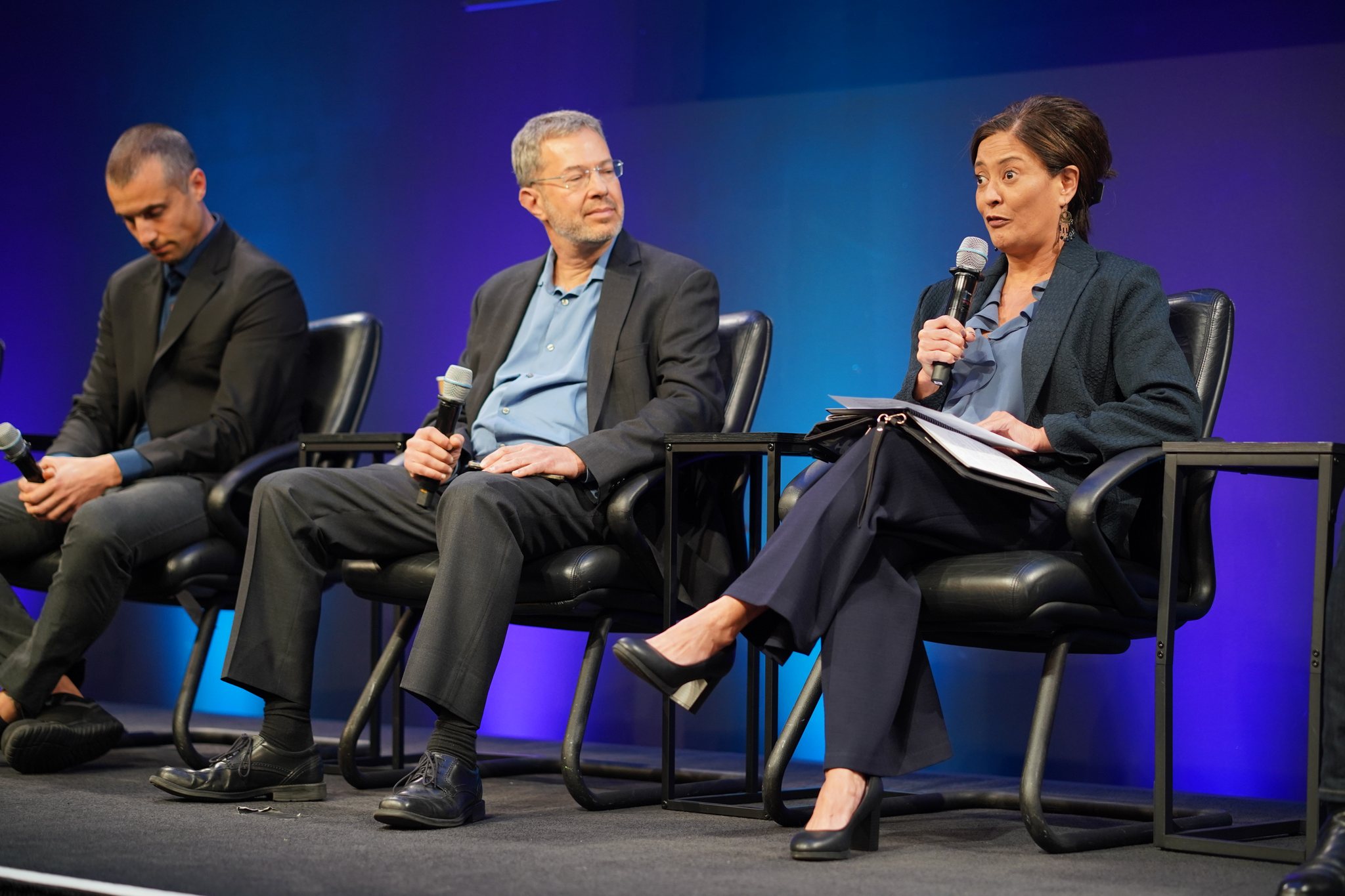
“A lot of different companies have actually invested quite a bit of corporate capital to scale production, assure supply chain, et cetera,” Melanie Preisser, general manager and executive vice president of York Space Systems, said Wednesday on the panel “Buses vs. Vertical Integration: Who Builds the Proliferated Era” at Silicon Valley Space Week. Noel Rimalovski, managing partner at GH Partners, moderated.
The problem, she said, is “the changing demand signal, the tendency to incrementally fund contracts, slow contracts down.” That “makes it quite hard for those of us in industry to be able to maintain the cadence of high rate manufacturing and delivery if we’re always throttling contract timelines and contract funding.”
Terran Orbital’s Carl Couch, vice president of strategy and business development, agreed. Defense money is planned over five years, he said, but it can be cut, paused or shortened at any point. Suppliers get told to prepare for material buys and higher-rate manufacturing, “but then the money could stop, dry up, restart, start again.”
The factories are already running
The capacity exists. Preisser said York has 55 satellites in orbit across five missions. Couch said Terran Orbital, a Lockheed Martin subsidiary that can still sell as a merchant supplier, turns out about six spacecraft a month and is about 85% vertically integrated, with Lockheed’s backlog insulating it from much of the turbulence in new space.
Samara Aerospace, which is building its first satellite, is taking production in-house. A supplier that will take a one-satellite order can’t keep up once production scales, said Patrick Haddox, its co-founder and CEO: “This one-off manufacturer cannot keep pace.”
CesiumAstro isn’t waiting for the signal. “We have and we are investing in infrastructure regardless of the demand that’s in front of us right now. We know the demand is coming,” said Shey Sabripour, its founder and CEO. He put the spending at half a billion dollars in Austin, with more in the Denver area and at other U.S. sites, for factories that build everything from chips to complete missions.
What would help most, Preisser said, is “having a stable, I’ll just call it demand signal.”