By Nick David, Editorial Lead, SatNews
A Canadian satellite constellation would spend about 2% of its time over Canada. That math is why Terrestar Solutions joined Equatys.
Space42 and Viasat, the co-founders of the Equatys direct-to-device venture, signed a memorandum of understanding with Terrestar on Wednesday. The goal is an open, standards-based interoperability framework linking Equatys with CaStar, Terrestar’s planned Canadian LEO constellation. The companies called it the first example of Equatys’ “sovereign shell” model, which pairs a global commercial system with constellations built for specific countries or regions.
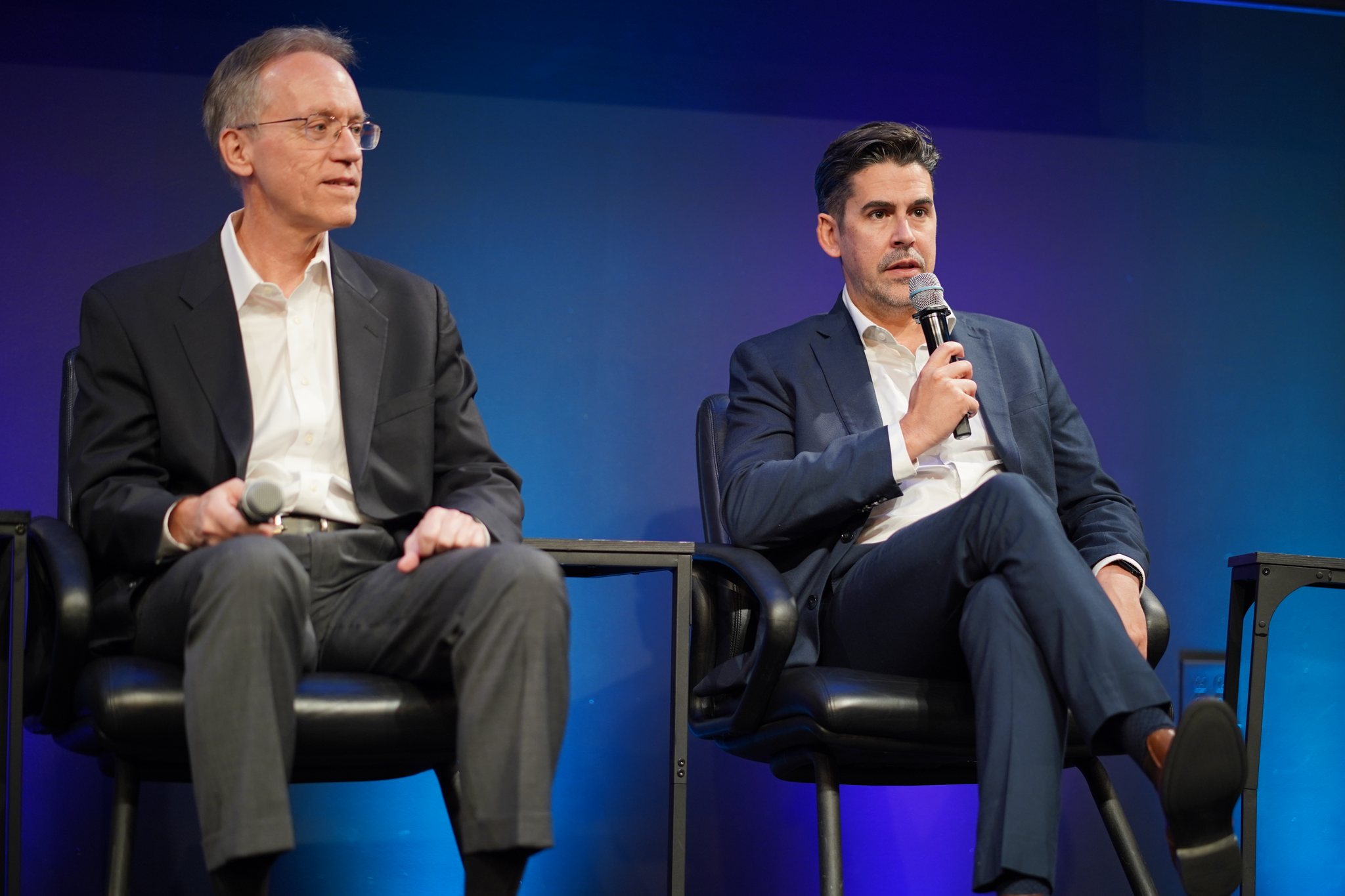
Later that morning, Terrestar’s Jason Trembley laid out the logic on the “Orchestrating the D2D network of networks” panel at Silicon Valley Space Week’s Satellite Innovation track, moderated by Aashu Virmani of Cambridge Consultants.
Terrestar is still building its own constellation, said Trembley, the company’s vice president of commercial solutions. But a constellation that spends 2% of its time over Canada needs an ecosystem of like-minded partners, he said. Trembley also represents the Mobile Satellite Services Association, which Terrestar co-founded.
His analogy: “It’s like renting out an apartment and it only being available 2% of the time. The economics just don’t work, right?”
The far north
Trembley said Terrestar owns and operates the Canadian side of the EchoStar T1 geostationary satellite. The company holds 40 MHz of mobile-satellite spectrum. CaStar is designed to cover the far north, Trembley said, which lines it up with other northern countries. Joining Equatys, at least initially, doesn’t stop Terrestar from partnering with anyone else, he added. “We think of it as an open network and one that would work in harmony with other networks.”
Spectrum makes partnership unavoidable. Terrestar’s holdings sit on the Canadian side of the same band SpaceX bought from EchoStar. Trembley said there is no way around coordinating across the border if that spectrum is going to be used properly.
Satellites and launch capacity can be added over time, he argued. Spectrum can’t: “spectrum is a scarce resource.”
What Equatys still needs
On the same stage, Iridium Chief Technology Officer Greg Pelton described the recipe he thinks it takes to compete at scale: launch, satellite manufacturing, spectrum and a high-value service. By his read, Equatys has spectrum, service-provider capability and satellites in orbit with more planned, but doesn’t necessarily have launch yet.
Terrestar President and CEO Jacques Leduc put the bet plainly in the announcement: “The future of mobile satellite connectivity won’t be built by countries or constellations acting alone.”
Viasat, an Equatys co-founder, is a Silicon Valley Space Week presentation sponsor.