By Nick David, Editorial Lead, SatNews
Bids for the Space Force’s next generation of GEO inspection satellites went in on Monday. One bidder says the award, and the volume behind it, won’t move at commercial speed.
RG-XX, the planned successor to the Geosynchronous Space Situational Awareness Program (GSSAP), is the first program to buy through Andromeda, the Space Force contract vehicle awarded to 14 companies in April. In May, the service raised Andromeda’s ceiling to about $6.2 billion to cover RG-XX and a second surveillance program. RG-XX satellites are expected to be more maneuverable than GSSAP and able to refuel in orbit.
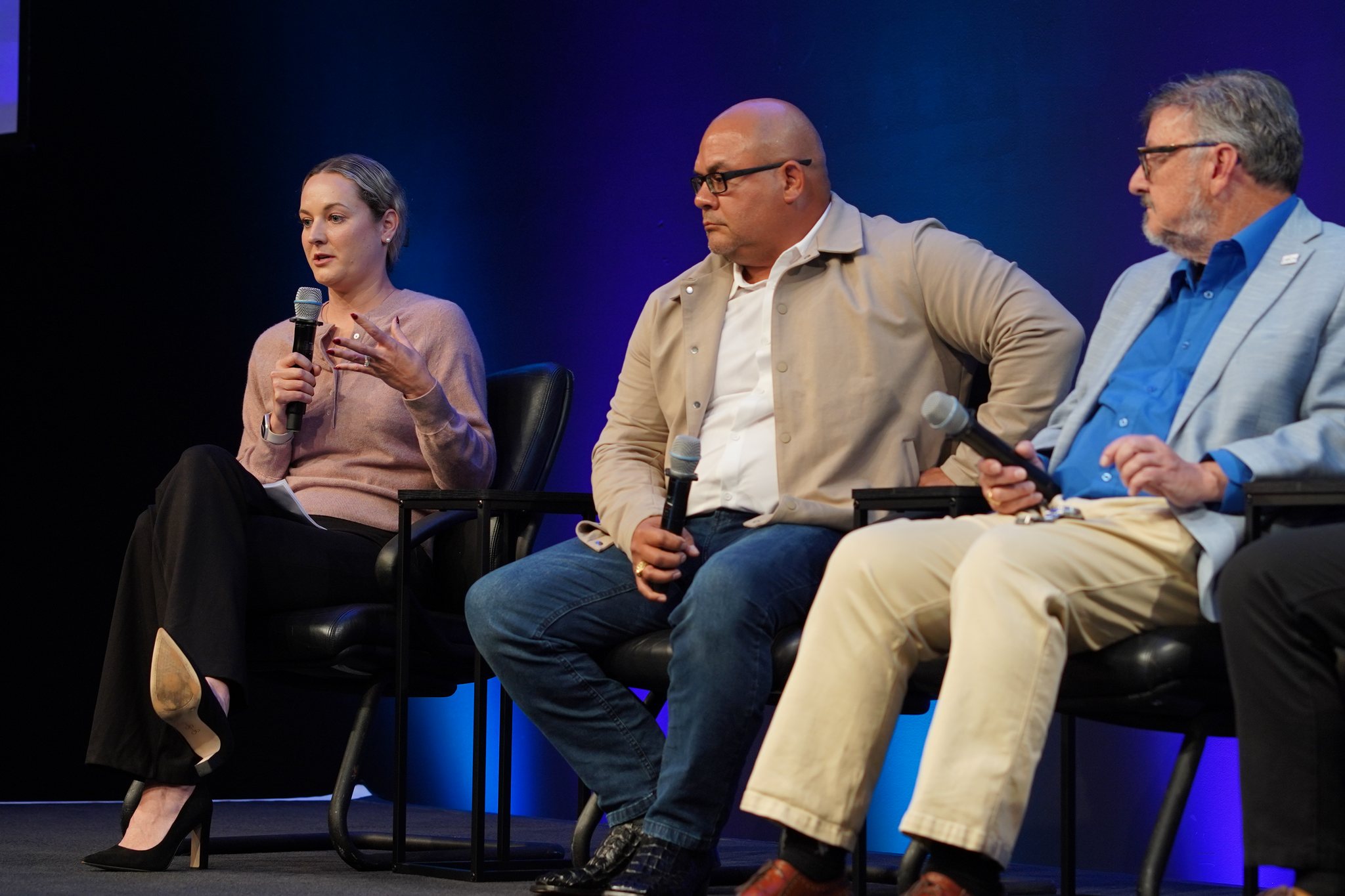
Courtney Sayles, chief product officer at Scout Space, said bids on the RG-XX delivery order were due Monday and the program is now in source selection. “We’re not even getting awarded until next year,” she said Thursday on the panel “Space Control as a Market: RG-XX, RPO, and the Limits of Commercial Combat Support” at Silicon Valley Space Week’s MilSat Symposium. Counting from the original industry day, she put the process at a year and a half to two years, depending on continuing resolutions.
“Not there for the VCs”
The size of the order is the bigger concern, Sayles said, a point she has also made to the government. Despite the roughly $6 billion ceiling on Andromeda, she said, this order will award maybe two space vehicles to two or three companies. “That’s not commercial speed and commercial volume that a lot of us are looking for.”
Buying two or three of every component keeps prices at the same level as buying one, she said. Commercial suppliers want to see orders of six or 10, and a government commitment to match, before costs come down. “It’s also a much bigger signal from the government to go to our VCs to get additional funding as well. Two awards once a year is not there for the VCs.”
Scout Space, which builds optical sensors and autonomy software for space domain awareness, recently won a $60 million STRATFI and is a subcontractor on RG-XX. Its first GEO payload is set to fly on Blue Origin’s Blue Ring around the end of the year or early next year, she said.
What’s working
Not all the feedback was critical. Servando Cuellar, director of programs at Astranis, one of the Andromeda contract holders, said he welcomed the Space Force’s push for fixed-price contracts. “I know some of the primes don’t like to do that,” he said, but companies like Astranis welcome them.
Gregg Burgess, president of Orion Space Solutions, took “a bit of a contrarian view.” He said the government already does well buying commercial space domain awareness data from ground-based tracking networks that feed the National Space Defense Center.
The panel, moderated by Eric Anderson, president of And One Technologies, also included Joe Guzman, founder and CEO of Space Cowboy ADR, and Richard Nederlander, founder and CEO of Spargo Space.
The Space Force requested $355 million for RG-XX in fiscal 2027, with $2.8 billion planned over five years. Budget documents put the first RG-XX launches in early fiscal 2029.